Featured Korean Architectural Tilt & Turn Window Systems
Explore high-performance thermal break aluminium tilt and turn windows engineered for Seoul's severe weather conditions, high soundproofing demands, and Zero Energy Building (ZEB) standards.
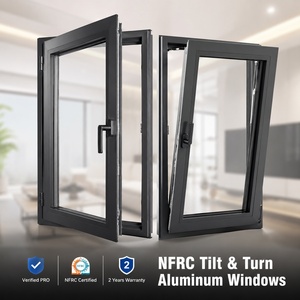
NFRC Tilt and Turn Black Narrow Frame Double Glazed Thermal Break Modern Residential Aluminum Windows
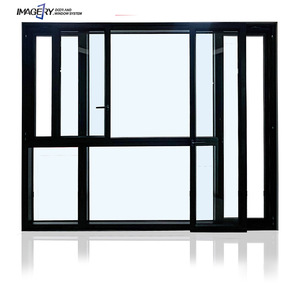
High Quality Tilt and Turn Drifting Customized Window Double Glazed Sliding Drift Aluminum Windows With LOW-E Glass
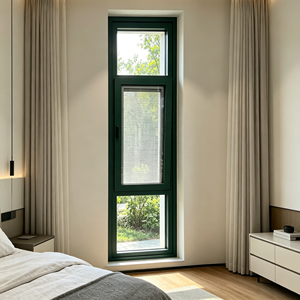
RC4 Weather Resistant Aluminum Tilt and Turn Casement Window for Sunroom Extension Villa Balcony Custom Hardware Handle
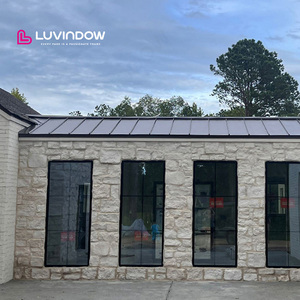
Slim Frame High Performance Aluminum Tilt Turn Windows NFRC Certified Low-E Glass Windows for Houses
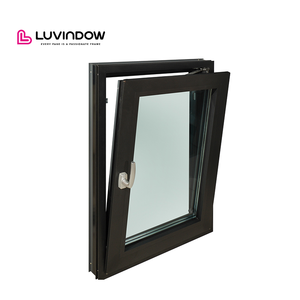
Modern Style Tilt Turn Window Low-E Glass German Hardware Aluminium Frame Swing Open For Villa-Double Glazing
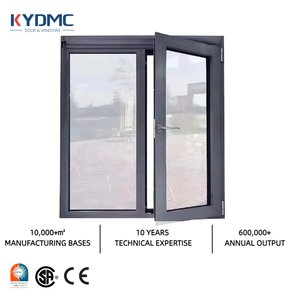
American NFRC Customizable Heat Insulation Casement Window Aluminum Double Glass Exterior Thermal Break Tilt and Turn Window
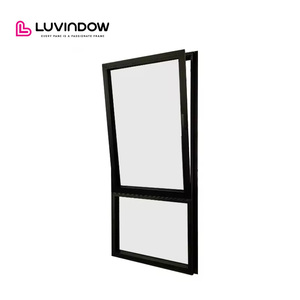
Hot Sale Narrow Frame Large Glass Windows Residential Villa Slimline Aluminium Windows Double Glazed Tilt Turn Aluminium Windows
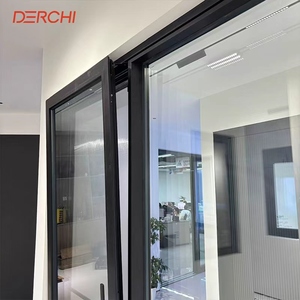
Ca Title 24 Custom Aluminum Windows Energy Saving Low E Glass Casement Window Double Glazed Tilt and Turn House Window
1. Architectural Shift in the Seoul Fenestration Market
The Seoul metropolitan region (including Gyeonggi Province and Incheon) represents one of the most technologically demanding fenestration markets in East Asia. Modern architectural dynamics in high-density residential developments in Gangnam, luxury villas in Seongbuk-dong, and high-rise commercial structures along the Han River have triggered a decisive transition from traditional sliding PVC windows toward high-integrity Aluminium Tilt and Turn Windows.
Driven by South Korea's aggressive Energy Efficiency Labeling and Standards Program (KS F 2278 for Thermal Resistance and KS F 2292 for Air Tightness) along with mandatory Zero Energy Building (ZEB) compliance for new constructions, developers are abandoning standard dual-track sliders. Standard sliding windows suffer from inherent seal degradation, perimeter air leakage, and inadequate acoustic dampening against urban traffic noise (such as the Olympic Expressway and Subway Line corridors).
Technical Insight for Seoul Architects: In South Korea's "Central 1" climate zone (which includes Seoul), exterior window systems must achieve an overall U-factor of ≤ 0.9 to 1.2 W/m²K to attain Grade 1 energy efficiency certification. Aluminium tilt and turn systems featuring multi-chamber Polyamide (PA66 GF25) thermal breaks and triple Low-E argon-filled glazing are uniquely equipped to meet these stringent parameters without compromising structural sash dimensions.
Dual-Action Functionality Engineered for Korean Living
Aluminium tilt turn windows provide two distinct operation modes within a single master handle mechanism:
- Tilt Position (Inward Top Venting): The sash tilts inward at the top by approximately 10 to 15 degrees. This creates a continuous natural ventilation chimney effect while maintaining total security against intruders and keeping out torrential monsoon rains typical of the Korean summer (Jangma season).
- Turn Position (Full Inward Swing): Rotating the handle 180 degrees allows the entire sash to swing inward up to 90 or 180 degrees. This provides 100% unobstructed clear opening area for rapid air exchange and facilitates effortless interior cleaning of outside glass surfaces—an essential requirement for modern high-rise apartments across Seoul.
2. Top 10 Aluminium Tilt Turn Windows Manufacturers & Factories Serving Seoul
Selecting the optimal manufacturer requires balancing raw material alloy purity, thermal break engineering, multi-point lock hardware reliability, local KS certification compliance, and direct factory pricing. Below is an exhaustive breakdown of the top 10 manufacturers active in the Seoul market for 2026.
| Manufacturer Name | Headquarters / Base | Key Specialty / Advantage | Thermal U-Value Range | Target Seoul Market Segment |
|---|---|---|---|---|
| BrioWindow Technology Co., Ltd. | Foshan, China (Direct OEM) | Custom Engineering, NFRC/CE/ISO, 30-Yr Quality Assurance | 0.78 - 1.1 W/m²K | Luxury Villas, Residential Complexes, B2B Contractors |
| LX ZIN (LX Hausys) | Seoul, South Korea | Domestic Brand Awareness, Local Retail Network | 0.95 - 1.3 W/m²K | Mass High-Rise Apartments, Local Remodeling |
| KCC Windows | Seoul, South Korea | Integrated Glass & Profile Fabrication | 1.00 - 1.35 W/m²K | Commercial Towers, Public Infrastructure |
| Eagon Windows & Doors | Incheon, South Korea | High-End Wood-Aluminium & Structural Systems | 0.85 - 1.2 W/m²K | Architectural Landmarks, Premium Commercial |
| Schüco Korea System | Bielefeld, Germany / Seoul Branch | German Ultra-Premium Systems & Hardware | 0.70 - 1.0 W/m²K | Ultra-Luxury Private Estates, Flagship Commercial |
| Reynaers Aluminium Korea | Duffel, Belgium / Local Network | European Architectural Profiles & Micro-Sash | 0.75 - 1.1 W/m²K | Contemporary Urban Residences, Office Hubs |
| YKK AP Korea | Tokyo, Japan / Seoul Office | High Typhoon Resistance & Precision Anodizing | 1.10 - 1.40 W/m²K | Mid-Rise Commercial & Coastal Edge Structures |
| Namsun Aluminum | Daegu / Seoul Supply Hub | Traditional Domestic Extrusion Powerhouse | 1.15 - 1.45 W/m²K | Standard Commercial Infill & Civil Projects |
| PNS Window | Busan / Seoul Regional Office | Cost-Effective Local Hardware Integrations | 1.20 - 1.50 W/m²K | Budget-Conscious Residential Developments |
| Aluk Group Asia | Luxembourg / Asian OEM Network | Global System Design with Modular Hardware | 0.90 - 1.25 W/m²K | Institutional Buildings, International Schools |
1. BrioWindow Technology Co., Ltd.
Headquartered in Foshan—China's global capital for architectural aluminium processing—BrioWindow Technology Co., Ltd. stands out as a premier direct factory manufacturer supplying engineered aluminium doors and windows to over 60 countries, including high-spec projects across Seoul, Incheon, and Busan.
- Structural System: 6063-T6 High-Precision Anodized / Powder Coated Aluminium
- Thermal Insulation: PA66 GF25 Polyamide Thermal Break with Iso-Foam Insertion
- Hardware Integration: Original German Siegenia / Roto / HOPO Multi-Point Locking Systems
- Certification: NFRC, CSA, CE, ISO9001, China National Highest Testing Standards
- After-Sales Commitment: 30-Year Structural Integrity Warranty with Direct Engineering Drawings
2. LX ZIN (LX Hausys)
LX ZIN is one of South Korea's largest building material manufacturers. While historically famous for PVC window frames, LX ZIN has expanded into high-tier thermal-break aluminium tilt-turn systems designed specifically to satisfy Korean domestic apartment building specifications.
- Extensive domestic distribution and showroom network across Seoul.
- Strong compatibility with Korean standardized window opening dimensions.
- Higher domestic retail pricing due to extensive brand marketing overhead.
3. KCC Windows
KCC Corporation provides vertical integration, producing both raw float glass, silicone sealants, and extruded aluminium profiles inside South Korea. Their tilt turn series target high-density commercial towers and government projects.
- In-house glass processing (Low-E coating, triple insulated units).
- Compliant with all local South Korean fire safety and structural standards.
- Focuses primarily on large-scale domestic developer contracts.
4. Eagon Windows & Doors
Eagon is recognized among Seoul architects for premium fenestration solutions. They specialize in high-end wood-aluminium composite tilt-turn windows and vacuum-glazed units designed for low-energy passive house projects.
- Advanced vacuum glazing technology available on select lines.
- Sophisticated aesthetics tailored for luxury custom residences.
- Premium market positioning with significant investment per unit.
5. Schüco Korea System
Schüco brings German system engineering directly into the South Korean market. Their aluminium tilt and turn windows are regarded as the gold standard for acoustic isolation, wind load resistance, and concealed system elegance.
- Concealed hinges and micro-slim sightline configurations.
- Extremely low U-factors capable of meeting European Passive House standards.
- High procurement costs and longer delivery lead times from Europe.
6. Reynaers Aluminium Korea
Belgium-based Reynaers offers architectural aluminium profiles with focus on high aesthetic finish, bullet-proof/burglar-resistant options, and slim frame designs suitable for contemporary boutique commercial projects in Gangnam and Itaewon.
- High customization options for surface finishes and anodizing shades.
- Excellent integration capability with curtain wall facades.
7. YKK AP Korea
YKK AP focuses heavily on high wind-pressure water tightness and durable surface treatments. Their tilt turn series are engineered to withstand typhoons while offering smooth manual operation.
- Patented surface coating technologies resistant to urban salt fog and pollution.
- Rigid frame extrusion geometry for high-rise wind resistance.
8. Namsun Aluminum
As one of South Korea's pioneer aluminium extruders, Namsun supplies standard system windows for general construction contracts throughout Gyeonggi-do and Seoul sub-cities.
- Solid domestic supply chain stability.
- Standardized commercial tilt turn models.
9. PNS Window
PNS offers accessible window solutions with basic thermal breaks and functional tilt turn hardware, serving medium-density residential housing projects across South Korea.
- Budget-friendly options for standard developments.
- Simple operation mechanisms for easy long-term maintenance.
10. Aluk Group Asia
Aluk provides European-designed aluminium window systems fabricated across Asian licensed facilities, offering a balanced middle ground between European designs and Asian logistics.
- Versatile hardware grooves compatible with European standard accessories.
- Reliable multi-chamber insulation profiles.
3. Engineering Specifications Required for the Seoul Microclimate
Seoul experiences extreme temperature swings ranging from sub-zero winter temperatures (-15°C in January) to hot, humid, typhoon-prone summer monsoons (+35°C with up to 90% humidity in July and August). In addition, urban noise levels in central commercial districts like Yeouido, Mapo, and Gangnam demand stringent sound attenuation specs.
Key Technical Criteria for Seoul Procurement:
Polyamide Thermal Break (PA66 GF25)
Un-insulated aluminium profiles conduct exterior cold directly into the living space, causing condensation, mold, and interior frost. High-spec tilt-turn windows must utilize 24mm to 34mm PA66 GF25 (25% fiberglass reinforced polyamide) structural strips to decouple inner and outer extrusions.
Triple-Pane Low-E Insulated Glass
To satisfy Korea's ZEB Grade 1 rating, sashes are fitted with 42mm-48mm triple-glazed units (e.g., 6mm Low-E + 14Ar + 6mm Clear + 14Ar + 6mm Low-E) featuring warm-edge composite spacers and 95% argon gas fill.
Triple EPDM Compression Gaskets
Unlike brush seals on sliding windows, tilt turn windows rely on continuous, continuous-miter vulcanized EPDM gaskets. When locked in the closed position, compression forces achieve sound isolation up to Rw = 42-45 dB.
4. Why Seoul Developers Partner with BrioWindow Technology Co., Ltd.
While domestic Korean manufacturers offer local availability, high markups, rigid standardized size catalogs, and long factory backlogs often constrain project timelines and inflated building budgets. As a direct manufacturer headquartered in Foshan, China, BrioWindow Technology Co., Ltd. bridges this gap by delivering direct factory cost performance combined with certified engineering precision.
Direct Factory Cost Savings
By eliminating multiple tiers of local domestic distributors and regional agents, BrioWindow offers B2B clients in Seoul factory-direct pricing—reducing total fenestration material costs by 25% to 40% without compromising on profile wall thickness or hardware quality.
Full Architectural Customization
Every window opening in modern luxury villas or commercial facades requires customized dimensions, frame profile depths (70mm, 80mm, 90mm, 110mm series), hardware finishes (anodized matte black, metallic champagne, fluorocarbon powder coating), and glass specifications.
Rigorously Tested & Certified
All BrioWindow tilt turn products undergo systematic testing for wind load resistance, air permeability, water tightness, and acoustic dampening adhering to NFRC, CSA, CE, and ISO9001 frameworks, easily matching or exceeding Korea's KS testing benchmarks.
Seamless Export Logistics to Incheon/Busan
Located in the heart of Guangdong's export hub, BrioWindow provides professional export packaging (fully sealed wooden crates, corner protection, vacuum film) with fast sea freight transit times directly to Incheon Port or Busan Port in under 4-7 days.
30-Year Warranty & Engineering Support
Every order is supported by complete CAD shop drawings, 3D structural BIM models, step-by-step installation guides, and a comprehensive 30-year quality guarantee on structural aluminium profiles.
German Hardware Standards
We outfit our tilt turn sashes with premier German multi-point locking hardware (Siegenia / Roto / GU / HOPO), ensuring smooth manual handle rotation up to 50,000 operational cycles.
5. Seoul Buyer's Frequently Asked Questions (FAQ)
How do imported BrioWindow tilt-turn sashes meet South Korea's KS F 2278 thermal standards?
Our engineering team selects profile depths (such as our 80mm or 90mm ultra-thermal series) equipped with 34mm PA66 GF25 thermal breaks, specialized insulating foam cavity inserts, and triple Low-E argon-filled glass units. These configurations achieve overall system U-factors as low as 0.78 to 0.95 W/m²K, fully complying with Korea's Zone 1 thermal requirements.
What documentation is required to import aluminium windows from BrioWindow to Seoul?
We provide a comprehensive export package including Commercial Invoices, Detailed Packing Lists, Bills of Lading, Certificates of Origin (under RCEP for reduced or zero import tariffs), Factory Quality Test Certificates, and detailed CAD Opening Schedules to ensure smooth customs clearance through Incheon or Busan ports.
Why choose Aluminium Tilt and Turn windows over standard UPVC sliding windows for high-rise projects?
Aluminium provides significantly higher structural tensile strength than UPVC, allowing for larger, heavier glass sashes and slimmer sightlines without sagging or frame distortion under high wind pressure. Furthermore, tilt and turn compression seals provide air/water tightness superior to brush-sealed sliders, preventing water penetration during heavy typhoons.
What information should Korean buyers prepare before requesting an engineering quote?
Please provide your project location (e.g., Seoul, Gyeonggi-do), building type (residential villa, commercial tower, institutional), architectural elevation/window schedule drawings with opening sizes, preferred frame color/finish, glass thermal performance target (U-value/SHGC), and target delivery timeline.
How are windows packed to prevent damage during sea transport from Foshan to Korea?
All sashes are wrapped in anti-scratch protective film, fitted with heavy-duty corner protectors, cushioned with PE foam layers, and packed inside fully enclosed fumigation-free solid plywood crates designed for fork-lift handling and ocean container shipping.
