Engineered Aluminum Window & Door Solutions
Factory-Direct CE Certified Window Systems Built for Commercial Developers, Contractors, and Luxury Residential Projects across Mumbai.
Navigating Mumbai’s Microclimate: Thermal & Structural Requirements for Swing Windows
Mumbai's architectural landscape presents a demanding mix of environmental stresses for exterior building envelopes. As a coastal megacity exposed to the Arabian Sea, Mumbai experiences extreme humidity, torrential monsoon rain cycles (averaging over 2,500 mm annually), intense solar radiation, and aggressive airborne marine salts. In high-density districts such as Worli, Bandra Kurla Complex (BKC), Lower Parel, and Marine Drive, high-rise luxury towers and modern commercial real estate require fenestration systems engineered beyond generic residential standards.
Aluminum swing windows (commonly designated as side-hung casement or tilt-and-turn systems) are increasingly specified over traditional sliding profiles by structural engineers and real estate developers across Mumbai. The engineering reason lies in compression seal mechanics: whereas sliding windows rely on brush seals that degrade rapidly under coastal dust and driving rain, swing windows utilize continuous EPDM (Ethylene Propylene Diene Monomer) double or triple weatherstripping. When pulled tight by multi-point locking hardware against the perimeter frame, a swing window creates an airtight, watertight barrier capable of withstanding wind loads exceeding 3,000 Pascals (Pa)—the equivalent of Category 3 hurricane forces.
Information Gain Note: Salt-Spray & Anodization Standards for Marine Environments
Standard powder coatings fail within 3 to 5 years in coastal Mumbai due to filiform corrosion under humid, salt-laden atmospheric conditions. Premium aluminum swing window suppliers targeting the Mumbai market must utilize high-grade 6063-T6 architectural aluminum profiles treated with minimum 25-micron anodic oxidation or PVDF (Polyvinylidene Fluoride) fluorocarbon coatings complying with AAMA 2605 specifications. This ensures long-term resistance against color fading, chalking, and salt oxidation.
The Critical Role of CE Certification & Technical Compliance
CE Certification (Conformité Européenne) is far more than a regulatory stamp; it serves as a rigorous baseline metric for structural stability, thermal transmittance, air permeability, and water tightness under EN 14351-1:2006+A2:2016 test protocols. For Indian developers sourcing aluminum swing windows from specialized manufacturing centers like Foshan, CE documentation guarantees that every batch has undergone empirical laboratory stress testing.
In high-rise construction across Mumbai, key physical performance parameters defined by CE standards include:
- Air Permeability (EN 12207 Class 4): Prevents humid tropical air and fine particulates from infiltrating air-conditioned spaces, significantly reducing HVAC electrical load requirements.
- Water Tightness (EN 12208 Class E750/900): Ensures zero water penetration under dynamic water spraying combined with continuous static pressure up to 900 Pa during severe monsoon downpours.
- Resistance to Wind Load (EN 12210 Class C5): Measures frame deflection structural integrity under extreme wind shear forces experienced on tower facades above 100 meters elevation.
- Acoustic Insulation (EN ISO 10140-2): Achieves sound reduction index ratings (STC) of 38dB to 45dB when paired with laminated acoustic double glass, isolating interiors from heavy urban traffic and ambient city noise.
Specification Benchmark Matrix: Aluminum Swing Systems vs. Standard Windows
To assist architects, structural consultants, and quantity surveyors in Mumbai, the matrix below outlines technical performance thresholds across profile geometry, thermal insulation, and weatherproofing capabilities.
| Performance Parameter | CE Certified Thermal Break Swing Window | Non-Thermal Break Casement | Standard Sliding Profile |
|---|---|---|---|
| Profile Alloy & Temper | 6063-T6 / High-Precision Extrusion | 6063-T5 Standard Grade | 6063-T5 Commercial Grade |
| Thermal Insulation Strip | PA66-GF25 Polyamide (24mm - 34mm) | None (Solid Aluminum) | None |
| U-Factor (Thermal Transmittance) | 1.2 - 1.8 W/m²K (Low Energy Loss) | 3.8 - 4.5 W/m²K | 4.5 - 5.8 W/m²K |
| Acoustic Isolation (STC) | 38 dB - 45 dB (Acoustic Laminated) | 28 dB - 32 dB | 22 dB - 26 dB |
| Water Pressure Limit | 750 Pa - 900 Pa (Monsoon Proof) | 300 Pa - 450 Pa | 150 Pa - 250 Pa |
| Hardware & Locking System | Multi-Point Gear Drive (Siegenia/CMECH) | Single Latch / Friction Stay | Crescent Lock / Touch Latch |
| Design Service Life | 30+ Years (30-Year Factory Warranty) | 10 - 15 Years | 5 - 10 Years |
Localized Application Scenarios across Mumbai's Real Estate Segments
Aluminum swing windows are not one-size-fits-all. Different urban micro-locations within the Mumbai Metropolitan Region (MMR) present unique architectural demands:
Towers along coastal strips face severe wind pressures and salt fog. Heavy-duty outswing aluminum casement windows equipped with multi-point locking and 8mm+6mm double tempered Low-E glass provide maximum structural resistance, low solar heat gain (SHGC < 0.30), and crystal-clear panoramic views of the sea without frame bowing.
Tilt-and-turn swing systems are engineered for modern commercial structures. In tilt mode, they offer secure top ventilation without micro-drafts or water entry during unexpected rain showers. In turn mode, they allow safe inside-access cleaning for exterior glass, drastically lowering maintenance costs for corporate building owners.
Large residential developments in growing suburban hubs prioritize noise isolation from local train corridors and expressways. Thermal break aluminum swing windows integrated with PVB acoustic glass reduce interior decibel levels from 80dB (street level) to a peaceful 35dB, boosting property values and tenant satisfaction.
Historic districts undergoing luxury restoration require slim profile sightlines that respect traditional aesthetics while integrating modern performance. Custom narrow-frame aluminum Crittall-style swing doors and casements provide timeless elegance combined with CE-certified weather seals.
Factory Strengths: Why Sourcing from BrioWindow Foshan Hub Delivers Competitive Superiority
Headquartered in Nanhai District, Foshan—the global powerhouse for aluminum profile engineering—BrioWindow Technology Co., Ltd. brings over a decade of specialized export experience. Serving developers, contractors, and architectural firms in over 60 countries across North America, Australia, Europe, and Asia, BrioWindow provides a fully integrated supply model from shop drawing engineering to direct export logistics.
Key manufacturing capabilities that distinguish BrioWindow as a trusted partner for Mumbai importers include:
- Precision CNC Fabrication: Automatic corner-crimping technology ensures perfectly square, structurally seamless frame joins that prevent corner water leakage under extreme hydrostatic pressure.
- Comprehensive Product Ecosystem: Beyond aluminum swing windows, BrioWindow manufactures matching sliding doors, bi-folding patio doors, smart motorized roof vents, central axis pivot entrance doors, PVC windows, and structural curtain walls from a unified production hub.
- Rigorous In-House Quality Testing: Prior to ocean freight, units undergo continuous air/water chamber testing, hardware fatigue testing (cycle testing over 50,000 operations), and coating thickness verification.
- 30-Year After-Sales Assurance: Backed by dedicated technical documentation, CAD/BIM shop drawing support, and localized installation guidance for overseas contractors.
Frequently Asked Questions by Mumbai Buyers & Project Managers
Unlike sliding systems that allow water buildup in bottom tracks during torrential downpours, swing casement windows utilize stepped outer frame drain channels with anti-backflow flap valves and multi-point EPDM compression seals. Under high monsoon wind load, the wind force actually pushes the outswing sash tighter against the perimeter frame gasket, creating a tighter weather seal.
Production lead time at our Foshan facility typically averages 20 to 25 days depending on specification complexity. Ocean transit from Shenzhen/Guangzhou ports to Mumbai’s Nhava Sheva (JNPT) port takes approximately 12 to 16 days. BrioWindow provides complete export documentation including CE certificates, test reports, commercial invoices, packing lists with piece-mark labeling, and Bill of Lading to streamline customs clearance.
Yes. Our structural engineering team reviews structural opening schedules, floor elevation plans, and local wind load requirements before production. We adjust profile wall thicknesses (ranging from 1.4mm up to 3.0mm), select appropriate reinforced mullions, and configure double or triple glazing build-ups (including Low-E, Argon gas, or laminated safety glass) tailored to your building height.
For coastal environments like Mumbai, we recommend 304 or 316 surgical-grade stainless steel friction stays, heavy-duty hinges, and anti-corrosive multi-point locking mechanisms sourced from leading hardware partners (such as CMECH, Siegenia, or Hoppe). Hardware is subjected to 500-hour neutral salt spray (NSS) testing to guarantee smooth, rust-free operation.
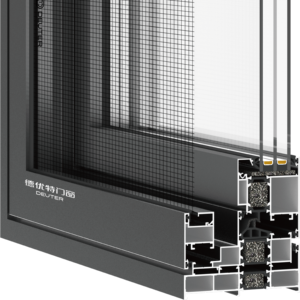
Aluminum is a conductive metal. Without a thermal break, outdoor solar heat rapidly conducts through the frame into air-conditioned interior rooms. A thermal break aluminum profile incorporates a low-conductive polyamide strip (PA66GF25) between the inner and outer aluminum frames, stopping thermal transfer. This reduces solar heat gain by up to 60%, lowering continuous air conditioning energy consumption in hot cities like Mumbai.
We supply comprehensive installation manuals, exploded 3D component diagrams, video walkthroughs, and piece-mark matching tags for every crate. For large-scale commercial real estate developments, our technical team provides live remote video engineering support and direct consultation with local installation crews in Mumbai.
Ready to Elevate Your Mumbai Project's Window Performance?
Partner directly with Foshan's premier CE-certified aluminum window factory. Submit your architectural schedules or project specifications today for immediate engineering support and factory-direct pricing.
