Featured Aluminum Lanai & Architectural Door Systems
Rigorously tested for weather resistance, structural deflection, and sound insulation. Exported across North America, Australia, and 60+ countries worldwide.
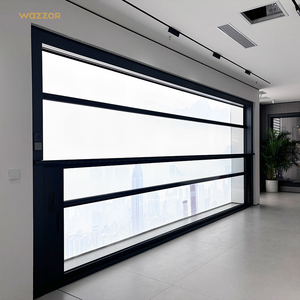
Wazzor Electric Lift Window | Motorized Vertical Operation Upward Electric Aluminum Windows
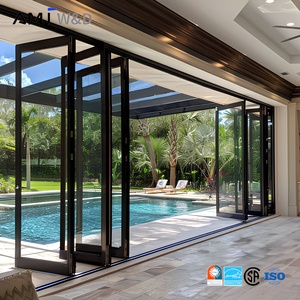
NFRC American Standard Bifold Doors Thermal Break Aluminum Glass Villa Sliding and Folding Doors
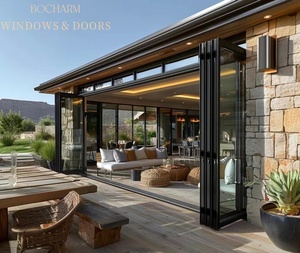
BOCHARM Aluminum Alloy Foldable Concertina Folding Bi-fold Doors Double Tempered Glass
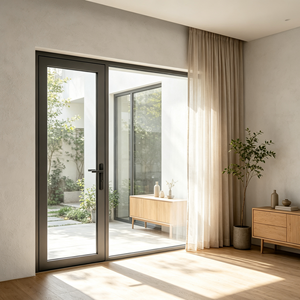
Australian Standard Soundproof Double Glazed Glass Casement Door Aluminium Swing Doors
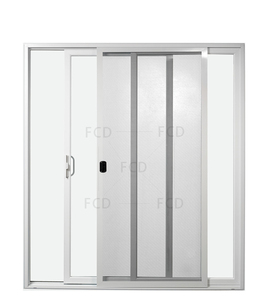
Customizable Commercial Sliding Glass Doors Aluminum Mosquito Net Pane Heavy Duty Sliding Doors
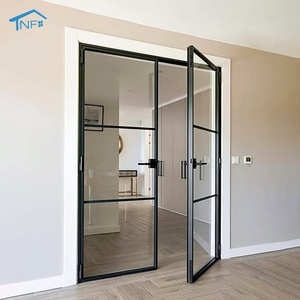
French Design Commercial Swing Soundproof Waterproof Aluminum Double Glass Casement French Door
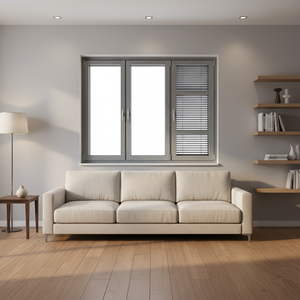
Aluminum Clad Wood Casement Tilt & Turn Louver Windows Hurricane Impact Double Tempered Heatproof
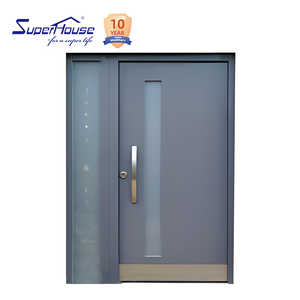
Luxury Aluminum Hurricane Impact Entry Door NOA FPA AAMA NFRC Certified High Wind Resistant Door
Architectural Procurement Authority: Evaluating Trusted Aluminum Lanai Door Manufacturers
When specifying fenestration systems for high-end coastal villas, commercial resort developments, or modern multi-family residential complexes, selecting the right aluminum lanai door manufacturer is a strategic decision that affects structural integrity, building envelope thermal energy compliance, long-term maintenance costs, and architectural aesthetics. A lanai—traditionally defined as a roofed, open-sided veranda or patio enclosure originating in tropical architecture—demands door systems capable of bridging indoor comfort with outdoor exposure.
Based in Nanhai District, Foshan City—China's global epicenter for high-precision aluminum extrusion and fenestration engineering—BrioWindow Technology Co., Ltd. has established an international reputation for delivering factory-direct, custom-engineered aluminum door and window systems. With over a decade of continuous export operations targeting North America (United States and Canada), Australia, and over 60 international territories, our manufacturing facility merges precision metallurgical extrusion (utilizing 6063-T6 primary aluminum billets) with sophisticated thermal barrier polyamide technologies (PA66GF25 structural insulative strips).
Structural Precision
Extruded using primary 6063-T6 aluminum alloy profiles with wall thicknesses ranging from 2.0mm to 3.0mm, engineered to withstand extreme wind load deflections (L/175 structural limits).
Thermal Isolation
Polyamide PA66GF25 glass-fiber reinforced thermal breaks minimize thermal conductivity, lowering overall U-factors down to 0.28 BTU/h·ft²·°F to satisfy strict NFRC & Energy Star metrics.
Impact & Coastal Durability
Configurable with SentryGlas® (SGP) laminated glass and corrosion-resistant AAMA 2605 fluorocarbon (PVDF) powder coatings designed for marine environment salt spray resistance.
Unlike commodity suppliers, our structural design framework addresses the core pain points faced by general contractors, structural engineers, and real estate developers: air infiltration resistance, water penetration pressures (up to 750 Pa), frame deflection under hurricane wind conditions, and seamless integration of heavy-duty stainless steel multi-point locking hardware systems (utilizing German Hoppe, Siegenia, or custom BrioWindow concealed locking gear).
Engineering Breakdown of Architectural Lanai Door Typologies
Lanai enclosures serve a dual functionality: they act as a impenetrable protective envelope against extreme rainstorms, windborne debris, and intense solar infrared heat gain, while converting into completely open span clearings that extend indoor living areas onto outdoor patios, pool decks, and garden spaces. Achieving this requires selecting the proper structural layout for your building project:
1. Multi-Track Heavy-Duty Sliding Lanai Doors
Designed for panoramic glass expanses, multi-slide lanai door systems utilize multi-track frames (2-track, 3-track, or 4-track configurations) allowing panels to stack neatly behind one another or recess into wall pockets (pocketing sliding doors). Engineered with bottom-loaded stainless steel tandem rollers resting on heavy-duty anodized tracks, individual glass panels weighing up to 400 kg (880 lbs) can be operated effortlessly with minimal friction.
2. Concertina Bi-Fold Lanai Doors
Bi-folding aluminum lanai doors utilize top-hung or bottom-supported hinge and guide roller systems that allow up to 95% of the wall opening to be fully folded away. Utilizing continuous EPDM double-compression gaskets, weatherstripping between panel joints creates a tight air seal that isolates humidity, sound (achieving STC ratings above 40 dB), and driving rain when fully closed.
3. Lift-and-Slide Thermal Break Lanai Systems
For demanding high-rise residential or coastal wind exposure conditions, Lift-and-Slide technology elevates the door panel off its weather-sealing gaskets via internal gear hardware when the handle is rotated. This allows massive double or triple-glazed units to glide smoothly. When lowered, the panel weight compresses high-grade perimeter gaskets directly against the track frame, guaranteeing air tightness and water pressure resistance matching fixed window standards.
Future Procurement & Architectural Trends in Aluminum Lanai Door Systems (2025–2030)
As global energy codes tighten and minimalist architectural aesthetics dominate high-end residential design, the manufacturing and specification of aluminum lanai doors are undergoing a technological transition. B2B purchasers and developers must align their sourcing strategies with key upcoming market vectors:
Ultra-Narrow Interlocks (< 20mm Sightlines)
Architects are phasing out bulky structural stiles. Modern lanai sliding systems now utilize high-moment-of-inertia carbon-reinforced vertical interlocks with visible widths as thin as 16mm to 19mm, maximizing natural daylight while retaining high wind load resistance.
Zero-Threshold Seamless Transitions
Eliminating tripping hazards between indoor rooms and outdoor lanai decks has driven the development of flush, recessed track channels featuring integrated sub-surface drainage systems that rapidly channel rainwater away from interior subfloors.
Smart Motorization & Building Automation
High-end villa projects are increasingly integrating motorized electric lift-and-slide or vertical bi-folding systems connected to smart home automation platforms (KNX, Crestron, Zigbee), featuring automated rain-sensing closing mechanisms and pinch-safe safety sensors.
Low-Carbon Recycled Primary Aluminum
Driven by LEED certification requirements and European Carbon Border Adjustment Mechanisms (CBAM), top-tier manufacturers are shifting toward low-carbon billet casting powered by hydroelectricity, reducing embodied carbon footprints by up to 60%.
Industry Benchmark: Technical Performance & Specification Matrix
To assist project engineers and sourcing managers in compiling project tender documents, the table below outlines the core engineering parameters of BrioWindow’s customized aluminum lanai door series compared to standard global industry benchmarks:
| Performance Parameter | Standard Market Aluminum Doors | BrioWindow Thermal Break Lanai Doors | BrioWindow Coastal Impact Lanai Series |
|---|---|---|---|
| Structural Profile Material | 6063-T5 Recycled Aluminum (1.4mm) | 6063-T6 Virgin Billet Aluminum (2.0mm–2.5mm) | Heavy-Duty Architectural 6063-T6 (2.5mm–3.0mm) |
| Thermal Insulation (U-Factor) | U ≥ 0.55 BTU/h·ft²·°F (Non-thermal) | U = 0.28 - 0.34 BTU/h·ft²·°F (PA66GF25) | U = 0.24 - 0.30 BTU/h·ft²·°F (Triple Insulated) |
| Wind Pressure Resistance | Design Pressure (DP) 30–40 PSF | Design Pressure (DP) 50–65 PSF | Design Pressure (DP) 70–100+ PSF (Miami-Dade Level) |
| Water Penetration Resistance | 250 Pa - 300 Pa | 500 Pa - 600 Pa | 750 Pa (High Performance Sub-drainage) |
| Acoustic Rating (STC) | STC 26 - 30 dB | STC 38 - 42 dB (Double Tempered IGU) | STC 43 - 48 dB (Acoustic PVB/SGP Laminated) |
| Surface Finish & Coating | Standard Powder Coat (AAMA 2603) | Super-Durable Powder Coating (AAMA 2604) | PVDF Fluorocarbon Coating (AAMA 2605 Marine Grade) |
| Hardware & Multi-point Lock | Single-point Latch / Generic Brand | German Siegenia / Hoppe Multi-Point Locks | Heavy-Duty Stainless Steel 316 Multi-Point System |
B2B Procurement & Global Sourcing FAQ
Key technical and logistical questions answered by our engineering and export compliance team:
What certifications do BrioWindow aluminum lanai doors hold for international building codes?
Our aluminum lanai doors and windows are manufactured to comply with key international standards including North American NFRC (National Fenestration Rating Council) for thermal energy performance, AAMA (American Architectural Manufacturers Association) for structural load testing, Florida Product Approval (FPA) / Miami-Dade NOA protocols for high-velocity hurricane zones (HVHZ), and AS2047 / AS1288 standards for the Australian building code.
Can BrioWindow manufacture custom sizes based on architectural CAD or Revit BIM files?
Yes. Over 90% of our production volume consists of custom-engineered openings. Our in-house technical engineering team converts architectural CAD schedule drawings and BIM models into precise shop drawings, detailing glass structural calculations, profile extrusion cross-sections, drainage details, and installation anchor points prior to client sign-off and factory cutting.
How do thermal break aluminum lanai doors perform compared to standard non-thermal break profiles?
Standard aluminum is a conductive metal that transfers outside heat directly into air-conditioned interior spaces. A thermal break door incorporates a continuous structural polyamide barrier (PA66GF25) separating the exterior aluminum profile from the interior frame. This barrier breaks the thermal bridge, reducing heat transfer by up to 60%, preventing frame condensation, and significantly lowering building HVAC energy consumption.
What is the recommended packaging protocol to prevent damage during long-distance ocean freight?
Every customized door assembly undergoes a multi-layer export protective wrapping process: 1) Surface protective film over aluminum profiles; 2) EPDM corner protective caps; 3) Bubble-wrap thermal insulation wrap; 4) Fully enclosed non-fumigation plywood crates with internal foam cushioning and steel banding, ensuring zero movement or surface abrasion during FCL or LCL container shipping.
What after-sales technical support and quality warranty guarantees are provided?
BrioWindow provides a comprehensive 30-year limited quality assurance warranty covering structural aluminum profile integrity and anodized/powder-coated surface finishes. Hardware accessories carry a 5 to 10-year replacement warranty. Furthermore, we supply complete step-by-step installation manuals, video walkthroughs, and real-time remote engineering consultation for overseas site installation teams.
Partner with China's Premier Aluminum Lanai Door Manufacturer
Whether you are sourcing for a luxury coastal villa project, a commercial hotel development, or looking for an established OEM/ODM factory supply partner in Foshan, our team is ready to deliver precision shop drawings, factory pricing, and structural samples.
Inquire Now