Curated High-Performance Fenestration Catalog
Precision-engineered aluminum alloy entry doors, sliding systems, and hurricane-impact fenestration manufactured in Foshan, China for global architectural deployment.
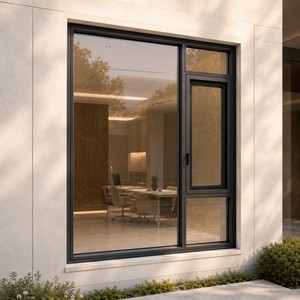
Soundproof Double Glazed Aluminum Alloy Casement Window with Slim Black Frame Windproof for Modern Homes and Offices
Inquire Now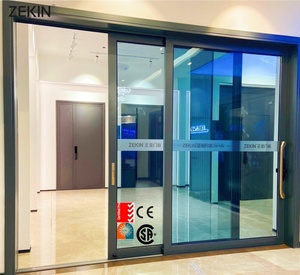
ZEKIN Modern Aluminum Alloy Sliding Doors AS2047 Certified Soundproof Design for Home Office
Inquire Now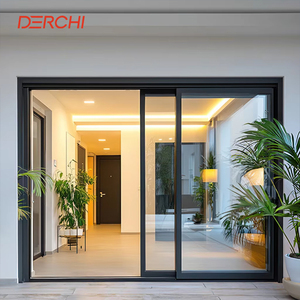
DERCHI NFRC America Standard Large Sliding Glass Doors for Patio Aluminum Frame Thermal Insulation Double Glass Sliding Doors
Inquire Now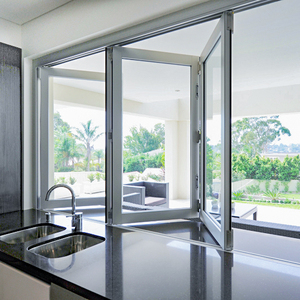
Hurricane Impact High Quality Corner Aluminium Profile Glass Bi Folding windows
Inquire Now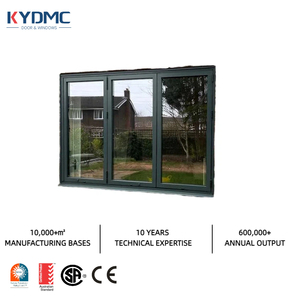
Low E Double Glass Aluminium Black Frame Bifold Windows Soundproof NFRC Modern Exterior Garden American bar Bifold Window
Inquire Now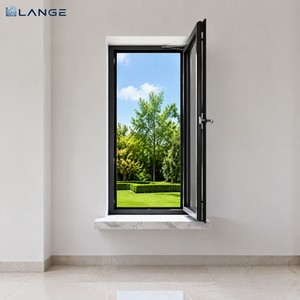
LANGE Luxury CE Certified Thermal Break Aluminum Tilt Turn Casement Windows Aluminum Alloy Windows Inward Opening Windows
Inquire Now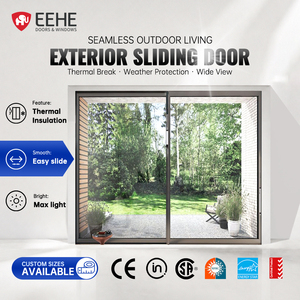
EEHE Oversized Aluminum Sliding Door NFRC Certified Double Glazed Heavy Duty Patio Sliding Doors for Exterior Residential
Inquire Now
Profile Aluminum Doors and Windows Factories In Foshan China
Inquire NowEngineering Excellence in Commercial & Residential Entry Thresholds
The global architectural landscape is undergoing a structural paradigm shift. Entrance doors are no longer evaluated merely as localized aesthetic focal points or basic physical barriers; they are now recognized as critical exterior envelope components governing building energy balance, structural security, perimeter acoustic attenuation, and architectural brand identity. For developers, general contractors, import distributors, and architectural firms, specifying premier aluminum front entry doors requires navigating complex metallurgy, thermal barrier engineering, and international code compliance.
Aluminum alloy fenestration systems have emerged as the dominant specifier choice across luxury residential developments, mid-rise commercial head offices, and high-density multi-family structures. When compared to legacy timber, hollow metal, or unreinforced vinyl (uPVC) alternatives, structural aluminum profiles provide an unprecedented strength-to-weight ratio, structural resistance against wind load deformation, dimensional stability under extreme climate fluctuation, and exceptional service life expectancy exceeding 40 years with minimal maintenance overhead.
Primary Sourcing Insight: Modern structural aluminum entrance doors utilize high-grade 6063-T6 or 6061-T6 extrusions coupled with multi-cavity polyamider thermal breaks (PA66-GF25), delivering overall system U-factors as low as 0.82 W/m²K while satisfying stringent hurricane impact codes (ASTM E1886/E1996) and burglary resistance standards (EN 1627 RC3/RC4).
Metallurgical & Structural Profile Integrity
The structural backbone of high-performance entry doors relies on precision-extruded aluminum alloy profile geometry. Leading manufacturers in the Foshan industrial cluster utilize primary billet 6063-T6 aluminum, engineered with wall thicknesses ranging from 2.0mm to 3.0mm for heavy-duty swing and pivot leafs, and up to 4.0mm at high-stress load points such as corner cleats and hinge anchors. This high-density alloy matrix resists torsional twisting, sagging over extended duty cycles, and structural fatigue induced by frequent daily cycles.
Furthermore, surface treatment plays a pivotal role in determining long-term exterior durability. Premium export-grade aluminum doors receive advanced surface finishing treatments including Fluorocarbon (PVDF) electrostatic spraying—utilizing Kynar 500 resin formulations that comply with AAMA 2605 specifications—or high-micron anodizing (Class I, >18μm). These coatings guarantee resistance to UV degradation, salt spray corrosion in coastal zones (tested beyond 3,000 hours under ASTM B117 standards), chalking, and industrial chemical exposure.
Engineering & Performance Specification Benchmarks
To assist procurement managers, facade consultants, and structural engineers in evaluating system performance against project requirements, the matrix below outlines core performance indicators of BrioWindow aluminum entry door systems:
| Performance Characteristic | Testing Standard Benchmark | BrioWindow Standard Spec | High-Performance / Custom Spec |
|---|---|---|---|
| Structural Wind Load | ASTM E330 / AS2047 | Serviceability: 2500 Pa (Design) | Ultimate: Up to 5000 Pa (Hurricane Impact) |
| Thermal Insulation (U-Factor) | NFRC 100 / EN ISO 10077 | 1.4 – 1.8 W/m²K (Double Glazed) | 0.8 – 1.1 W/m²K (Triple Low-E + PA66 Break) |
| Air Infiltration Resistance | ASTM E283 / EN 12207 | < 0.1 cfm/ft² @ 1.57 psf | Class 4 (Hermetically Sealed EPDM gaskets) |
| Water Penetration Resistance | ASTM E331 / EN 12208 | 450 Pa (Static Head Pressure) | 750 Pa (Submerged threshold system) |
| Acoustic Isolation (STC/OITC) | ASTM E90 / ISO 10140 | STC 35 - 38 dB | STC 42 - 45 dB (Laminated Acoustic Glass) |
| Forced Entry Security | EN 1627 / PAS 24 | Multi-Point Locking (3-Point) | RC3 / RC4 Level (5-to-7 Point Motorized) |
Future Procurement & Design Trends in Aluminum Entry Doors (2026–2030)
Strategic B2B procurement demands anticipating architectural evolution and energy regulation shifts before contract execution. Based on export intelligence gathered from over 60 destination markets, including the United States, Canada, Australia, and Northern Europe, four key technological developments are defining the future of entry door specification:
1. Smart Access & Motorized Automation
Integration of concealed electromagnetic multi-point locksets natively compatible with biometric fingerprint scanning, facial recognition, smart home Zigbee/Matter protocols, and commercial access keycards. Automatic drop-down bottom seal mechanisms activate upon latching to maintain airtight acoustic integrity without dragging on floor finishes.
2. Ultra-Thermal Iso-Bar Isolation
As global building codes mandate Net-Zero Carbon targets, standard thermal breaks are giving way to multi-chambered polyamide strips (PA66-GF25 reinforced with 25% glass fiber) injected with hydrophobic polyurethane foam (PU). This eliminates convective air loops within profile chambers and dramatically reduces thermal bridging.
3. Oversized Architectural Pivot Systems
Architects are increasingly specifying dramatic, oversized pivot entrance doors reaching heights up to 4.5 meters and widths up to 2.2 meters. These systems require heavy-duty adjustable floor pivots capable of supporting leaf weights up to 500kg, engineered with hydraulic speed-control checking and hold-open dampers.
4. Circular Economy & Modular Repairability
Institutional procurement guidelines now prioritize circular economy compliance. Aluminum profiles possess an infinite recycling lifecycle without material degradation. Modern door designs feature modular EPDM weatherstripping gaskets and mechanically jointed internal corner brackets that allow field replacement of worn components rather than total door assembly replacement.
The Foshan Manufacturing Advantage: Quality Verification & Export Protocols
Located in Nanhai District, Foshan City, Guangdong Province, BrioWindow Technology Co., Ltd. operates at the geographical heart of China's premier aluminum extrusion and processing industrial infrastructure. With over a decade of dedicated export experience, BrioWindow bridges the gap between high-capacity Chinese manufacturing economics and strict Western regulatory compliance (NFRC, AS2047, CE, CSA).
End-to-End Quality Management System (QMS)
Every aluminum front entry door order undergoes rigorous quality verification across 6 distinct production gates prior to international container loading:
- Spectrometric Alloy Verification: Incoming aluminum billets are tested via optical emission spectrometry to verify exact 6063/6061 elemental composition before profile extrusion.
- Thermal Strip Shear Testing: Polyamide thermal break crimping is subjected to transverse pull-off force testing to ensure composite structural bonding between aluminum profiles and PA66-GF25 bars.
- Coating Adhesion & Thickness Gauging: PVDF and anodized coatings are verified for film thickness (μm) and subjected to cross-hatch adhesion and impact resistance testing.
- Glass Unit Dew-Point & Seal Inspection: Insulating glass units (IGU) feature dual-sealed structural silicone with integrated desiccant matrix; argon gas fill ratio is confirmed via non-invasive spark emission analysis (>90% argon fill).
- Mock-Up Pre-Assembly & Hardware Calibration: 100% of custom door assemblies are pre-hung in factory testing jigs to test latch clearance, hinge alignment, perimeter gasket compression, and lock cylinder operation.
- Export Packaging Integrity: Finished units are sealed in protective film, padded with corner protectors, enclosed in fumigated solid wooden crates, and palletized for zero-damage maritime transport.
Frequently Asked Procurement Questions (FAQ)
Answers to common technical, logistics, and commercial questions raised by international importers, developers, and trade buyers.
