Recommended Double Pane & Architectural Window Series
Direct-factory aluminum window systems manufactured for high thermal insulation, hurricane resistance, soundproofing, and commercial-grade durability.
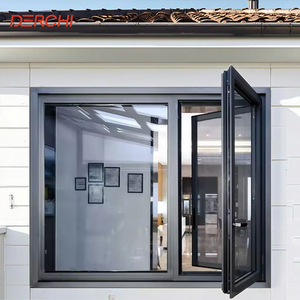
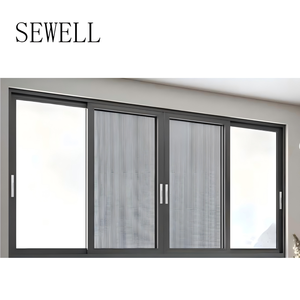
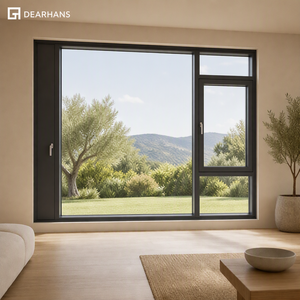
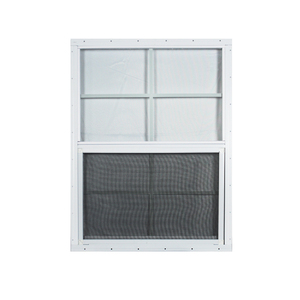
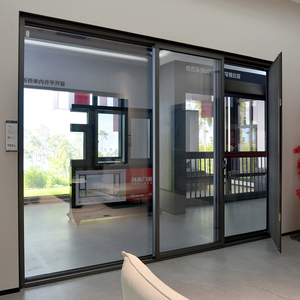
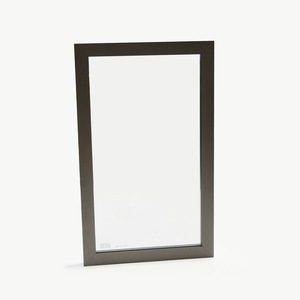
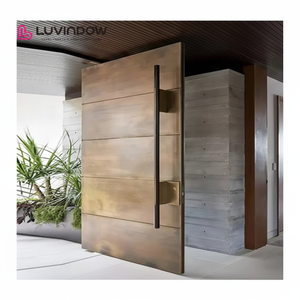
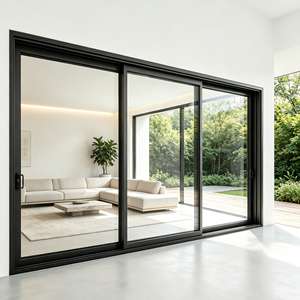
Enterprise Advantage: Direct-from-Factory Excellence in Foshan, China
Selecting a top-tier manufacturer among modern aluminum double pane windows factories requires examining structural integrity, thermal barrier engineering, precision extrusion capabilities, and compliance with stringent international building codes. Headquartered in Nanhai District, Foshan City—China's primary hub for architectural aluminum profiles and window fabrication—BrioWindow Technology Co., Ltd. stands as a premier direct-factory enterprise specializing in premium residential and commercial fenestration systems.
Over more than a decade of specialized production, BrioWindow has refined an end-to-end manufacturing and quality control ecosystem tailored specifically for international B2B buyers, architectural specifiers, general contractors, and bulk importers. Our core export destinations encompass the United States, Canada, Australia, and over 60 countries worldwide. By operating at the intersection of raw material extrusion, automated insulated glass unit (IGU) assembly, and precise CNC machining, we ensure every window unit achieves superior U-factor performance, structural wind pressure load resistance, and sound transmission reduction (STC).
Certified Compliance
Fully compliant with AS2047 (Australia), NFRC / AAMA (USA), and CE standards. Tested rigorously against air infiltration, water penetration resistance, and ultimate structural strength.
Full Portfolio Sourcing
A single, accountable manufacturer supplying thermally broken casement windows, sliding windows, bi-fold doors, central axis pivot doors, smart motorized windows, and curtain walls.
30-Year Quality Support
Backed by decades of field-tested hardware, PPG Fluorocarbon (PVDF) surface treatments, Technoform Polyamide thermal strips, and robust after-sales technical support.
Future Procurement & Technology Trends in Double Pane Aluminum Windows (2025–2030)
The architectural fenestration sector is undergoing a monumental paradigm shift driven by stringent municipal energy conservation mandates, Net-Zero Building initiatives, and shifting climatic volatility. When evaluating an aluminum double pane windows factory, overseas procurement officers and project managers must consider technological trajectory beyond simple unit cost.
1. Advanced Polyamide Thermal Break Engineering (PA66 GF25)
Standard non-thermal aluminum frames exhibit high thermal conductivity ($k \approx 160 \text{ W/m}\cdot\text{K}$), leading to thermal bridging, interior condensation, and excessive HVAC energy loads. Modern high-efficiency factories utilize multi-cavity thermal break profiles insulated with 24mm to 34mm Polyamide 66 reinforced with 25% glass fiber (PA66 GF25). This structural insulation reduces thermal bridge conductivity to below $0.3 \text{ W/m}\cdot\text{K}$, enabling total window frame U-factors to reach as low as $1.2 \text{ W/m}^2\cdot\text{K}$ ($0.21 \text{ BTU/h}\cdot\text{ft}^2\cdot^\circ\text{F}$).
2. Triple-Sealing EPDM & Silicone Co-Extrusion Technology
Air leakage accounts for up to 40% of residential thermal loss. The trend in premium casement and tilt-and-turn windows incorporates continuous, three-stage automotive-grade EPDM gaskets combined with corner vulcanization. This design guarantees an air infiltration rate of less than $0.1 \text{ CFM/ft}^2$, fulfilling passive house air tightness requirements and providing superior acoustic attenuation (STC 38–44 dB).
3. High-Performance Insulated Glass Units (IGUs) & Soft-Coat Low-E Spectrally Selective Glazing
Double pane windows produced by leading China factories no longer rely on simple float glass. Modern double-glazed units feature double-layer silver soft-coat Low-E (such as Solarban 60/70 equivalents) applied via magnetron sputtering vacuum deposition. Combined with 90%+ pure Argon gas filling and warm-edge composite spacers (e.g., Technoform or Swisspacer), solar heat gain coefficients (SHGC) can be tuned between 0.22 and 0.45 depending on whether the building is located in a cooling-dominated (US Sunbelt, Northern Australia) or heating-dominated zone (Canada, Northern US).
Fenestration Engineering Performance Comparison Matrix
The table below provides an authoritative comparison of structural, thermal, and acoustic metrics across standard and advanced double-glazed aluminum systems manufactured by BrioWindow:
| Performance Metric | Standard Non-Thermal Double Pane | Architectural Thermal Break (PA66 24mm) | Hurricane Impact Thermal Break (PA66 34mm) |
|---|---|---|---|
| Overall U-Factor (W/m²K) | 2.8 - 3.4 | 1.4 - 1.8 | 1.1 - 1.4 |
| SHGC (Solar Heat Gain Coeff.) | 0.45 - 0.60 | 0.24 - 0.35 | 0.20 - 0.30 |
| Sound Transmission Class (STC) | 28 - 32 dB | 36 - 42 dB | 42 - 48 dB (with Laminated IGU) |
| Structural Wind Load (Pa) | 1500 - 2500 Pa | 3500 - 4500 Pa | > 5000 Pa (AS2047 / ASTM E1300) |
| Air Infiltration Rate | 0.30 CFM/ft² | 0.08 CFM/ft² | 0.03 CFM/ft² |
| Ideal Project Application | Low-cost inland residential | Luxury Villas, Commercial Office | Coastal, High-Rise, Hurricane Zones |
4. Smart Home Motorization & IoT Integration Trends
Procurement data indicates a sharp increase in demand for motorized casement and sliding systems. High-end real estate developments increasingly mandate concealed chain-actuator motors integrated with building management systems (BMS), automated rain-sensing shutoff mechanisms, voice control compatibility, and central axis pivot entry doors operating with biometric smart locks.
How to Audit an Aluminum Double Pane Windows Factory: Quality Verification Guide
For global buyers, conducting due diligence on a foreign window factory involves scrutinizing raw material sourcing, extrusion standards, glass processing certifications, and pre-shipment testing. Below is the operational framework utilized by BrioWindow to ensure zero-defect delivery across international oceans:
1. Primary Aluminum Alloy Ingot Verification
Insist on virgin 6063-T6 or 6060-T6 architectural grade aluminum extrusions with wall thicknesses meeting or exceeding 1.4mm for windows and 2.0mm for heavy-duty sliding doors. Avoid factories utilizing scrap or recycled aluminum alloys that compromise structural yield strength under wind loads.
2. Glass Tempering & IGU Sealant Integrity
Ensure glass panels feature SGCC (USA), AS/NZS 2208 (Australia), or EN 12150 (Europe) certification stamps. Double pane units must utilize dual-seal construction: primary butyl sealant to minimize moisture vapor transmission, and secondary structural silicone or polysulfide sealant to resist UV degradation and mechanical stress.
3. Surface Treatment & Corrosion Resistance
For coastal and humid deployments, specify powder coating conforming to AAMA 2604 or AAMA 2605 standards, or anodized finishes ($\ge 25 \mu m$). This prevents salt-spray oxidation, chalking, and color fading over extended sunlight exposure.
4. Export Packaging & Container Loading Standards
Window frames and IGUs are vulnerable during ocean transit. BrioWindow enforces a 5-layer protective wrapping protocol: protective film on metal profiles, corner corner protectors, bubble wrapping, fully enclosed fumigated plywood crates, and steel-strapped palletization.
Frequently Asked Questions by Overseas Window Importers & Buyers
In-depth technical and commercial answers addressing common engineering, logistics, and customization queries.
What specific window and door types does BrioWindow manufacture in Foshan?
How do double pane aluminum windows compare to vinyl (uPVC) windows in terms of performance and lifespan?
Can BrioWindow manufacture double pane windows tailored to specific architectural shop drawings and regional energy codes?
What glass configurations are available for double pane energy-saving windows?
What documentation and technical information should buyers submit for a fast project quotation?
What after-sales warranty and engineering support does your factory provide overseas?
Ready to Partner with a Leading Aluminum Double Pane Windows Factory?
Download our complete architectural product catalog, engineering technical manuals, physical project case studies, and request a factory-direct price quotation today.
Get Catalog