Export-Grade Architectural French Window Series
Engineered in Foshan with premium 6063-T5 aluminum extrusions, thermal break insulation, and advanced multi-lock security systems compliant with NFRC, AS2047, and CE fenestration metrics.
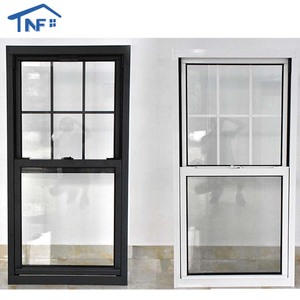
Foshan America Aluminum Tempered Glass Waterproof French Black Windows & Doors Custom Design Single/Double Hung
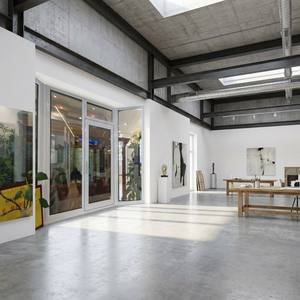
HUACAI French Style Aluminum Casement Window with Grill Design Soundproof Double Glass Swing Window
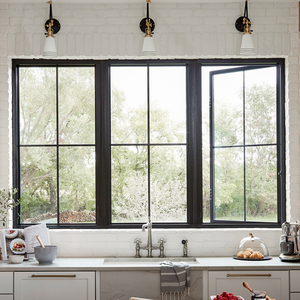
NFRC Standards High Energy Efficiency Double Glazing Aluminum Casement Windows Double Casement with Grill
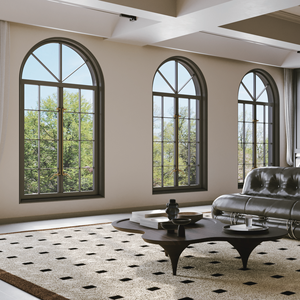
High Strength 6063-T5 Aluminum Alloy Double Glazed Insulated Glass Outward Opening Retro Arch Casement French Windows
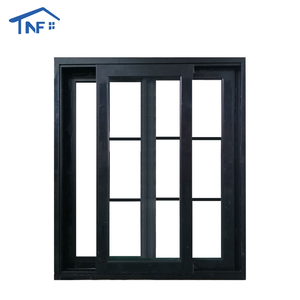
Custom NFRC AS2047 Thermal Break Aluminum Waterproof Double Tempered Low-E Glass French Sliding Windows
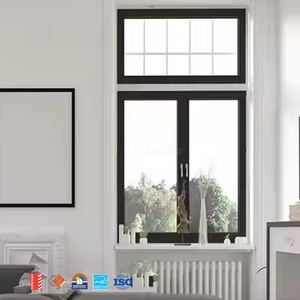
AMJ Soundproof New Design Hot Sale Aluminum Window Professional Triple/Double Glazed French Window Casement
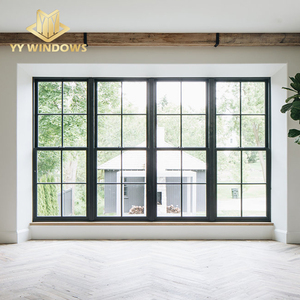
NFRC Standard Luxury Double Tempered Glazing Aluminum French Casement Windows for Grill Design
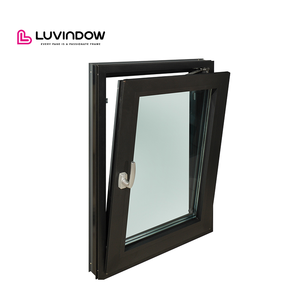
NFRC Certification Thermal Break Aluminum Windows Sound Insulation Double Glazed French Casement Windows
Why Source Aluminum French Windows from Foshan, China?
The strategic industrial cluster of Nanhai, Foshan represents over 70% of global premium architectural aluminum extrusions. BrioWindow Technology Co., Ltd. leverages this ecosystem to deliver precision engineering, structural durability, and wholesale commercial value.
6063-T5 Architectural Billet Alloy
Our French window systems strictly utilize high-purity virgin 6063-T5 aluminum extrusions with profile wall thicknesses ranging from 1.4mm to 2.0mm. This profile density ensures superior tensile strength (≥ 160 MPa) and yield strength (≥ 110 MPa), allowing structural stability under massive wind pressures in coastal or high-rise applications.
Polyamide Thermal Break Technology
To eliminate metallic heat conduction, our advanced thermal break French windows incorporate imported PA66 GF25 (25% fiberglass reinforced polyamide) insulation strips. This thermal barrier drops overall U-factors down to 1.2–1.8 W/m²K, drastically reducing interior HVAC energy consumption in harsh North American and European winters.
Acoustic & Weatherproof Engineering
Dual-casement French configurations feature continuous EPDM (Ethylene Propylene Diene Monomer) automotive-grade sealing gaskets combined with multi-point locking gear. When paired with gas-filled double or triple tempered Low-E glass, our windows deliver sound attenuation ratings up to STC 45 dB and absolute water tightness.
Engineering & Performance Specification Matrix
A quick reference guide for architectural specifiers and sourcing procurement managers comparing systems against international codes.
| Parameter / Specification | Standard Thermal Break Series | Heavy-Duty Coastal / Hurricane Series | Retro Arch Architectural Series |
|---|---|---|---|
| Profile Material | 6063-T5 Extruded Aluminum (1.4mm - 1.8mm) | 6063-T6 High-Tensile Aluminum (2.0mm - 3.0mm) | 6063-T5 Custom Molded Arch Profile (1.6mm) |
| Thermal Insulation Strip | PA66 GF25 Strip (14.8mm - 24mm width) | Multi-Cavity PA66 GF25 + Polyurethane Foam Infill | Integrated PA66 GF25 Thermal Barrier |
| Glazing Configuration | 5mm+12Ar+5mm Double Tempered Low-E | 6mm+1.52PVB+6mm Laminated + 12Ar + 6mm Low-E | 5mm+9Ar+5mm Curved Double Tempered Low-E |
| Thermal Transmittance (U-Factor) | 1.4 - 1.8 W/m²K (0.25 - 0.31 BTU/h·ft²·°F) | 1.0 - 1.3 W/m²K (0.18 - 0.23 BTU/h·ft²·°F) | 1.5 - 1.9 W/m²K |
| Acoustic Insulation (STC) | 38 dB - 42 dB | 42 dB - 48 dB (High Traffic / Airport Grade) | 35 dB - 40 dB |
| Design Wind Load (Pascal) | 3000 Pa (Serviceability) | up to 5500 Pa (ASTM E1300 / TAS 202 Compliant) | 2500 Pa |
| Surface Finish Options | AkzoNobel Powder Coating / Anodized | PVDF Fluorocarbon Spraying (10-Year Anti-Fading) | Architectural Wood Grain Thermal Transfer / PVDF |
| Hardware & Locking System | CMECH / Siegenia Concealed Hinge Multi-Point | HOPE / Sobinco Heavy-Duty Stainless Friction Stay | Vintage Style Cast Brass or Concealed Multi-Point |
Future Procurement Trends for Aluminum French Windows
Insights from global fenestration trade data and building code evolution affecting international importers, architectural firms, and residential builders.
1. Demand Shift Toward Ultra-Slim Sightlines & Minimalist Muntin Bars
Traditional French windows utilized heavy timber or thick steel profiles. Contemporary architectural trends lean heavily toward ultra-narrow aluminum sightlines with structural internal glazing tape and true divider grids (SDL/TDL). Procurement channels report a 40% surge in demand for slim French casements that combine modern minimalist aesthetics with classic divided-light charm.
2. Mandatory High Energy Compliance (NFRC & Passive House)
Governments across North America (ENERGY STAR® v7.0), Australia (NCC Section J), and Europe are enforcing stricter building envelope energy ratings. Importers must prioritize Chinese manufacturers capable of providing third-party NFRC and AS2047 testing documents proving Solar Heat Gain Coefficient (SHGC) ≤ 0.23 and Air Infiltration ≤ 0.1 L/s·m².
3. Hybrid Retro-Arch & Custom Geometry Fabrication
Historical renovation projects in North America and Western Europe require replacing legacy timber windows with zero-maintenance aluminum arch French casements. Manufacturing facilities capable of bending complex thermal break extrusions while preserving structural corner integrity represent the fastest-growing sector in B2B fenestration exports.
4. Integration of Smart Home Automation & Concealed Motorization
Commercial luxury developments are rapidly integrating motorized opening systems. Next-generation aluminum French windows now incorporate hidden electric chain actuators wired directly into smart home automation networks (Zigbee/KNX), allowing automated climate response and biometric lock integration without altering external profiles.
BrioWindow Advanced Manufacturing & Quality Engineering
Headquartered in Lishui Town, Nanhai District, Foshan, BrioWindow Technology Co., Ltd. operates state-of-the-art aluminum extrusion lines, CNC precision cutting centers, and automated insulating glass lines. Every unit undergoes rigorous factory acceptance testing before export to over 60 countries.
Technological Innovations in Modern French Windows
How advanced metallurgy, surface chemistry, and automated glass fabrication are redefining structural integrity and longevity for export markets.
Corner Joint Injection Technology
Eliminating frame corner leakage is paramount for high-rise B2B fenestration orders. Modern Chinese exporters utilize cast aluminum corner keys with pneumatic resin injection grooves. The injected two-component polyurethane adhesive bonds corner aluminum profiles and thermal break strips into a single rigid unit, preventing micro-gaps caused by thermal expansion.
PVDF & Fluorocarbon Surface Treatments
For coastal villas exposed to high salt spray and UV radiation, standard powder coating can oxidize over time. Modern manufacturing incorporates 2-coat or 3-coat Kynar 500 / PVDF fluorocarbon coatings. This chemical formulation guarantees color retention and corrosion resistance for over 20 years under ASTM B117 salt spray testing conditions.
Warm Edge Spacer & Argon IGU Assembly
Traditional aluminum glass spacers act as thermal bridges along the edge of glass panes. High-efficiency French windows employ composite warm-edge spacers (Technoform/Swisspacer) combined with automated primary butyl seal and secondary silicone structural sealant. Filling cavity spaces with 90%+ pure Argon gas drops edge condensation risks to near zero.
B2B Buyer Sourcing FAQ (Frequently Asked Questions)
Answers to common structural, logistics, and compliance inquiries raised by developers, architectural specifiers, and procurement managers sourcing French windows from China.
Q1: How do Chinese aluminum French windows comply with North American NFRC and Australian AS2047 codes?
Reputable Foshan manufacturers engineer profiles specifically for export markets. For North America, window units undergo thermal modeling (THERM/WINDOW software) and physical testing at NFRC-accredited laboratories to verify U-factor, SHGC, and Visible Transmittance. For Australia, window assemblies are tested under AS2047 for structural deflection (AS4055), air infiltration (AS2047.2), and water penetration resistance (up to 450Pa).
Q2: What is the standard production lead time and ocean packaging protocol for custom architectural orders?
Standard production lead time ranges from 25 to 35 calendar days following CAD shop drawing approval. For international sea freight, windows are individually wrapped in protective PE film, fitted with corner guards, and enclosed in fully custom heat-treated fumigated plywood crates (ISPM 15 compliant) with internal desiccant bags to prevent moisture damage during transpacific transit.
Q3: Why select thermal break aluminum over solid uPVC or natural timber for commercial projects?
Aluminum offers vastly superior structural strength-to-weight ratios compared to uPVC, preventing frame sagging on large double-casement French openings (e.g., 2.4m height+). Unlike natural timber, aluminum does not warp, rot, swell, or require periodic painting under ambient weather fluctuations, while thermal break strips resolve aluminum's historic thermal conductivity drawback.
Q4: Can custom glazing configurations (hurricane impact, privacy, low-E coatings) be integrated into French casements?
Yes. Glass pockets on 6063-T5 profile extrusions accommodate overall Insulating Glass Unit (IGU) thicknesses from 24mm to 42mm. Options include laminated hurricane-rated SGP/PVB interlayers, triple-pane Low-E coated units, electrochromic smart glass, decorative muntin bars (Grills-Between-Glass GBG or Simulated Divided Lites SDL), and tinted acoustic glass.
Q5: How does BrioWindow handle job site dimensional accuracy and CAD engineering support for foreign developments?
Before raw extrusion cutting, our dedicated engineering division produces detailed 2D elevation/section shop drawings and 3D BIM models based on architectural project plans. We verify rough opening dimensions, perimeter flashing details, wind load calculations, and structural anchoring methods, requiring client sign-off before manufacturing commences.
Q6: What warranties and after-sales support mechanisms are extended to overseas importers?
BrioWindow offers a comprehensive 30-year structural warranty on extruded aluminum profiles, a 10-year warranty on insulating glass seals against fogging/desiccant breakdown, and a 5 to 10-year warranty on multi-point hardware systems (Siegenia, CMECH, Kinlong). Replacement hardware components and technical installation guidance are dispatched via air freight whenever required.
Partner with China's Premier French Window Manufacturer
Whether you require factory-direct pricing for a multi-unit commercial project, structural CAD drawings for an architectural bid, or sample kits for regional distribution, our Foshan engineering team is standing by.
