Featured Architectural Accordion Door Systems
Direct Factory-Grade Aluminum Folding Doors Engineered for Extreme Wind-Loads, High Thermal Efficiency, and Seamless Indoor-Outdoor Transitions.
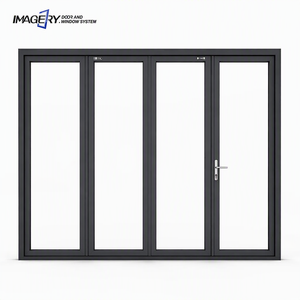
Modern Aluminum Alloy Tempered Glass Waterproof Sliding Bifold Accordion Folding Door
Contact Us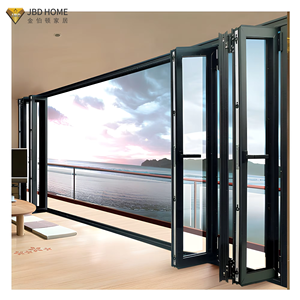
NFRC AS2047 Bi-fold Doors Seaside Hotel Hurricane Proof Outdoor Folding Doors
Contact Us
Impact Resistant Low Maintenance Modern Style Thermal Break Aluminum Glass Accordion Doors
Contact Us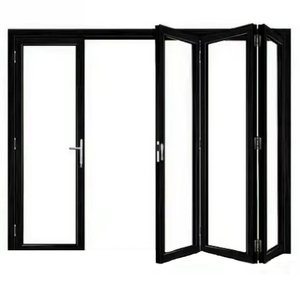
Folding Style Aluminum Interior Acrylic Folding Door Customize Size Color Accordion Door
Contact Us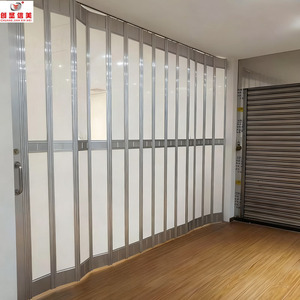
High Quality Sliding Bifolding Garage Door Windproof Safety Partition Accordion Polycarbonate Outdoor
Contact Us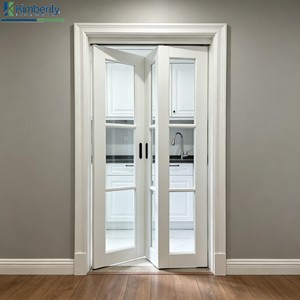
Large Opening Design Bi Fold Door Slim Narrow Frame Aluminium Accordion Folding Glass Door
Contact Us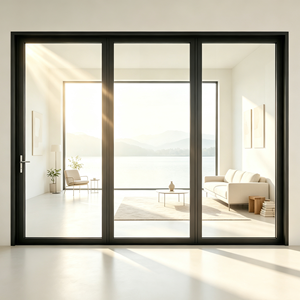
American Certification NFRC Weather Resistance Powder Coating Aluminum Glass Accordion Doors
Contact Us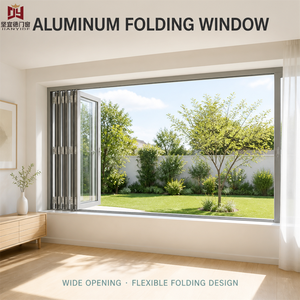
Aluminum Horizontal Folding Glass Window For Indoor Patio Residential Custom Double Glazed
Contact Us1. Strategic B2B Sourcing Overview: The Shift to Chinese Architectural Fenestration
Over the past decade, the global architectural fenestration sector has undergone a profound transformation. Commercial real estate developers, custom luxury home builders, and building product distributors across North America, Australia, and Europe are increasingly turning to top-tier Chinese manufacturers for high-end aluminum accordion doors (also known as bi-fold or concertina doors). Foshan, located in Guangdong Province, stands as the epicenter of this industrial evolution, leveraging an unmatched ecosystem of aluminum profile extrusion, thermal break innovation, hardware engineering, and advanced glass fabrication.
Modern architectural design prioritizes expansive glass areas, ultra-narrow sightlines, and indoor-outdoor living integration without sacrificing structural integrity, hurricane resistance, or strict energy conservation metrics. Sourcing high-performance aluminum accordion doors directly from qualified Chinese OEMs allows international buyers to achieve significant cost efficiencies—typically 30% to 50% lower than European or North American counterparts—while retaining full compliance with stringent international standards such as NFRC (National Fenestration Rating Council), AS2047 (Australian Standard for Windows and Doors), and European CE mark requirements.
2. Structural Engineering & Technical Comparison Matrix
Selecting the optimal framing and glazing configuration for large-scale exterior openings requires evaluating structural resilience, thermal performance, and mechanical lifespan. Below is a comprehensive engineering comparison detailing aluminum accordion door specs against legacy vinyl and timber alternatives.
| Performance Metric | Thermal Break Aluminum Accordion | Standard Non-Thermal Aluminum | uPVC / Vinyl Folding Systems | Solid Timber Bi-Fold Systems |
|---|---|---|---|---|
| U-Factor Range (W/m²K) | 1.2 - 1.8 (High Efficiency) | 2.8 - 3.5 (Poor Efficiency) | 1.4 - 2.0 (Moderate) | 1.5 - 2.1 (Moderate) |
| Frame Tensile Strength | 230 MPa (Structural 6063-T6) | 160 MPa (Standard 6063-T5) | 40 - 60 MPa (Low) | Dependent on wood density |
| Maximum Leaf Height | Up to 4,000 mm (13.1 ft) | Up to 2,800 mm (9.1 ft) | Up to 2,400 mm (7.8 ft) | Up to 3,000 mm (9.8 ft) |
| Acoustic Insulation (STC) | STC 38 - 45 dB (Double/Triple Glazed) | STC 25 - 30 dB | STC 30 - 34 dB | STC 32 - 36 dB |
| Coastal Corrosion Resistance | Excellent (Fluorocarbon PVDF / Anodized) | Moderate (Standard Powder) | High (Non-metallic) | Low (Requires constant re-sealing) |
| Maintenance & Lifespan | 30+ Years / Minimal Maintenance | 20 Years / Low Maintenance | 10-15 Years (Risk of yellowing/warping) | Requires annual staining/painting |
Core Engineering Principles of Top Chinese Manufacturers
How Advanced Material Science and Precise Mechanical Hardware Ensure Decades of Flawless Operation
Polyamide Thermal Isolation
Utilizing high-density PA66-GF25 reinforced nylon thermal barriers to eliminate thermal bridges, prevent interior condensation, and drastically reduce heat transfer coefficients.
Heavy-Duty Bogie Rollers
Engineered bottom-loaded stainless steel 316 roller carriages rated for up to 300 kg (660 lbs) per sash leaf, ensuring whisper-quiet, one-finger smooth glide motion.
NFRC & AS2047 Certification
Rigorously lab-tested under AAMA/WDMA/CSA 101/I.S.2/A440 standards and Australian AS2047 compliance for wind pressure, water tightness, and structural air infiltration.
3. Emerging Procurement Trends & Technology Roadmap (2025–2030)
As global architectural preferences evolve toward micro-minimalist aesthetics and net-zero carbon buildings, top manufacturers in Foshan are redefining the benchmark for aluminum accordion door manufacturing. B2B procurement managers and project specifiers must align their sourcing strategies with three primary technical vectors:
A. Minimalist Sightlines & Ultra-Slim Interlocks
Traditional accordion doors suffered from thick vertical frame overlaps (often exceeding 120mm per panel junction). Next-generation structural designs utilize concealed hinge mechanisms, structural silicone bonding, and narrow mullion sightlines down to 28mm. This design maximizing daylight transmission while utilizing high-modulus 6063-T6 aluminum alloys to preserve structural wind-load ratings.
B. Smart Home & Motorized Architectural Integration
Large-scale architectural accordion doors spanning distances of 10 to 15 meters are increasingly integrated with motorized drive systems. Advanced sensors automatically retract or seal doors in response to rain, high winds, or solar exposure, syncing seamlessly with building management systems (BMS) and smart residential hubs via Zigbee, Z-Wave, or KNX protocols.
C. Sustainable Recycled Aluminum & EPD Transparency
Environmental Product Declarations (EPD) are becoming mandatory in Western commercial bids. Exporters in Foshan are adopting primary low-carbon aluminum smelted with renewable hydro-power, combined with closed-loop factory recycling, reducing embodied carbon footprints by up to 60% compared to legacy smelting processes.
4. Manufacturer Profile: Why Partner with BrioWindow Technology Co., Ltd.
Headquartered in Lishui Town, Nanhai District, Foshan City—the heart of China's primary aluminum industry—BrioWindow Technology Co., Ltd. has established itself as an authoritative manufacturer and global exporter of high-tier fenestration systems. With over a decade of specialized export experience serving buyers across the United States, Canada, Australia, and over 60 countries, BrioWindow bridges the gap between complex engineering specifications and scalable factory production.
Rigorous Export Quality Control & Engineering Support
BrioWindow operates under a comprehensive quality management system where every export order undergoes rigorous step-by-step verification:
- Structural CAD & BIM Modeling: Free shop-drawing engineering review based on client architectural plans prior to profile cutting.
- Raw Material Traceability: 100% inspection of billet alloy composition, anodizing layer thickness, and powder coating adhesion (AkzoNobel / PPG finishes).
- Mock-up Assembly & Water-Tightness Testing: Complete pre-shipment factory assembly to test smooth hinge alignment, track drainage, and multi-point locking engagement.
- Protective Export Packaging: Fumigated plywood crates with shock-absorbing foam lining, corner protectors, and shrink-wrapped moisture barriers to ensure zero damage during transoceanic transit.
- 30-Year Warranty & Technical After-Sales: Dedicated ongoing support, spare parts fulfillment, and installation documentation for global developers and distributors.
5. Comprehensive B2B Sourcing FAQ for International Buyers
Essential guidance for architectural specifiers, contractors, importers, and procurement directors evaluating Chinese aluminum accordion door manufacturers.
Leading manufacturers like BrioWindow submit complete door assemblies to certified third-party testing laboratories (such as Intertek or TÜV Rheinland) to conduct structural wind pressure (ASTM E330), water penetration (ASTM E331), air infiltration (ASTM E283), and thermal performance testing. System profiles are custom-extruded with thermal break cavities designed specifically to hold double or triple-glazed Low-E argon-filled units that achieve required Solar Heat Gain Coefficients (SHGC) and U-factors dictated by local climate zones.
For high-weather exposure, top exporters supply raised high-performance weather thresholds featuring integrated inner weep holes, check valves, and double-sloped drainage channels. Where seamless zero-step indoor-outdoor transitions are required, flush recessed floor tracks with sub-surface drainage systems are specified. For coastal regions, hardware must be upgraded to Marine Grade Stainless Steel 316 and profiles treated with a 25-micron anodized layer or PVDF fluorocarbon paint to prevent salt-spray oxidation.
Utilizing high-tensile 6063-T6 aluminum alloys, individual sash panels can reach heights of up to 4.0 meters (13.1 ft) and widths of 1.2 meters (3.9 ft) per leaf. Overall opening widths can span upwards of 15 meters using multi-panel configurations (e.g., 3+3, 5+1, 7+0, or 8+8 panel stacking arrangements). Top-hung or bottom-loaded structural support must be evaluated based on the building header load capacity.
The procurement workflow begins with the client submitting structural opening schedules or DWG CAD drawings. BrioWindow’s engineering team generates detailed 2D/3D fabrication shop drawings specifying profile cross-sections, glass makeups, lock height placement, hardware brands (e.g., Siegenia, Hoppe, Cotech, or custom Brio hardware), and installation flanges (nailing fins for North America vs. sub-head/sub-sill channels for Australia). Production commences only upon formal CAD sign-off.
To achieve high acoustic isolation (STC > 40 dB) and thermal efficiency (U-factor < 0.25 BTU/h·ft²·°F), systems are fitted with double or triple insulated glass units (IGUs) incorporating laminated glass panes (e.g., 6mm Low-E + 12Ar + 6mm Clear + 1.52PVB + 6mm Clear). Warm-edge composite spacers (such as Technoform or Swisspacer) are utilized alongside krypton or argon gas fills to minimize thermal conduction along edge seals.
Aluminum accordion doors contain high glass ratio panels requiring rigorous protective packing. Units are completely factory-assembled or modularly knocked-down (KD) depending on container dimensions. Panels are wrapped in protective PE film, edged with thick corner guards, enclosed in custom-built fumigated plywood crates, and secured with steel strapping. Shipments are fully insured under CIF/DDP terms with full ocean freight documentation supplied.
BrioWindow provides a 30-year warranty on aluminum structural profile integrity, a 10-year non-fading guarantee on surface finishes (PVDF/powder coating), a 10-year warranty on insulated glass unit seal integrity against fogging, and a 5-year warranty on mechanical roller and locking hardware. Replacement components and technical guidance are dispatched immediately via air freight in case of site contingencies.
