Precision-Engineered Architectural Systems
Explore BrioWindow's high-performance aluminium doors, hurricane-rated sliding windows, and storefront structural profiles.
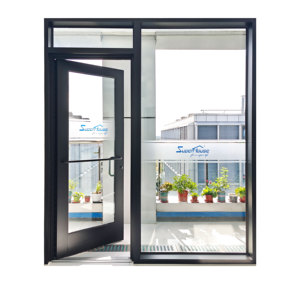
Commercial Storefront Hurricane Swing Door NFRC FPA Certified High Wind Pressure Impact Resistant Aluminum Glass Exterior Door
Inquire Now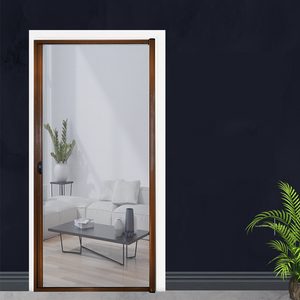
Fliegengitter Aluminium Alloy Custom Retractable Mosquito Net Bug Insect Sliding Screen Door Net Roller Fly Screen Door
Inquire Now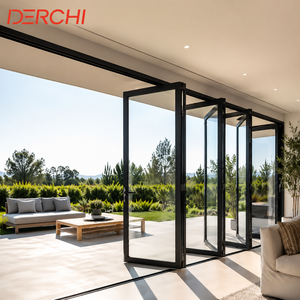
Aluminum Patio Folding Doors Modern Bi-Fold Glass Door System For Outdoor Living
Inquire Now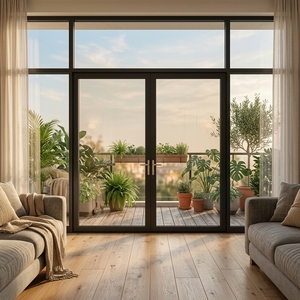
Customized Bulk Insulated Front Entry Doors French Doors Factory Direct Entry Aluminum Casement Doors
Inquire Now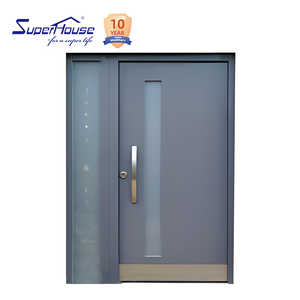
Luxury Aluminum Hurricane Impact Front Entry Door NOA FPA AAMA NFRC Certified High Wind Resistant Villa Exterior Hinged Door
Inquire Now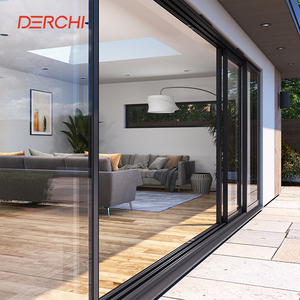
Luxury Heavy Duty Slim Frame Panoramic Large Glass Panel Sliding Glass Aluminium Door For Villa House
Inquire Now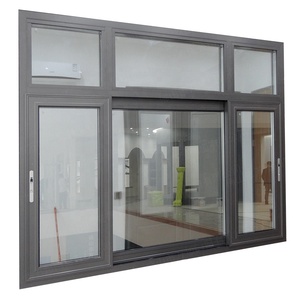
Hurricane Impact Aluminum Glass Customized Sliding Window Home Aluminum Windows Impact Soundproofing Double Glazed Windows
Inquire Now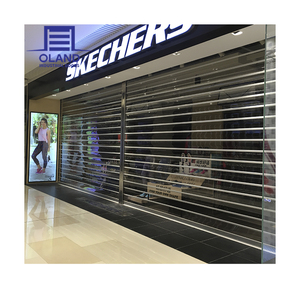
Commercial Aluminum Transparent Polycarbonate Rolling Shutter Door for Airport Shops & Storefronts UV Resistant, Impact-Proof
Inquire Now1. Executive Summary: Sourcing Top China Aluminium Sliding Window Suppliers
Navigating the Foshan fenestration hub, structural thermal dynamics, and compliance matrix for international architectural projects.
The global architectural sector has witnessed a structural paradigm shift toward ultra-durable, thermally efficient, and aesthetically minimalist building envelopes. As residential villas, high-rise commercial complexes, and modern retail storefronts demand larger clear glass spans and reduced visible sightlines, selecting a qualified Top China Aluminium Sliding Window Supplier becomes a paramount strategic decision for real estate developers, general contractors, and fenestration importers worldwide.
China's Pearl River Delta—specifically Nanhai District in Foshan City, Guangdong—stands as the undisputed global capital of aluminum profile extrusion, surface treatment, and window fenestration engineering. Sourcing from top-tier Foshan manufacturers such as BrioWindow Technology Co., Ltd. offers global buyers unprecedented access to vertically integrated production capabilities. However, bridging the gap between factory-direct manufacturing and strict overseas building codes (such as North American AAMA/NFRC standards, Florida Building Code NOA hurricane requirements, and Australian AS2047 fenestration standards) requires deep technical due diligence.
Information Gain Insight: Unlike standard commodity trading, premium architectural aluminium sliding windows are dynamic engineered systems. The performance of a sliding window relies not merely on the aluminum profile wall thickness, but on the synergistic integration of thermal barrier geometry (PA66-GF25), EPDM sealing strip density, multi-point lock hardware mechanical advantages, and IGU (Insulated Glass Unit) thermal coat integrity.
Technical Benchmark Matrix: Chinese Extrusion vs. Global Standards
To evaluate a top China supplier, technical procurement teams must audit the fundamental metallurgic properties and extrusion specifications utilized in production. Premium sliding window profile systems utilize high-grade 6063-T5 or 6061-T6 aluminum alloys. Standard architectural profiles require a minimum nominal wall thickness of 1.4mm to 2.0mm for windows, and 2.0mm to 3.0mm for heavy-duty panoramic sliding doors to withstand extreme lateral wind loads (Design Pressure up to ±80 PSF).
2. Engineering Excellence: Thermal Breaking & Structural Dynamics
Deconstructing profile alloy tempers, polyamide thermal strip design, and hurricane impact glazing systems.
When procuring from a premier aluminium sliding window supplier in China, engineering teams must evaluate three structural pillars: thermal break physics, acoustic dampening coefficients, and structural wind resistance.
Polyamide PA66-GF25 Strips
Utilizing 25% glass fiber reinforced polyamide insulation strips ensures mechanical strength while completely interrupting aluminum's conductive heat flow path.
Low-E Double/Triple IGUs
Hermetically sealed glass units filled with 90%+ Argon gas and coated with microscopic silver layers reflect infrared rays while permitting maximum visible light.
SGP & PVB Hurricane Glazing
Laminated safety glass engineered with DuPont SentryGlas (SGP) interlayers resists severe missile impact, preventing envelope breach during severe storm conditions.
Thermal Break Mechanics: Compression vs. Non-Thermal Profiles
Standard aluminum is a highly conductive thermal material ($k \approx 200 \text{ W/m}\cdot\text{K}$). Unbroken aluminum frames act as thermal bridges, transferring solar energy directly into air-conditioned interiors during summer and dissipating indoor heat during winter. Leading Chinese suppliers solve this through high-precision Technoform PA66-GF25 thermal barrier insertions. By isolating the exterior aluminum profile from the interior profile, system U-values are reduced dramatically from over $5.0 \text{ W/m}^2\text{K}$ down to under $1.4 \text{ W/m}^2\text{K}$ (Passive House suitable).
Drainage Mechanics & Hidden Water Channels
Traditional sliding windows frequently suffer from rainwater back-seepage under severe gale-force storms. Superior engineering solves this via multi-stage pressure-equalized drainage systems. BrioWindow incorporates concealed downward drainage ports with non-return silicone flap valves, allowing accumulated track water to discharge freely while preventing exterior wind pressure from forcing water back into the interior track structure.
3. Deep-Dive Product Recommendations & System Architectures
Matching specific sliding mechanism engineering to structural project requirements.
A comprehensive fenestration project rarely relies on a single window type. As a holistic manufacturer, BrioWindow Technology Co., Ltd. designs custom-engineered sliding, casement, folding, and motorized systems to fit varying elevation specs:
A. Ultra-Slim Frame Panoramic Sliding Windows & Doors
Designed for luxury coastal villas and modern high-rise penthouses, slim-frame sliding systems compress the visible center interlock vertical profile width down to just 20mm–25mm. By concealing frame perimeters inside surrounding wall reveals, architects achieve an astonishing 98% daylight glass ratio. Heavy-duty stainless steel bottom rollers with precision needle bearings support glass leaf weights up to 450kg, ensuring frictionless one-touch gliding performance.
B. Lift-and-Slide (Hebe-Schiebe) Thermal Sliding Systems
For large opening spans requiring extreme acoustic and weather sealing, Lift-and-Slide mechanisms represent the pinnacle of fenestration hardware engineering. Turning the operator handle 180 degrees lifts the entire door sash off its rubber weather seals, allowing heavy multi-pane glass panels to slide effortlessly. Returning the handle drops the sash firmly back onto perimeter EPDM gaskets, compressing double-lip seals to achieve zero air infiltration ($Q_1 \le 0.1 \text{ m}^3/\text{m}\cdot\text{h}$) and exceptional sound attenuation up to STC 42dB.
C. Hurricane Impact-Resistant Coastal Sliding Windows
Engineered specifically for hurricane-prone regions such as Florida, the Caribbean, and coastal Australia, impact-rated sliding windows feature reinforced heavy-gauge structural ribs, multi-point stainless steel locking hooks, and laminated glass configurations (e.g., 6mm tempered + 1.52mm PVB/SGP + 6mm tempered). These systems hold rigorous NFRC, AAMA, and FPA certifications, verifying their ability to withstand cyclic wind pressures exceeding 5000 Pa and high-velocity debris impacts.
4. Future Procurement Trends in Aluminium Sliding Window Manufacturing
Forecasting smart home integration, ultra-low carbon footprint extrusions, and minimal architectural design.
As global building regulations tighten around carbon neutrality and structural envelope resilience, international procurement directors must align with suppliers capable of delivering forward-compatible fenestration solutions. B2B procurement trends over the next decade will focus heavily on four transformative technology vectors:
1. Smart Motorization & IoT Integration
Future sliding window systems are evolving into active smart building components. Concealed linear magnetic drive motors, integrated rain sensors, and home automation API connectivity allow remote automated ventilation and touchless operation.
2. Green Aluminum & Recycled Content
Decarbonization mandates require suppliers to utilize low-carbon recycled aluminum billets powered by hydro-electric smelting processes, dramatically reducing embodied carbon (EPD documented).
3. Embedded Fly Screens & Retractable Nets
Clean architectural aesthetics demand bug screens integrated seamlessly inside sliding tracks (Fliegengitter systems) or motorized retractable mesh screens that roll away when not in active use.
General contractors and architectural importers who establish long-term OEM/ODM partnerships with technology-driven manufacturers like BrioWindow gain immediate access to these fast-evolving innovations. This proactive alignment minimizes regulatory compliance risks and guarantees high project asset valuations upon handover.
5. Corporate Advantage: BrioWindow Technology Co., Ltd.
Why international developers and importers select BrioWindow as their core Chinese manufacturing partner.
Located in Lishui Town, Nanhai District, Foshan City, BrioWindow Technology Co., Ltd. represents the modern benchmark of high-precision Chinese fenestration manufacturing. Over more than a decade of focused international export operations, BrioWindow has built a robust export network spanning over 60 countries, with core market concentration across the United States, Canada, Australia, and Western Europe.
Why Partner with BrioWindow?
- Complete Multi-Material Capabilities: Beyond premium aluminium sliding windows and doors, BrioWindow manufactures aluminum casement windows, bi-fold doors, central axis pivot doors, smart motorized windows, PVC systems, wooden entrance doors, sunrooms, and unitized curtain walls.
- Rigorous International Testing Compliance: Our factory product series undergo thorough laboratory structural testing, holding key international credentials including NFRC thermal performance ratings, Florida FPA / NOA hurricane certifications, AAMA structural compliance, and ISO 9001 quality management verification.
- Comprehensive Engineering CAD/BIM Support: Our dedicated project engineering division translates complex architectural blueprints into precise 2D shop drawings and 3D structural BIM models prior to raw material extrusion, eliminating costly site re-work.
- 30-Year Quality Assurance Guarantee: Reflecting unyielding confidence in our fluorocarbon (PVDF) powder coatings, continuous stainless steel hardware, and structural glass glazing, BrioWindow backs all overseas shipments with a comprehensive 30-year after-sales quality assurance commitment.
6. Frequently Asked Procurement Questions (FAQ)
Clear, direct technical answers for importers, architects, and procurement officers.
What complete product categories does BrioWindow manufacture in Foshan? +
Which global markets and building codes does BrioWindow support? +
Can BrioWindow manufacture custom sizes from project CAD drawings? +
What technical information should I prepare before requesting a quote? +
What warranty and after-sales support does BrioWindow provide overseas? +
Ready to Spec Your Next Project with Foshan's Premier Window Supplier?
Speak directly with our export engineering team to receive custom CAD shop drawings, technical performance certifications, and direct factory pricing.
