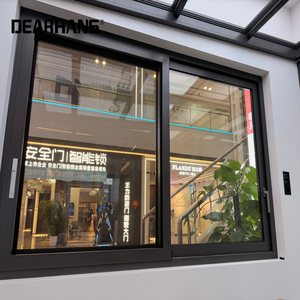
Export-Grade Catalog
Featured Architectural Aluminum Window & Door Systems
Direct factory recommendations manufactured in Foshan, China. Tested to North American (AAMA/NFRC), Australian (AS2047), and European (CE EN14351-1) building standard codes.
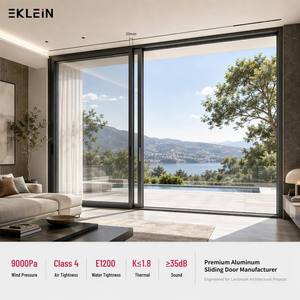
Minimalist Black Frame Aluminum Sliding Door Narrow Profile Divider
Get Catalog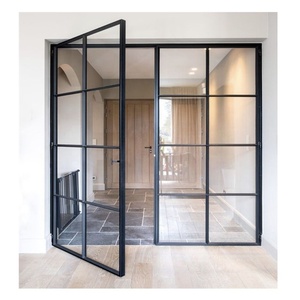
Black Crittall Style Internal/interior/ Indoor Slimline Lounge Aluminum Doors
Get Catalog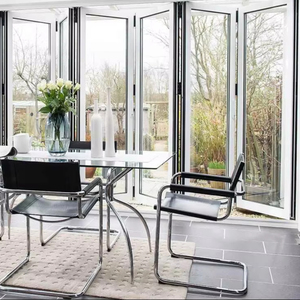
Wide Opening Aluminum Bi Folding Door Double Insulated Glazed High Security
Get Catalog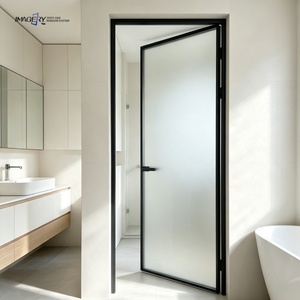
Factory Direct Extremely Narrow Frame Aluminum Alloy Casement Door
Get Catalog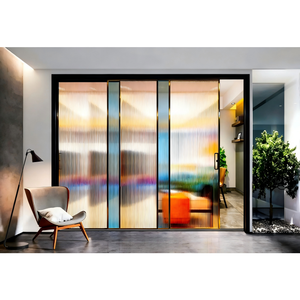
AS2047 Modern Double Glazed Stacker Sliding Aluminum Alloy Doors Windows
Get Catalog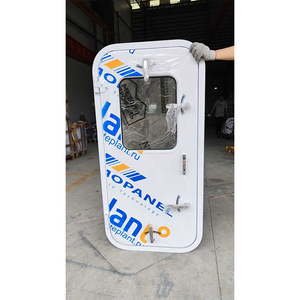
Marine Aluminum Watertight Door Multi Handwheel Locking Solid Ship Bulkhead Door
Get Catalog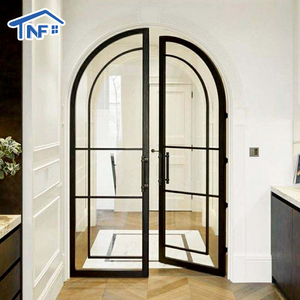
Custom Slim Aluminum Framed Swing Glass Crittall Style Arched Double Glazed Door
Get Catalog10+
Years Manufacturing Mastery
60+
Global Export Destinations
30-Year
After-Sales Quality Warranty
100%
Foshan Factory Direct Quality
Industry Whitepaper • Executive Analysis
Navigating China’s Architectural Fenestration Landscape
For commercial real estate developers, facade contractors, and international fenestration importers, identifying top-tier China aluminium sliding sash windows factories & exporters requires an in-depth understanding of structural engineering, metallurgical alloy grades, thermal break polymer science, and cross-border certification dynamics.
Foshan Fenestration Cluster
Located in Nanhai District, Foshan, Guangdong Province—the world's premier extrusion hub—manufacturers benefit from integrated aluminum supply chains, advanced anodizing facilities, and direct access to international deep-water export ports.
Rigorous Compliance
Leading exporters engineer window assemblies compliant with AS2047 (Australia), NFRC/AAMA (USA), and CE EN14351-1 (Europe). Structural wind pressures up to 4500 Pa (N6 high wind zone ratings) ensure structural integrity.
Advanced Thermal Breaks
Incorporating polyamide PA66-GF25 thermal barrier strips significantly lowers overall window U-factors down to 1.2–1.6 W/m²K, mitigating thermal bridging in severe cold and hot climates alike.
Technical Metallurgy & Design
Engineering Principles of High-Performance Aluminium Sliding Sash Windows
Sliding sash windows (both vertical hung and horizontal stacker configurations) demand exceptional structural rigidity to resist panel deflection while maintaining smooth operational kinematics over decades of use.
1. Extrusion Profile Metallurgy: 6063-T5 vs. 6063-T6 Alloys
Standard residential windows often utilize basic commercial aluminum extrusions, which suffer from long-term deflection under extreme wind loads. Modern Foshan export leaders utilize high-grade 6063-T5 or 6063-T6 architectural aluminum alloy extrusions with profile wall thicknesses ranging from 1.4mm to 2.2mm for windows, and up to 3.0mm for heavy-duty sliding stacker patio doors. T6 heat treatment enhances tensile strength to ≥205 MPa and yield strength to ≥180 MPa, ensuring structural stability across expansive glazing openings.
2. Vertical Sash Balance Mechanical Systems
For vertical sliding sash windows (Hung Windows), operational smooth-sliding physics depend heavily on the internal balance mechanism embedded within the jamb track channels:
- Block & Tackle Balances: Utilizes high-tensile aircraft cables and internal spring pulleys, supporting heavy triple-glazed sashes up to 45 kg per panel.
- Constant Force Spring Balances: Precision stainless steel coil springs that deliver uniform operation force regardless of sash position.
- Spiral Torsion Balances: Adjustable mechanical rod balances engineered for custom historical restoration or modern architectural projects requiring precise field calibration.
3. Acoustic Sealing & Triple Weather-Stripping Systems
Vertical and horizontal sliding joints are historically vulnerable to air infiltration and acoustic leakage. Premium Chinese manufacturers solve this via multi-barrier sealing matrixes consisting of siliconized high-density brush piles, continuous EPDM gaskets, and interlock fin seals. This engineering combination achieves an acoustic attenuation rating of STC 38 dB to 44 dB when paired with soundproof laminated double glazing.
B2B Specification Benchmark Matrix
| Performance Parameter | Standard Commercial Grade | Export Heavy-Duty Thermal Grade | Testing & Compliance Standard |
|---|---|---|---|
| Profile Alloy & Temper | 6063-T5 (1.4mm wall thickness) | 6063-T6 High Tensile (2.0mm - 3.0mm) | GB/T 5237 / ASTM B221 |
| Thermal Transmittance (U-Value) | 2.8 - 3.4 W/m²K (Non-Thermal) | 1.2 - 1.6 W/m²K (PA66-GF25 Thermal Break) | NFRC 100/200 / ISO 10077 |
| Structural Wind Load | 1500 Pa – 2500 Pa | 3500 Pa – 4500+ Pa (Cyclonic Zone Rated) | AS4284 / ASTM E330 |
| Air Infiltration Control | Level 3 (1.5 m³/m·h) | Level 8 / Class 4 (0.1 m³/m·h) | AS2047 / EN 12207 |
| Water Penetration Resistance | 250 Pa static pressure | 600 Pa – 900 Pa dynamic water head | AS2047 / ASTM E331 |
| Acoustic Insulation (STC/Rw) | STC 28 - 32 dB | STC 38 - 45 dB (Double/Laminated) | ISO 717-1 / ASTM E90 |
Market Outlook & Strategy
Future Sourcing & Procurement Trends in Aluminium Sliding Windows
As global building standards converge around decarbonization, operational longevity, and modern aesthetic simplicity, sourcing practices for imported aluminum windows are evolving rapidly.
1. Minimalist Ultra-Slim Sightlines
Architectural demand has shifted heavily toward ultra-narrow frame profiles with interlock sightlines reduced to just 15mm–25mm. Modern China factories utilize structural glazing adhesives to make the glass pane an integral structural component of the sash frame.
2. Smart Motorization & Actuators
Integration of concealed motorized actuators controlled via mobile app, rain sensors, or building management systems (BMS) is transitioning from high-end luxury customization into standard commercial specs for hard-to-reach clerestory windows.
3. Recycled Aluminium & Carbon Footprints
International green building certifications (LEED, BREEAM, Green Star) now demand Environmental Product Declarations (EPDs). Premier exporters are using low-carbon recycled aluminum billets smelted with renewable hydro-power.
Enterprise Excellence
BrioWindow Technology Co., Ltd. • Foshan Factory Powerhouse
Headquartered in Denggang Community, Lishui Town, Nanhai District, Foshan City, BrioWindow Technology Co., Ltd. stands as a certified leader in engineering custom fenestration solutions for global real estate developments.
10+ Years Export Experience
Over a decade dedicated exclusively to design, fabrication, and global logistics. Delivering tailor-made window and door packages directly to project sites across the USA, Canada, Australia, and over 60 countries worldwide.
Full Engineering Drawings Support
In-house structural and facade engineers review architectural CAD drawings, structural wind loading schedules, and BIM models to output comprehensive shop drawings and material cut-lists prior to production.
30-Year Warranty Assurance
Backed by rigorous internal testing protocols adhering to national standard GB/T 5237 and ISO 9001 quality management, all aluminum frame assemblies are covered by a comprehensive 30-year operational quality assurance guarantee.
End-to-End Export Quality Inspection Protocol
Step 1: Billet & Anodizing Audit
Spectrometer raw material testing for 6063 alloy purity and chemical composition. Micron coating gauge checks for powder coating (≥60μm) and anodizing (≥15μm).
Step 2: Glass & IGU Assembly
Automated insulated glass unit (IGU) processing line with dual-seal polyisobutylene (PIB) and structural silicone. Argon gas fill verifications (≥90% concentration).
Step 3: Mock-Up & Water Testing
Full-scale pre-shipment mock-up assembly. Air pressure chamber and spray rack testing to guarantee zero water leakage under simulated severe storm conditions.
Procurement FAQ
Frequently Asked Questions by International B2B Buyers
Detailed technical answers to common questions asked by developers, general contractors, and fenestration importers sourcing from China.
What window and door systems does BrioWindow manufacture in Foshan?
We manufacture a complete range of high-performance architectural systems, including aluminum alloy folding doors, horizontal sliding doors, casement/swing windows and doors, double-hung vertical sliding sash windows, central axis pivot entrance doors, smart motorized windows, UPVC/PVC windows and doors, wooden internal doors, fire-rated doors, sunrooms, and commercial aluminum curtain wall facade systems.
Which international export markets and building codes do your products support?
Our primary export markets include the United States, Canada, and Australia, with distribution active across 60+ countries. Our systems are engineered to meet key international certification standards, including Australian AS2047 and AS1288 glazier standards, North American NFRC thermal and AAMA structural standards, and European Union CE EN14351-1 benchmarks.
Can BrioWindow manufacture custom sizes according to architectural drawings?
Yes, 100% of our production is customized to specific project architectural schedules. Our structural engineering team reviews your elevation drawings, CAD files, or opening schedules, recommending optimal profile series, glass configurations (Low-E double/triple glazing, argon gas, laminated safety glass), hardware fittings, and custom RAL powder coat or anodized surface finishes before issuing formal CAD shop drawings for approval.
What technical information should I provide to get an accurate quotation?
To provide a precise engineering proposal and bill of materials (BOM), please prepare: (1) Project location and building type (residential villa, multi-family apartment, commercial tower), (2) Window/door opening schedule or architectural CAD drawings, (3) Preferred opening mechanisms (sliding sash, bi-fold, casement), (4) Glass specifications (e.g., 6mm Low-E + 12Ar + 6mm Clear), (5) Frame finish color (RAL code or anodized finish), and (6) Required performance metrics (wind load rating, sound insulation STC target, U-factor limits).
What quality guarantees, warranties, and after-sales support are offered?
We provide a 30-year structural warranty on our extruded aluminum frames, a 10-year warranty on insulated glass units against seal failure, and up to a 10-year warranty on top-tier German/Italian hardware (CMECH, Hoppe, Siegenia, GU). Overseas buyers receive comprehensive installation guidance manuals, technical video walkthroughs, spare hardware kits with every shipment, and direct support from our project engineering team.
How are aluminum sliding windows packaged for international sea freight?
Every window unit undergoes a 5-layer protective packaging sequence: (1) Surface protective film over all aluminum profiles, (2) EPE foam corner protectors, (3) Waterproof bubble wrap casing, (4) Heavy-duty corrugated cardboard wraps, and (5) Custom ISPM-15 compliant fumigated plywood crates or steel A-frame racks for safe container loading and unloading via forklift.
What hardware brands are available for sliding sash balance and locks?
We offer both top-tier international hardware brands (such as CMECH USA, Siegenia Germany, Roto, Hoppe) and premium Chinese architectural hardware brands (Kaisen, Kin Long). All multi-point locks, stainless steel rollers, and sash balances undergo salt-spray testing (AAMA 907) for over 1000 hours to ensure high corrosion resistance in coastal environments.
What is the standard production lead time for export orders?
Standard production lead time is 25 to 35 business days following final CAD shop drawing approval and deposit receipt. For complex custom anodized or custom extruded profile architectural projects, lead times range from 35 to 45 days. Rapid sample prototyping is available for contract bidding processes.
Request Engineering Specifications & Factory Price List
Connect directly with our export engineering department to receive technical CAD drawings, structural test reports, and factory-direct project quotes for your developments.
Get Catalog