Direct Factory Portfolio
Precision-Engineered Aluminium Sliding & Folding Systems
Explore high-performance bi-fold and multi-track accordion door systems compliant with North American (NFRC/ASTM), European (CE/EN), and Australian (AS2047) building codes.
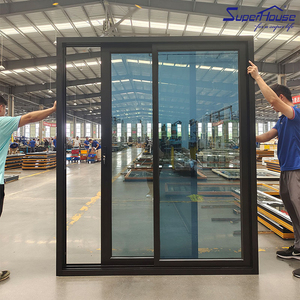
Eco Thermal Invisible Slide Perfect Fit Aluminum Folding Doors for North American Wood Frame Villas
Get a Quote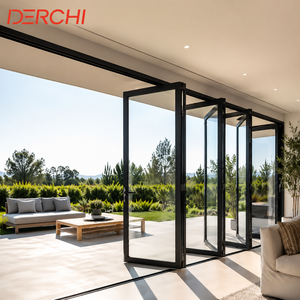
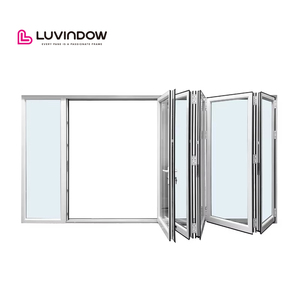
Aluminum Patio Folding Doors Modern Bi-Fold Glass Door System For Outdoor Living
Get a Quote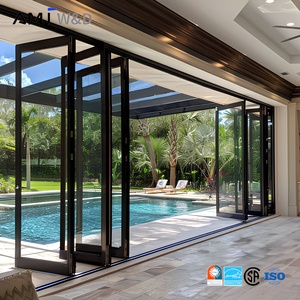
Nfrc American Standard Bifold Doors Thermal Break Aluminum Glass Villa Sliding and Folding Doors for Hotel Resort
Get a Quote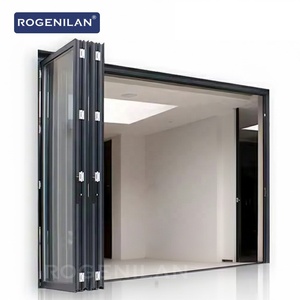
Rogenilan Modern Waterproof Accordion Sliding Folding Door System Foldable Aluminium Double Glazed Bi-Fold Doors
Get a Quote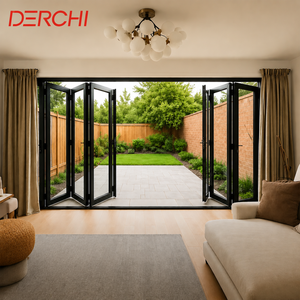
Soundproof Double Glazed Patio Folding Doors Aluminum Bi-Fold System
Get a Quote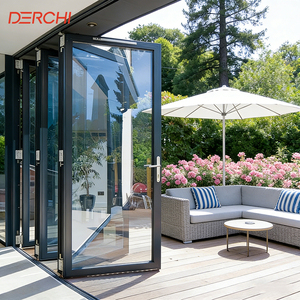
DERCHI NFRC Aluminium Balcony Accordion Door Thermal Break Double Tempered Glass Exterior Bi Folding Sliding Bi-fold Patio Doors
Get a Quote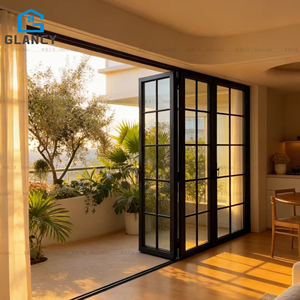
Aluminum Alloy Balcony Patio Bi-Fold Slide Folding Doors with Screen Thermal Insulation for Interior Garden and Courtyard Use
Get a Quote
Technical Whitepaper
Engineering Architecture of Chinese Architectural Aluminium Systems
In-depth structural breakdown of thermal breaks, metallurgy standards, and weatherization mechanisms driving China's premier fenestration factories.
1. Extrusion Alloy Standards & Metallurgical Integrity (6063-T6 vs 6061-T6)
When procurement managers, real estate developers, and façade consultants source aluminium sliding folding doors from China, alloy composition dictates long-term deflection resistance, coastal corrosion performance, and hardware load-bearing capacities. Top-tier manufacturers based in Foshan utilize prime 6063-T6 extruded aluminum profiles with wall thicknesses exceeding 2.0mm for residential bi-folds and up to 3.0mm for heavy commercial assemblies. This specific magnesium-silicon alloy matrix delivers an ultimate tensile strength of no less than 205 MPa and a yield strength of 170 MPa.
Furthermore, leading export factories apply advanced surface treatments including AkzoNobel PVDF fluorocarbon coatings, 25-micron anodic oxidation, and hyper-durable powder coating systems designed to withstand ASTM B117 salt spray testing for over 3,000 hours without blistering or chalking. This guarantees structural stability even in aggressive tropical coastal microclimates or high-altitude UV environments.
2. Thermal Barrier Technology: Polyamide (PA66GF25) Strips vs Poured Polyurethane
Modern architectural energy codes—such as Title 24 in California, the IECC in North America, and NCC 2022 in Australia—require stringent thermal envelope performance. Premier Chinese factories have transitioned from basic uninsulated aluminum frames to multi-cavity thermal break extrusions featuring PA66GF25 (Polyamide 66 reinforced with 25% glass fiber). The glass fiber reinforcement matches the coefficient of thermal expansion of the surrounding aluminum profiles (2.3×10⁻⁵/K), preventing internal shear stress failure under extreme ambient temperature differentials.
By pairing PA66GF25 thermal bridges with double- or triple-glazed Low-E Insulated Glass Units (IGU) containing argon gas fills and Warm-Edge Technoform spacers, whole-door system U-factors drop below 0.28 BTU/h·ft²·°F (U-value < 1.6 W/m²K), meeting Passive House and NFRC strict guidelines.
"Information Gain Insight: The structural durability of a heavy-duty folding door lies in its top-hung hardware carriage. Foshan's leading export factories engineer quad-roller stainless steel (SUS304/316) carrier hinges capable of holding leaf weights in excess of 150kg to 250kg per panel while retaining fingertip operational force under 15 Newtons."
| Specification Parameter | Standard Entry Level (Generic) | High-End Export Standard (BrioWindow Class) | Testing / Compliance Standard |
|---|---|---|---|
| Profile Wall Thickness | 1.2mm – 1.4mm Aluminum | 2.0mm – 3.0mm Heavy-Duty 6063-T6 | GB 5237 / ASTM B221 |
| Thermal Break Material | PVC / Recycled Nylon Strips | Technoform PA66GF25 Polyamide | DIN 16941 / EN 14024 |
| Glass Configuration | Single/5mm Clear Tempered | 6mm + 12Ar + 6mm Low-E Double/Triple IGUs | NFRC 100/200, ANSI Z97.1 |
| Air & Water Infiltration | Low Water Resistance threshold | Sub-floor Flush Track with EPDM Triple Seals | ASTM E283 / ASTM E331 |
| Wind Load Resistance | 1500 Pa Design Pressure | Up to 4500 Pa (Impact/Hurricane Rated) | ASTM E1300 / TAS 201/202/203 |
| Roller Hardware Load Rating | Max 60kg per panel | SUS316 Quad-Carriage Heavy-Duty (150kg-250kg) | EN 13126-15 Cycle Tested (100,000 Cycles) |
Supply Chain Strategy
Future Sourcing & Procurement Trends for B2B Buyers
Analysis of international trade dynamics, direct factory sourcing models, and compliance requirements transforming overseas door and window procurement.
1. Digital BIM & Shop Drawing Integration
Global architectural firms no longer accept generic factory catalog specifications. B2B buyers now mandate 3D BIM (Revit/CAD) digital twin models, submittal packages, and structural calculation reports detailing wind deflection, thermal bridge values, and anchor reactions prior to PO issuance.
2. Hurricane & Impact Performance Mandates
Due to severe climate volatility across coastal regions in North America, Australia, and the Caribbean, demand for Florida Product Approval (FPA) and Hurricane Impact-Resistant SGP laminated glass bi-fold doors has grown by 38% year-over-year.
3. Factory-Direct Modular Crating & Assembly
To mitigate rising jobsite labor costs in Western markets, procurement managers prioritize manufacturers that provide pre-drilled, knock-down (KD) pre-assembled frame kits with quick-connect gaskets and sequential packing containers tailored to site schedules.
Architectural Evolution
Innovations in Aluminium Folding & Sliding Systems
Discover how modern minimalist sightlines, smart hardware integration, and zero-threshold drainage systems are reshaping luxury residential and commercial architecture.
Ultra-Slim Interlock Sightlines
Architectural bi-fold doors now feature ultra-slim profile sightlines as narrow as 20mm–30mm at center stiles, maximizing daylight intake while maintaining structural wind resistance through internal steel reinforcements.
Flush Zero-Barrier Thresholds
Barrier-free transition between interior living areas and exterior outdoor patios is achievable with sub-floor recessed drainage channels. Concealed weather seals automatically drop down upon closure to block driving rain.
Smart Motorization & Sensor Control
Heavy oversized folding door assemblies are increasingly integrated with hidden brushless DC motors, automated multi-point lock systems, rain sensors, and home automation protocols (Zigbee/KNX/Crestron).
Manufacturing Infrastructure
Why Global Developers Trust Foshan OEM Factories
Built upon BrioWindow's 10+ years of export engineering experience, state-of-the-art aluminum extrusion lines, and rigorous quality control protocols.
Foshan Manufacturing Hub Advantage
Situated in Nanhai District, Foshan—the epicenter of global aluminum extrusion and fenestration technology—granting immediate access to premium raw materials and hardware supply chains.
Strict National & Global Testing
Every product batch undergoes strict internal water tightness, air permeability, structural loading, and operation cycle tests compliant with North American, European, and Australian standards.
30-Year Quality Guarantee
Backed by robust engineering, precision CNC machining, and premium anodized or powder-coated finishes, supported by long-term warranty documentation for commercial peace of mind.
One-Stop Customization (OEM/ODM)
From single custom villa projects to multi-family residential developments, providing comprehensive shop drawing reviews, customized extrusion die designs, and structural glass calculations.
Complete Fenestration System Portfolio
Specialized single-source manufacturing spanning bi-fold doors, ultra-slim sliding doors, heavy pivot doors, casement windows, curtain walls, smart motorized units, and sunrooms.
End-to-End Export Logistics
Custom wooden box packaging, corner protective padding, and specialized sea-freight container loading plans ensuring zero transit damage to overseas job sites across 60+ countries.
Procurement Guide
Frequently Asked Questions for Overseas Buyers
Essential guidance for general contractors, real estate developers, window importers, and architects sourcing aluminum doors from China.
What key certifications are required to import aluminum folding doors into North America or Australia?
For North America, doors must meet NFRC (National Fenestration Rating Council) standards for thermal performance (U-factor and SHGC) and ASTM E283/E331/E547 structural water and air testing, alongside Florida Hurricane Impact approvals (TAS 201/202/203) for coastal zones. For Australia, windows and doors must be compliant with AS2047 (structural capacity and weather resistance) and AS1288 (safety glass selection).
How do thermal break aluminum folding doors compare to vinyl (uPVC) or timber bi-folds?
Aluminum folding doors provide significantly higher structural strength, allowing for larger glass panels, narrower frames, and higher wind load resistance. Unlike uPVC, aluminum does not warp or expand excessively under high solar heat. Unlike wood, thermal break aluminum requires zero repainting or anti-rot maintenance while achieving comparable U-values via PA66 polyamide thermal barriers.
Can Foshan factories customize aluminum doors according to project architectural drawings?
Yes. OEM/ODM engineering teams review structural architectural elevations, wall construction details, and window opening schedules. They generate technical CAD/BIM shop drawings including glass specifications, frame depth (e.g., 75mm, 80mm, 100mm, 120mm series), threshold drainage configurations, and hardware placements for buyer sign-off before manufacturing.
What is the typical production lead time and container packing procedure for overseas shipping?
Standard fabrication lead time is 25 to 35 business days from shop drawing approval and deposit receipt. For shipping, fully assembled or KD frames and glass units are wrapped in protective polyethylene film, reinforced with corner guards, and packed into steel-banded, fumigated plywood crates to withstand ocean vibration and humid transit environments.
What details are needed to request an accurate wholesale factory quotation?
To receive a complete quote within 24 hours, buyers should provide: 1) Project location & climate requirements; 2) Structural opening dimensions or CAD schedules; 3) Preferred opening configuration (e.g., 3+1, 5+0 bi-fold, multi-track sliding); 4) Glass buildup (e.g., double low-E tempered, laminated impact); 5) Frame finish (RAL powder coat, anodized, wood grain); 6) Target destination port.
What warranty and post-sale technical support are supplied with overseas orders?
Export orders include a comprehensive 30-year structural warranty on aluminum profile integrity, 10-year warranty on insulated glass units against seal failure, and 5 to 10-year warranties on German (CMECH/Siegenia/Hoppe) hardware assemblies. Technical support includes step-by-step PDF installation manuals, hardware adjustment videos, and real-time remote engineering assistance.
Ready to Engineer Your Project's Door & Window Systems?
Connect directly with our Foshan engineering specialists for submittal reviews, custom CAD shop drawings, and competitive factory-direct pricing for your next project.
Get a Quote