Premier Factory-Direct Aluminium Skylights
Engineered for high thermal resistance, hurricane impact proofing, acoustic insulation, and seamless smart building integration.
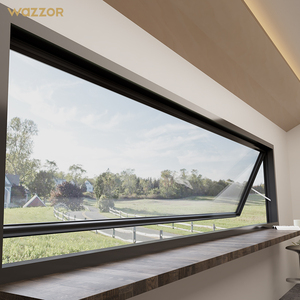
Wazzor AS2047 Hurricane Impact Aluminium Tempered Glass Awning Roof Windows Electric Skylight Window Outward Opening Windows
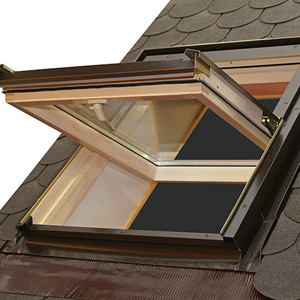
China Manufacturer High Quality Energy Saving Outdoor Waterproof Tempered Glass Aluminum Motorized Skylight Roof Window
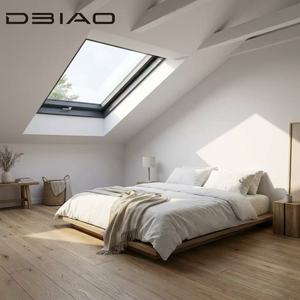
Modern Manual Vertical Swing Vent Skylight Double Insulated Tempered Glass Aluminum Frame Soundproof Bright Basement Roof Window
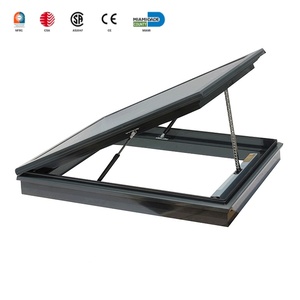
LML CE NFRC CSA Roof Window Vertical Opening Automatic Aluminum Glass Skylight Rain Sensor Heat Insulation Villa Sunroom Patio
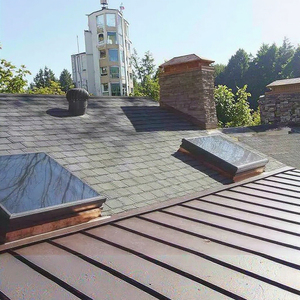
High Quality Manufacturer Customized Modern Automatic Aluminum Dormer Skylight Roof Window
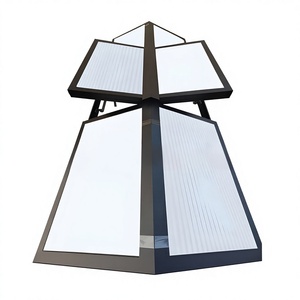
Door Window Factory MINYE-ZH1225 Aluminum Alloy Postmodern Louver-style Heat Insulation Laminated Tempered Glass Skylight
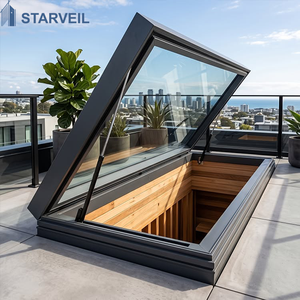
Aluminum Electric Opening Roof Skylight Thermal Break Double Glazed Glass Attic Terrace Roof Window
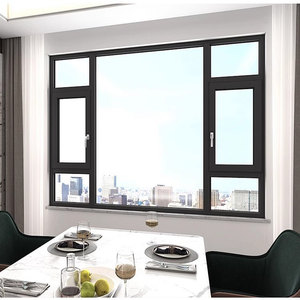
windows Aluminum Window Roof Aluminium Skylight for Houses Glass Sliding Arch Double Proof Soundproof House Ventanas
Technical Architecture & Structural Benchmark Analysis
Understanding the metallurgical, mechanical, and thermal parameters that govern high-performance architectural skylights.
Architectural daylighting systems have evolved from simple pitched glass roof vents into complex, smart-enabled structural fenestrations. When global procurement teams, facade consultants, and general contractors evaluate China aluminium skylight windows factories and exporters, technical compliance with international structural codes represents the primary benchmark of evaluation. Aluminum skylights placed on roof pitches must withstand extreme static and dynamic loads, including heavy snow accumulative weight, negative wind uplift pressures, and thermal stresses.
1. Metallurgical Profile Integrity: 6063-T6 Extrusion Alloy
Premium Chinese manufacturers utilize structural grade 6063-T6 aluminum alloys for profile extrusions. Alloy 6063 provides superior surface finish quality for powder coating, anodizing, and fluorocarbon (PVDF) spray treatments, while the T6 heat treatment temper ensures tensile strengths exceeding 205 MPa and yield strengths over 170 MPa. This structural rigidity allows for ultra-slim frame profiles with maximised daylight apertures without risking frame deflection under severe coastal wind loads or seismic displacement.
2. Thermal Separation & Polyamide Barrier Systems (PA66-GF25)
To meet stringent green building codes such as LEED, Title 24, and European NZEB (Nearly Zero Energy Buildings), aluminum roof windows incorporate multi-cavity thermal break systems. Extruded aluminium profiles are split into interior and exterior sub-frames structurally bridged via 25% glass-fiber reinforced Polyamide strips (PA66-GF25). This barrier drops thermal conductivity (U-frame values down to 1.3 W/m²K), preventing thermal bridging, mitigating internal moisture condensation in high-humidity zones, and vastly reducing HVAC operational loads.
3. Advanced Insulated Glazing Units (IGU) & Laminated Safety Assemblies
Roof windows demand elevated safety glazing standards compared to vertical curtain walls. Standard specification requires a toughened outer glass pane combined with a laminated safety inner glass pane (e.g., 6mm Low-E Tempered + 12Argon Warm Edge Spacer + 6mm+1.52PVB/SGP+6mm Laminated). In the event of catastrophic hail or mechanical impact, the PVB/SGP interlayer holds broken glass fragments intact, eliminating falling debris hazards for occupants below. Incorporating Argon gas fills with soft-coat Low-E layers yields Solar Heat Gain Coefficients (SHGC) below 0.25 and U-factors as low as 0.18 BTU/hr·ft²·°F.
| Performance Indicator | Standard Aluminium Skylight | Thermal Break Motorized Skylight | Hurricane Impact / High-Spec Roof Window |
|---|---|---|---|
| Profile Alloy & Temper | 6063-T5 Structural Aluminum | 6063-T6 Precision Thermal Break Profile | 6063-T6 Heavy-Duty Reinforced Extrusion |
| Thermal Transmittance (U-Value) | 2.8 - 3.4 W/m²K | 1.2 - 1.6 W/m²K | 0.8 - 1.2 W/m²K (Triple Glazed) |
| Water Tightness Rating | 300 - 450 Pa | 600 - 900 Pa | 1000+ Pa (E1050 Standard Compliance) |
| Wind Load Resistance | Up to 2.5 kPa | Up to 4.5 kPa | Up to 6.0+ kPa (TAS 201/202/203 Certified) |
| Glazing Architecture | 5mm+9A+5mm Tempered IGU | 6mm Low-E + 12A Argon + 6mm Laminated | 8mm Low-E + 16A + 6mm+1.52SGP+6mm Impact |
| Sealing Gasket Compound | Standard PVC / Neoprene Rubber | Dual-Component EPDM Vulcanized Gaskets | Continuous Seamless Molded EPDM + Silicone |
Evaluating Chinese Skylight Manufacturers: Supply Chain Framework
A rigorous verification strategy for overseas procurement directors, architectural specifiers, and real estate developers.
1. International Fenestration Testing & Certifications
Direct verification of compliance certificates is mandatory. Leading Foshan exporters maintain AS2047 (Australian Windows Standard), NFRC / AAMA (North America), CE (EN 14351-1), and CSA standard reports tested by accredited third-party labs like Intertek or SGS.
2. Structural Processing Machinery & CNC Precision
High-end skylight manufacturing requires 4-axis or 5-axis CNC machining centers for automatic corner crimping, milling of rain-drainage channels, and precision mortising for electric motor chain actuators to eliminate air-water leakage points.
3. Actuator Motor Integration & Automation Control
Motorized skylights rely heavily on drive system reliability. Leading exporters partner with premium electric actuator suppliers (e.g., 24V DC push-pull chain drives with 400N to 1000N lifting force) capable of interfacing with RS485, Tuya Smart, KNX, or Zigbee automation networks.
Future Procurement & Product Development Trends (2025–2030)
Strategic market insights driving the next decade of architectural daylighting and smart envelope design.
The commercial and residential architectural skylight market is undergoing a massive transformation driven by decarbonization mandates, smart home IoT penetration, and occupant wellness requirements. Sourcing executives looking to maintain a competitive advantage must align with Chinese manufacturers actively investing in the following R&D verticals:
A. Smart Environmental Sensor & Automated HVAC Interlocking
Next-generation electric skylights no longer function merely as static daylighting units. Modern factory configurations embed hidden wind-and-rain sensors directly into the aluminum sash profiles. When rain sensors detect moisture, or anemometers detect wind speeds exceeding pre-set thresholds (e.g., 12 m/s), the electric actuator triggers full automatic closure within 5 to 8 seconds. Furthermore, integration with central HVAC systems enables automated night-purge natural cooling, extracting built-up heat during off-peak hours and drastically lowering air conditioning energy consumption.
B. Dynamic Electrochromic & PDLC Smart Glass Technologies
Mechanical blinds installed on ceiling skylights present maintenance challenges and aesthetic clunkiness. The industry procurement trajectory is shifting rapidly toward Polymer Dispersed Liquid Crystal (PDLC) and Electrochromic Smart Glass. At the touch of a button or automatically modulated via solar irradiance sensors, the skylight glass transitions from 100% crystal clear to an opaque or tinted state, dynamically tuning Light Transmittance (VLT) and solar heat gain in real time without external shading devices.
C. BIPV (Building-Integrated Photovoltaics) Solar Skylights
With global net-zero building directives gaining legislative momentum, BIPV skylight modules are transitioning from experimental commercial projects to standard procurement requests. By laminating ultra-thin, semi-transparent monocrystalline solar cells between the toughened glass layers of roof windows, skylights actively generate clean electrical power for the building while simultaneously serving as high-performance thermal barriers.
D. Ultra-Narrow Sightlines & Flush Structural Glazing
Architectural design language favors invisible framing. Modern Chinese factories are re-engineering traditional aluminium skylight frames into frameless flush-glazed exterior surfaces. By bonding structural silicone sealant directly to the perimeter stepped-glass edges, rain and debris glide off without pooling, preventing unsightly water mark accumulation on low-pitch roof installations.
Why Partner with BrioWindow Technology Co., Ltd.
Foshan’s Leading Engineering Manufacturer of Custom Aluminium Doors, Windows & Architectural Skylights.
Headquartered in Nanhai District, Foshan City—China’s epicenter for aluminum profile extrusion and fenestration technology—BrioWindow Technology Co., Ltd. stands as a premier direct manufacturer and global exporter of high-performance architectural systems. For over 10 years, BrioWindow has supplied custom aluminum sliding doors, casement windows, smart motorized skylights, pivot entrance doors, and curtain walls to contractors, developers, and trade importers across more than 60 countries, with core export markets in the United States, Canada, and Australia.
Single-Source Procurement Advantage
BrioWindow manufactures complete fenestration suites—ranging from thermal break aluminum skylights to ultra-slim sliding doors, heavy-duty pivot doors, and structural curtain walls—eliminating multi-vendor coordination risks for large-scale projects.
30-Year After-Sales Quality Assurance
Every system undergoes multi-stage quality control adhering to strict national standards. BrioWindow guarantees product longevity with a comprehensive 30-year quality warranty and dedicated technical engineering support for international clients.
Full Custom Engineering & CAD/BIM Support
BrioWindow’s in-house engineering team reviews architectural opening schedules, structural wind load targets, and thermal requirements to generate detailed shop drawings, glass stress calculations, and installation guides tailored to your site coordinates.
Frequently Asked Questions (FAQ) for B2B Buyers
Expert guidance addressing critical engineering, shipping, custom specification, and international compliance queries.
What structural aluminum profiles are recommended for coastal hurricane regions?
For coastal regions prone to severe windstorms and hurricanes (such as Florida, the Caribbean, or coastal Australia), we recommend high-tensile 6063-T6 aluminum profiles with a minimum wall thickness of 2.0mm to 3.0mm. Profiles should be integrated with laminated impact glass utilizing SentryGlas (SGP) interlayers and multi-point locking hardware engineered to pass TAS 201/202/203 dynamic impact and cyclic pressure tests.
How do motorized electric skylights prevent rainwater leakage in flat or low-pitch roof installations?
Low-pitch roof installations (below 15 degrees) require specialized waterproofing architecture. Our electric skylights utilize a dual-stage drainage system with continuous vulcanized EPDM seals, stepped overlapping sash designs, and integrated hidden condensation channels. Furthermore, automated rain sensors immediately trigger motor closure at the first droplet detection, ensuring interior spaces remain fully protected.
Can BrioWindow manufacture custom skylights to specific architectural CAD drawings?
Yes. Over 90% of our international orders are fully customized to project specifications. Our engineering team reviews your CAD files, REVIT BIM models, or rough opening schedules to optimize structural frame profiles, glass build-ups, and hardware configurations prior to factory production, issuing detailed shop drawings for final sign-off.
What thermal insulation performance can be achieved with double vs. triple glazing?
Standard double-glazed thermal break skylights (Low-E + Argon) achieve U-values between 1.4 and 1.8 W/m²K. For cold northern climates requiring ultra-low heat loss, triple-glazed IGUs with dual soft-coat Low-E coatings and warm-edge composite spacers lower U-values to 0.8–1.1 W/m²K, satisfying Passivhaus and stringent energy code requirements.
What export packaging is used to prevent glass breakage during long-distance ocean freight?
All fenestration units are wrapped in protective anti-scratch films, corner-guarded with heavy-duty EPE foam, and encased within fully enclosed fumigated plywood crates with internal steel strapping. Units are individually labeled by architectural opening tag numbers for rapid site sorting upon container arrival.
What electrical standards and smart home protocols do your electric actuators support?
Our electric actuators operate on universal 24V DC or 110V-240V AC power inputs. Control modules support standard wall switches, wireless RF remote controls, dry contact connections for BMS (Building Management Systems), and IoT smart home networks including Tuya, Zigbee, Apple HomeKit, and KNX protocols.
