Featured Glazing & Fenestration Export Systems
Engineered for Structural Integrity, Thermal Efficiency, and Global Standard Compliance (AS2047, NFRC, CE)
Executive Summary & Whitepaper Scope
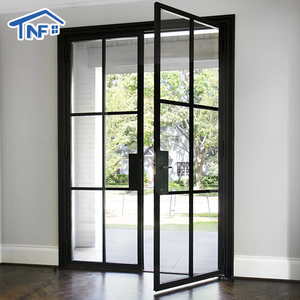
In modern architectural design, aluminium fixed glass windows (commonly referred to as picture windows, direct-set glazing, or non-operable vision panels) represent the cornerstone of ultra-clear building envelopes. Engineered to maximize natural daylighting while maintaining maximum air and water tightness, fixed windows eliminate operable mechanical components, thereby offering the lowest possible thermal transmittance (U-factor) and the highest structural resistance to wind loads.
As global building codes—such as North America's NFRC/IECC standards, Australia’s AS2047/AS1288, and Europe’s EN 14351-1—enforce stringent energy ratings and acoustic performance, selecting the ideal OEM/ODM manufacturer in China has transformed into an engineering-driven auditing process. This whitepaper provides procurement directors, structural engineers, commercial developers, and glazing contractors with deep, actionable technical insights into metallurgical profiles, Insulating Glass Unit (IGU) technologies, structural silicone glazing (SSG), factory vetting procedures, and international supply chain optimization.
1. Structural Engineering & Metallurgical Standards
Understanding the Core Profile Technologies of Foshan’s Top Aluminium Exporters
6063-T5 vs 6063-T6 Extrusions
Top China exporters utilize primary-grade 6063-T5 and 6063-T6 architectural aluminium extrusions. T6 artificial aging treatment elevates ultimate tensile strength beyond 205 MPa and yield strength above 170 MPa, preventing structural deflection (L/175 limits) in jumbo floor-to-ceiling fixed openings under extreme typhoon wind pressure.
PA66-GF25 Thermal Barriers
To eliminate thermal bridging, high-performance fixed windows incorporate Polyamide PA66 reinforced with 25% glass fiber (PA66-GF25) structural thermal break strips. This design maintains mechanical shear strength while achieving linear expansion coefficients identical to aluminium alloys, preventing seal degradation over 30+ thermal cycles.
AAMA 2605 Surface Coatings
For coastal and high-UV environments, premier manufacturers like BrioWindow Technology Co., Ltd. apply 3-coat Fluorocarbon (PVDF) electrostatic coatings compliant with AAMA 2605 specifications. Utilizing Kynar 500® resin guarantees color stability, salt spray resistance exceeding 4,000 hours, and zero chalking.
2. Advanced Glazing Architecture & IGU Performance
Matrix Comparison of High-Gain, Low-E Double & Triple Insulated Glass Units
| Glazing Assembly Type | Glass Thickness (mm) | Gas Infill / Spacer | U-Value (W/m²·K) | SHGC | STC Rating (dB) |
|---|---|---|---|---|---|
| Double Tempered Standard Low-E | 6mm Low-E + 12Ar + 6mm Clear | 90% Argon / Aluminium Spacer | 1.6 - 1.8 | 0.38 - 0.45 | 34 - 36 dB |
| Double Laminated Acoustic Low-E | 6mm Low-E + 12Ar + 6.38 PVB | 90% Argon / Warm Edge TPS | 1.4 - 1.6 | 0.32 - 0.38 | 40 - 42 dB |
| Triple Pane Super Thermal Low-E | 6mm Low-E + 12Ar + 6 Clear + 12Ar + 6 Low-E | 95% Argon / TGI Warm Edge | 0.9 - 1.1 | 0.24 - 0.30 | 38 - 40 dB |
| Hurricane Impact Laminated (SGP) | 6mm Low-E + 12Ar + 6mm Glass + 1.52 SGP + 6mm Glass | Structural Argon / Stainless Spacer | 1.3 - 1.5 | 0.28 - 0.35 | 44 - 48 dB |
Technical Insight: Structural Silicone Glazing (SSG) in Fixed Windows
Unlike standard operable windows relying on EPDM compression gaskets, heavy-duty structural fixed picture windows utilize Structural Silicone Glazing (SSG). Factory-applied structural adhesives—such as Dow Corning 983 or Tremco SG300—transfer wind loads from the glass directly to the extrusions without mechanical retaining clips. This enables seamless, flush-glazed aesthetic facades capable of resisting cyclic pressure differentials beyond ±6000 Pa.
3. Procurement & Sourcing Trends (2025–2030)
Key Market Drivers Shaping International B2B Fenestration Sourcing
Ultra-Narrow Sightlines
Architects are shifting toward minimal frame visibility. Contemporary fixed window profiles feature concealed frame depths where the outer frame profile hides inside the wall cavity, presenting a visible sightline under 25mm to maximize uninterrupted panoramic views.
BIPV Glazing Integration
Building-Integrated Photovoltaics (BIPV) are expanding into fixed spandrel and picture window units. Exporters in Foshan are embedding cadmium telluride (CdTe) or crystalline silicon solar cells directly within double-glazed fixed units to transform facade glass into clean power generators.
Embodied Carbon Accounting
With EPD (Environmental Product Declaration) certificates becoming mandatory across European and North American projects, top manufacturers are utilizing certified recycled aluminium billets (secondary aluminium with 75%+ scrap input) to cut embodied carbon by up to 80% per window frame.
4. Enterprise Manufacturing & Export Capabilities
Why Leading Global Builders Partner with BrioWindow Technology Co., Ltd.
Located in Lishui Town, Nanhai District, Foshan City—China's world-renowned aluminum profile manufacturing epicenter—BrioWindow Technology Co., Ltd. operates state-of-the-art extrusion, CNC machining, glass processing, and automated assembly facilities. For over a decade, BrioWindow has delivered precision-engineered fenestration systems tailored to stringent regional building codes across the United States, Canada, Australia, and over 60 countries worldwide.
Core Factory Vetting & Operational Strengths:
- Full Supply Chain Integration: From primary alloy billet casting to precision extrusion, thermal break insertion, PVDF/Powder coating lines, and double-seal IGUs, all processes are controlled under one ISO9001 certified roof.
- Comprehensive Certification Suite: Products are rigorously certified against Australian Standard AS2047 / AS1288, North American NFRC / AAMA test protocols, European CE marking, and ISO9001 quality management systems.
- 30-Year Quality Assurance Framework: Every fixed glass window batch undergoes stringent structural deflection testing (ASTM E330), water penetration testing under dynamic pressure (ASTM E331), and air infiltration verification (ASTM E283), supported by a comprehensive 30-year structural warranty.
- Bespoke Engineering & Shop Drawings: In-house structural engineering teams provide complete AutoCad shop drawings, structural wind load calculation sheets, and BIM models for seamless integration into architectural workflows.
5. Factory Vetting Checklist for International Importers
Crucial Verification Steps Before Placing OEM/ODM Fenestration Orders in China
Step 01: Audit Glass Certifications
Ensure the glass supplier provides SGCC (Safety Glass Certification Council) certification for the USA, AS/NZS 2208 for Australia, or EN 12150 for Europe. Uncertified glass carries risks of spontaneous nickel sulfide (NiS) inclusion breakage.
Step 02: Verify Thermal Break Strip Material
Request material test reports for thermal break strips. Require PA66-GF25 nylon strips. Inferior PVC thermal strips deform under high temperatures and compromise structural integrity.
Step 03: Inspect Packaging & Export Crating
Specify fumigated solid wooden A-frame crates with corner protectors, vacuum moisture bags, and protective plastic films to survive multi-week oceanic freight transit without glass scratching or frame distortion.
6. Frequently Asked Questions (FAQ)
Deep Technical Answers for Procurement Officers, Structural Engineers & Importers
What are the key technical advantages of aluminum fixed glass windows over operable windows? +
How does BrioWindow handle structural wind load calculations for high-rise or coastal projects? +
What glass configurations are recommended to prevent internal condensation in cold climates? +
What certifications are required for importing aluminum fixed windows to Australia and North America? +
What is the maximum manufacturing size capability for a single-pane fixed picture window? +
How does powder coating compare to anodizing for marine/coastal window installations? +
What information should be submitted to receive a fast, accurate OEM project quotation? +
What post-delivery support and warranty coverage does BrioWindow provide? +
Partner with China's Premier Aluminium Window Exporter
Direct Factory Pricing · Custom Architectural Shop Drawings · Certified AS2047, NFRC & CE Quality
Inquire Now