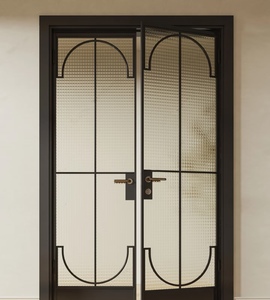
Engineered Fenestration Systems
Explore high-performance architectural doors and windows designed for residential villas, high-rise developments, and commercial storefronts worldwide.
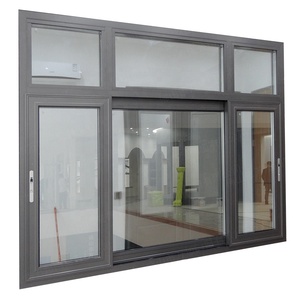
Hurricane Impact Aluminum Glass Customized Sliding Window Home Aluminum Windows Impact Soundproofing Double Glazed Windows
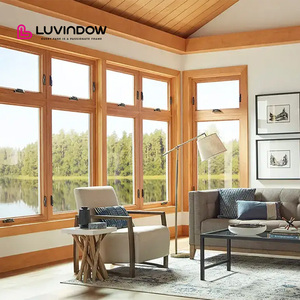
High Quality Hand Crank Aluminum Clad Wood Window Weatherproof Performance for Luxury Villas
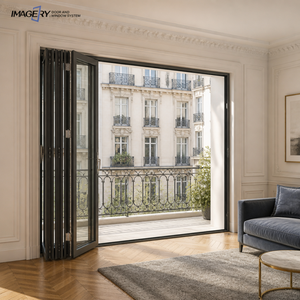
Luxury Bi-Fold Aluminum Folding Door Space Saving Wide Opening for Restaurant Storefront Terrace
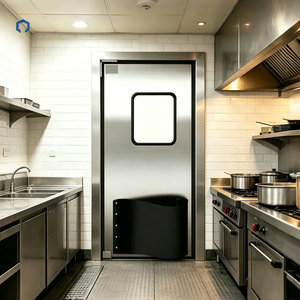
180° Commercial Aluminum Swing Impact Door With Glass Window, Automatic Single Leaf Restaurant Kitchen Door
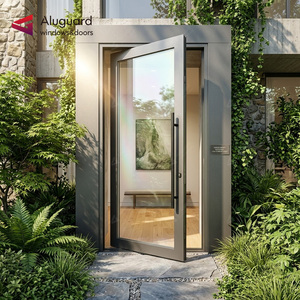
Modern Minimalist Thermal Break Aluminum Grille Pivot Door Double Glazed Glass Entrance Door for Villa
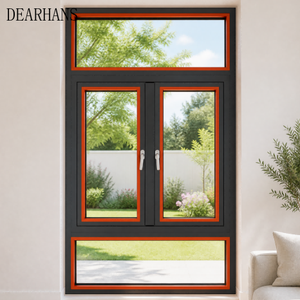
Thermal Break Aluminium Casement Hurricane Proof Impact Soundproof Modern windows for Houses Energy Efficient Custom Home
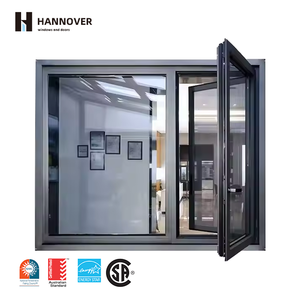
Modern NFRC Aluminum Casement Window Double or Triple Glazed Tilt and Turn Window Custom Sizes for Villa Commercial Projects
10+
Years Industry Experience
60+
Global Export Markets
30-Year
Quality Assurance
100%
Factory Inspection Compliant
Enterprise Excellence: Why Source from Foshan Hub?
BrioWindow Technology Co., Ltd. delivers engineered window and door systems directly from Foshan, China's premier architectural aluminum capital.
Stringent Quality Testing
Every profile design and glass assembly undergoes lab-certified testing conforming to European (EN) and North American (NFRC/ASTM) structural wind load and thermal standards.
Integrated Material Matrix
Complete single-source procurement across thermal break aluminum, PVC fenestration, solid wooden doors, fire-rated doors, glass curtain walls, and customizable sunrooms.
Global Export Compliance
Over 10 years exporting to over 60 countries with specific engineering adaptations for North America (USA, Canada), Australia (AS2047 standard), and European climate zones.
Technical Whitepaper: Aluminium Fenestration Engineering & Manufacturing Procurement
In modern architectural design, the thermal efficiency, acoustic insulation, structural deflection resistance, and long-term durability of a building envelope depend heavily on the mechanical specifications of its window and door systems. China, and specifically the Nanhai District in Foshan, Guangdong, represents the global epicenter of high-precision aluminum alloy extrusion, surface anodizing, architectural powder coating, and complex fenestration assembly. Selecting the right manufacturer requires an in-depth understanding of metallurgical alloys, thermal break isolation technologies, glass configuration dynamics, and international hardware compliance.
Information Gain Insight: Standard aluminum profiles without thermal breaks possess a high thermal conductivity ($k \approx 160 \text{ W/m}\cdot\text{K}$). Modern architectural specifications require high-density Polyamide (PA66-GF25 with 25% glass fiber reinforcement) thermal barrier strips to reduce the total window U-factor below $1.4 \text{ W/m}^2\cdot\text{K}$, essential for meeting ENERGY STAR® and Passive House criteria.
1. Metallurgical Profiles & Structural Alloy Selection
Architectural aluminum doors and windows fabricated by top China suppliers utilize primary 6063-T5 or 6063-T6 billet aluminum extrusions rather than recycled scrap metal. The T6 temper treatment provides superior ultimate tensile strength (up to 205 MPa) and yield strength (up to 180 MPa), ensuring zero profile deformation under heavy wind load pressures (P3 $\ge 5000 \text{ Pa}$).
- 6063-T5 Alloy: Standard for high-end residential casement and sliding windows. Offers ideal surface finish quality for powder coating and anodizing.
- 6063-T6 & 6060-T66 Alloys: Engineered for heavy-duty commercial pivot doors, high-span folding doors, and structural glass curtain walls requiring higher mechanical load thresholds.
- Wall Thickness Standards: Quality export window profiles feature minimum structural wall thicknesses ranging from 1.4mm to 2.0mm for windows, and 2.0mm to 3.0mm for high-traffic sliding or folding patio doors, fully compliant with GB/T 8814 and international building codes.
Engineering Performance Benchmarks for Sourcing
| Performance Indicator | Technical Metric Range | Standard Compliance | Target Application |
|---|---|---|---|
| Thermal Transmittance (U-Value) | 0.8 – 1.6 W/m²·K | NFRC 100/200, ISO 10077 | Cold Climates & Net-Zero Passive Buildings |
| Acoustic Rating (STC / OITC) | 35 dB – 48 dB Sound Reduction | ASTM E90, ISO 140-3 | Urban High-Density & Airport Adjacent Zones |
| Wind Pressure Resistance | Class 8 (P3 ≥ 5000 Pa) | AS2047, ASTM E330 | Coastal Hurricane & High-Rise Buildings |
| Air Infiltration Sealing | ≤ 0.5 m³/(m·h) | EN 12207 Class 4 | Energy Conservation & Dust Prevention |
| Water Penetration Resistance | 700 Pa – 1000 Pa Static Pressure | ASTM E547, AS4420.5 | Heavy Rainfall & Tropical Storm Regions |
Future Procurement Trends in Aluminium Doors & Windows
As global construction policies transition toward decarbonization, net-zero emissions, and occupant-centric smart environments, procurement leads and project managers must align their supply chains with key upcoming market trends over the next decade:
1. Ultra-Slim Sightline Minimalist Architectures
Modern interior and exterior design heavily emphasizes expansive glass areas with minimal visible framing. Modern narrow-frame sliding doors feature interlock sightlines as thin as 18mm to 25mm without compromising structural integrity. This is achieved by shifting the structural load onto hidden frame profiles embedded directly within building walls, combined with structural silicon glass bonding (IGU structural silicone).
2. Decarbonized Low-Carbon Aluminium Billets
International developers now prioritize low-embodied-carbon materials. Top Foshan extruders are increasingly utilizing hydro-powered aluminum smelting billets (yielding carbon emissions below 4.0 kg CO2/kg Al compared to traditional coal-fired power yielding 16.0 kg CO2/kg Al). Third-party EPD (Environmental Product Declaration) certificates are rapidly becoming mandatory for European and North American tenders.
3. Integration of Smart Actuation & Building Automation (BMS)
Concealed motorized actuators integrated with Smart Home IoT protocols (Zigbee, Z-Wave, KNX, or Wi-Fi) allow automated opening of high-level transom windows, skylights, and massive central axis pivot doors. Rain sensors, wind velocity meters, and indoor CO2 monitor triggers automatically drive motorized window mechanisms to adjust ambient indoor air quality.
4. Hurricane-Impact & Laminated Security Glazing
Increasingly volatile weather events have driven high demand for impact-rated fenestration beyond Florida's HVHZ (High-Velocity Hurricane Zone). System designers combine heavy-gage aluminum frames with laminated safety glass utilizing SGP (Kuraray SentryGlas®) interlayers, which remain intact even under direct debris impact at high wind speeds.
Key Industry Fabrication & Technology Development Trends
The manufacturing process in leading Chinese factories has transformed from manual assembly to automated CNC precision engineering. Importers evaluating factory capabilities should verify the following technology adoption milestones:
- 5-Axis Machining Centers: High-precision milling of lock mortises, hinge cutouts, and drainage holes within a single clamping operation ensures tolerances within ±0.1mm.
- Automated Corner Crimping with Two-Component Sealants: Mechanically injected corner joints using two-component polyurethane (PU) sealants and stainless steel corner keys guarantee permanent leak-proof joints and frame squareness under thermal stress.
- Advanced Surface Treatments: Transitioning from standard powder coatings to Fluorocarbon PVDF coatings (2-coat or 3-coat AkzoNobel / PPG systems) and Qualicoat Class 2 / Class 3 powders capable of resisting UV radiation and salt spray corrosion for over 25 years in coastal environments.
- Multi-Cavity Thermal Break Profiles: Modern profiles utilize multi-cavity insulation designs filled with high-density expanded polyethylene (EPE) or aerogel insulation foam strips, drastically cutting conductive thermal transfer.
Supply Chain Tip for Importers: Always specify high-grade hardware brands when issuing RFQs. Top Chinese manufacturers seamlessly integrate European hardware systems such as Siegenia, Hoppe, GU, Sobinco, or Roto alongside top-tier domestic hardware like CMECH and Kin Long to balance budget and lifecycle requirements.
Frequently Asked Questions (B2B Sourcing FAQ)
Essential guidance for international buyers, real estate developers, and construction contractors sourcing aluminum systems from Foshan, China.
What categories of doors and windows does BrioWindow manufacture?
We specialize in comprehensive architectural fenestration, including thermal break aluminum sliding doors, casement windows, tilt-and-turn windows, wide-span bi-fold doors, central axis pivot entrance doors, smart motorized windows, PVC/uPVC doors and windows, aluminum-clad wooden windows, fire-rated doors, sunrooms, and unitized glass curtain wall systems.
Which international geographic markets do you export to?
Our core export destinations include the United States, Canada, Australia, New Zealand, the United Kingdom, and Western Europe. Our products are installed in residential and commercial projects across more than 60 countries worldwide, engineered specifically to meet localized building codes.
Can you engineer systems directly from architectural CAD drawings and opening schedules?
Yes. Our dedicated in-house structural engineering team reviews architectural DWG/BIM drawings, structural opening schedules, wind load criteria, and thermal targets. We produce detailed shop drawings, profile section layouts, and glass schedules for client approval before raw aluminum extrusion or cutting begins.
What technical specifications should buyers prepare before requesting a quote?
To ensure an accurate quotation, buyers should provide: 1) Project location and structural building type; 2) Window/door opening schedule with dimensions; 3) Preferred opening mechanisms (sliding, casement, pivot, folding); 4) Glazing specs (double/triple pane, Low-E coating, argon fill, impact laminate); 5) Frame surface finish and RAL color code; 6) Specific regional performance certifications required (e.g., NFRC, AS2047, CE).
What after-sales support, warranty, and quality assurance are provided?
BrioWindow provides a comprehensive 30-year quality assurance program covering structural aluminum frame integrity. Hardware systems carry standard 5 to 10-year manufacturer warranties. We offer comprehensive installation technical manuals, digital remote support, and replacement hardware kits for international project deployments.
How do you ensure safe protection during long-distance maritime freight packaging?
All fabricated door and window units undergo multi-layer export protective packaging: 1) Protective film on aluminum profile surfaces; 2) Corner protective guards; 3) Bubble wrap and moisture-proof wrap; 4) Fully enclosed fumigated plywood crates or steel A-frame racks loaded directly into containers to prevent glass breakage or frame scratches.
Ready to Elevate Your Architectural Project?
Contact our engineering sales team today to request customized shop drawings, physical material samples, technical datasheets, and factory-direct pricing for your next development.
