Factory Direct Product Catalog
High-performance custom architectural doors and windows engineered for residential villas, commercial high-rises, and industrial enclosures.
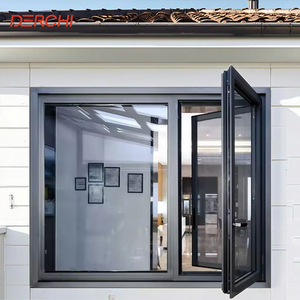
NFRC Hurricane Proof Impact Window Energy Saving Low E Glass Thermal Break Casement Aluminum Windows & Doors
Send an Inquiry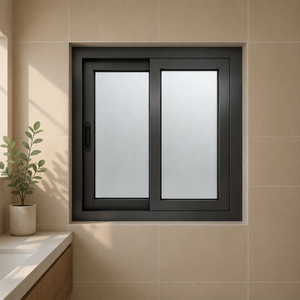
Profile Aluminum Doors and Windows Factories In Foshan China
Send an Inquiry
Customized Bulk Insulated Front Entry Doors French Doors Factory Direct Entry Aluminum Casement Doors
Send an Inquiry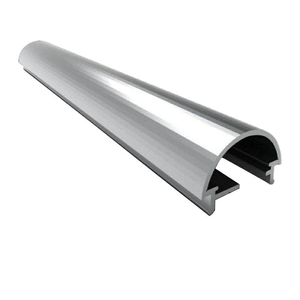
7075 Stronger Alloy Aluminum Extrusion for Fabrication Products Durable Shower Door Aluminum Extrusions - Alloy 6463 U Channel
Send an Inquiry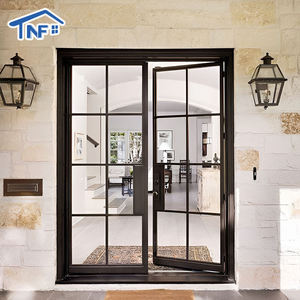
Factory Direct Sale Black Aluminum Frame Casement Entry Door Soundproof Aluminum French Patio Doors for Houses
Send an Inquiry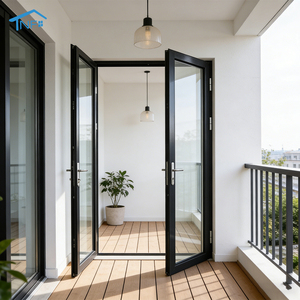
Foshan Aluminum Alloy Entry Doors Factory High Quality Modern Finished Swing Glass Door For Villa CE Certified
Send an Inquiry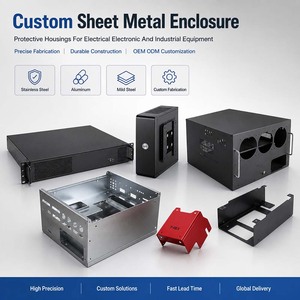
Custom Sheet Metal Enclosure OEM Aluminum Metal Box Chassis Fabrication For Industrial Control Panel Cabinet
Send an Inquiry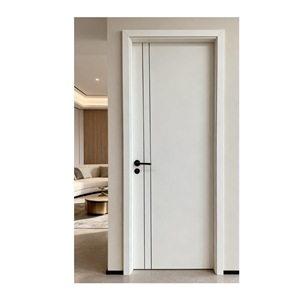
High End Minimalist Fluted Single Room Door Custom Aluminum Frame Stable Structure for Indoor
Send an InquiryState of Global Aluminum Door Fabrication (2026 Procurement Guide)
In modern architectural engineering and commercial construction, specifying the correct aluminum door fabrication factory is a crucial technical decision. Aluminum alloy systems have become the dominant choice for entrance doors, heavy-duty sliding patio doors, curtain wall integrations, and interior partition systems due to their exceptional strength-to-weight ratio, structural resistance against wind load, and imperviousness to environmental oxidation.
Metallurgical & Mechanical Metallurgy Comparison
Understanding alloy composition is essential for sourcing high-durability fabrication doors. The table below delineates the structural and chemical performance characteristics of standard aluminum alloys utilized across top fabrication factories:
| Alloy Designation | Temper Standard | Tensile Strength (MPa) | Yield Strength (MPa) | Primary B2B Application |
|---|---|---|---|---|
| AA 6063 | T5 / T6 | 215 - 245 | 170 - 210 | Architectural casement doors, slim sliding profiles, thermal break window frames. |
| AA 6061 | T6 | 310 | 276 | Structural curtain walls, heavy commercial entrance doors, hurricane-rated framing. |
| AA 6463 | T5 | 185 - 205 | 150 - 170 | High-polish decorative frames, luxury shower enclosures, bright anodized trims. |
| AA 7075 | T6 | 570 | 505 | Ultra-high strength structural reinforcements, specialized industrial control cabinets. |
Evaluating the Top 10 Aluminum Door Fabrication Suppliers
When selecting among top-tier aluminum door suppliers and direct manufacturers, global procurement directors must evaluate vendors across five critical engineering vectors:
Extrusion & Precision Machining
Leading factories operate multi-axis CNC machining centers capable of maintaining dimensional tolerances within ±0.1mm on complex miters, corner lock joinery, and multipoint lock mortises.
Thermal Break Technology
Insertion of high-density PA66-GF25 (25% Glass Fiber reinforced Polyamide) thermal barrier strips via automated crimping machines ensures low thermal conductivity (U-Factor ≤ 0.24 Btu/h·ft²·°F).
Surface Treatment Durability
Capabilities spanning PVDF (Fluorocarbon 3-Coat spraying), Qualicoat-certified architectural powder coating (>60 microns thickness), and anodic oxidation (AA15/AA25 grades for coastal salinity resistance).
Glass Unit Integration
Direct factory assembly of insulated glass units (IGU) featuring Low-E coatings, warm edge flexible spacers, Argon gas filling, and laminated SGP structural interlayers for impact resistance.
International Certification
Compliance with global building standards including NFRC thermal ratings, CE marking for Europe, AS2047 fenestration standards for Australia, and Miami-Dade Florida Building Code (FBC) hurricane impact compliance.
Hardware Hardware Ecosystem
Integration with heavy-duty hidden hinges, German-engineered multipoint lock hardware (e.g., Siegenia, Hoppe, GU), and smart motorized drive units tested for 100,000+ open-close cycles.
Future Procurement & Architectural Trends (2026–2030)
As global architectural design accelerates toward energy efficiency, ultra-clean sightlines, and building automation, aluminum door fabrication is undergoing significant technological evolution:
1. Ultra-Narrow Interlocks and Frameless Minimalist Profiles
Modern luxury residential projects increasingly demand massive motorized sliding doors with visible face widths under 20mm. Achieving structural stability with such slim interlocks requires factories to utilize high-tensile 6063-T6 aluminum alloys combined with structural silicone glazing, allowing panel heights to exceed 4.5 meters without structural deflection under high wind load pressures (up to 5000 Pa).
2. Advanced Vacuum Insulated Glass (VIG) & Low-E Integration
The integration of double Low-E coatings, triple-pane gas-filled IGUs, and emerging Vacuum Insulated Glass (VIG) technology within aluminum thermal break frames allows system U-values to drop below 0.8 W/m²·K. This level of performance enables large glazed doors to conform to ultra-strict European Passive House standards while maintaining physical structural integrity.
3. Smart Motorization & Building Management System (BMS) Interoperability
Commercial doors and high-end residential entrance doors are shifting from manual operation to integrated smart motorization. Embedded brushless linear actuators, biometric access systems, rain-sensing automated closing modules, and CAN-bus integration allow aluminum doors to operate seamlessly within overall smart home and commercial BMS infrastructures.
4. Circular Economy & Low-Carbon Recycled Aluminum
Major international developers are enforcing strict carbon accounting rules. Leading fabrication factories are now adopting low-carbon primary aluminum smelted using hydropower, alongside post-consumer recycled aluminum billets (reducing embodied energy by 95% compared to primary smelting), complete with Environmental Product Declarations (EPD).
BrioWindow Technology Co., Ltd. — Premier Foshan OEM/ODM Manufacturer
Situated in the heart of China's aluminum industrial cluster (Lishui Town, Nanhai District, Foshan), BrioWindow Technology Co., Ltd. stands as a premier direct manufacturer and global exporter of high-precision aluminum doors and windows.
Frequently Asked Questions (B2B Procurement FAQ)
Answers to essential technical and commercial questions raised by international importers, developers, and facade engineers.
Request Direct Factory Quotation & Engineering Assistance
Partner directly with Foshan's top aluminum door fabrication facility. Get complete pricing, technical submittals, glass U-value calculations, and sample profile kits delivered for your project.
