Precision-Engineered Aluminum Window & Door Series
Explore our certified thermal break, architectural sliding, casement, and customized OEM/ODM fenestration products tailored for luxury residential and commercial developments.
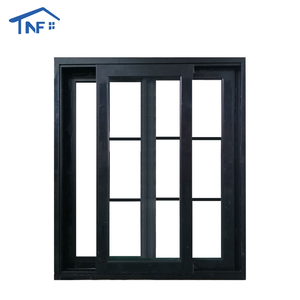
Custom NFRC AS2047 Thermal Break Aluminum Waterproof Double Tempered Low-e Glass French Sliding Windows
Contact Us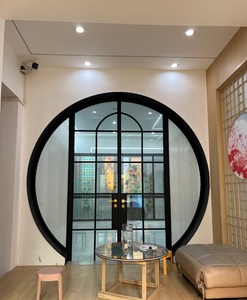
Modern Minimalist Aluminum Glass Door French Arch-shaped Windproof Finished For Villa Living Room Entry
Contact Us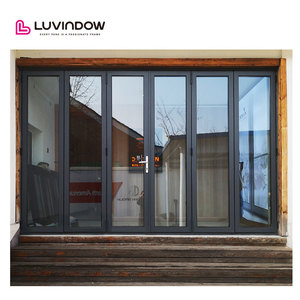
Soundproof Aluminium Laminated Flush Bi-fold Stacker Door Aluminum Frame Glass Door Bifold Doors Folding Patio
Contact Us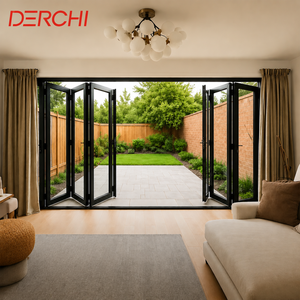
Soundproof Double Glazed Patio Folding Doors Aluminum Bi-Fold System
Contact Us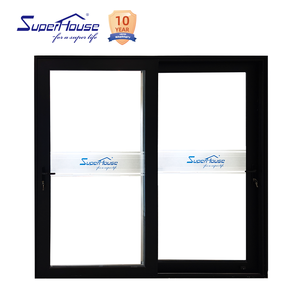
Superhouse For Villa Patio Doors Double Glazed Hurricane Impact Resistant Waterproof Modern Aluminium Sliding Doors
Contact Us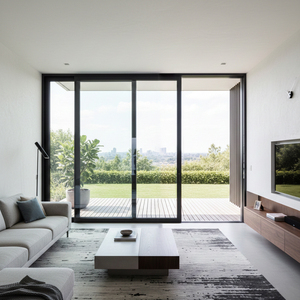
LEDOW Slim Frame Aluminum Lift Slide Door for Patio/Porch High Wind Resistance for North America Luxury Villa
Contact Us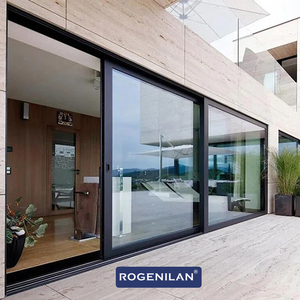
Rogenilan House Exterior Heavy Duty Double Glazed Sliding Door Aluminium Large Lift and Slide Glass Patio Sliding Doors
Contact Us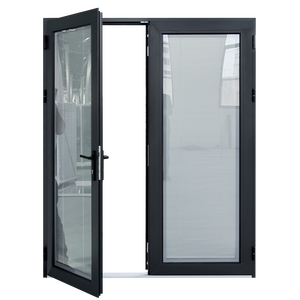
USA Certified Energy-Saving Aluminum Casement Door with Blinds Inside Grill Design Double Pane Aluminum Door
Contact UsEngineering Superiority & Global Manufacturing Footprint
Headquartered in Foshan, China—the world’s premier architectural aluminum production hub—BrioWindow Technology Co., Ltd. delivers institutional-grade OEM/ODM fenestration solutions backed by international accreditations.
Architectural Engineering Whitepaper: Advanced OEM/ODM Aluminum Open Window Systems
Modern architectural design increasingly demands ultra-slim visual profiles without compromising structural safety, thermal efficiency, or acoustic isolation. As a leading OEM/ODM aluminum open window manufacturer and supplier, BrioWindow addresses these conflicting engineering goals through state-of-the-art extrusion metallurgy, advanced thermal breaking technologies, multi-barrier sealing dynamics, and precision mechanical joinery.
1. Metallurgical Foundations: 6063-T5 vs. 6063-T6 Extrusion Profiles
The structural backbone of any high-performance casement, awning, or tilt-turn open window lies in the alloy composition and heat treatment process. We strictly employ primary (non-recycled scrap) aluminum billet conforming to GB/T 5237 / ASTM B221 standards. Primary 6063 aluminum, enriched with controlled ratios of Magnesium (Mg) and Silicon (Si), offers superior surface finish quality, excellent anodizing characteristics, and optimal tensile performance.
| Alloy & Temper Specification | Tensile Strength (Rm MPa) | Yield Strength (Rp0.2 MPa) | Hardness (Webster / Vickers) | Primary B2B Architectural Application |
|---|---|---|---|---|
| 6063-T5 (Air Quenched) | ≥ 160 MPa | ≥ 110 MPa | ≥ 8.0 HW | Standard commercial frame profiles, interior open windows |
| 6063-T6 (Water Quenched + Aged) | ≥ 205 MPa | ≥ 180 MPa | ≥ 12.0 HW | High-rise curtain wall vents, hurricane-impact casement frames |
| 6060-T66 (High-Precision European Spec) | ≥ 215 MPa | ≥ 160 MPa | ≥ 13.0 HW | Ultra-slim thermal break sash profiles requiring micro-tolerances |
2. Thermal Bridge Insulation Technology: Polyamide PA66-GF25 Structural Strips
Uninsulated aluminum exhibits high thermal conductivity ($K \approx 160 \text{ W/m}\cdot\text{K}$), leading to thermal energy loss, condensation build-up, and HVAC inefficiency. Our OEM/ODM open window systems utilize structural thermal barrier technology featuring PA66-GF25 (Polyamide 66 reinforced with 25% glass fiber) insulation strips.
By matching the coefficient of thermal expansion ($\alpha = 2.3 \times 10^{-5} /\text{K}$) between the aluminum profiles and the PA66-GF25 strips, our assemblies maintain structural integrity under extreme diurnal temperature fluctuations (ranging from $-40^\circ\text{C}$ to $+80^\circ\text{C}$). Integrating multi-cavity thermal strips filled with expanded Polyolefin (EPP) or Aerogel insulation achieves frame thermal transmittance rates ($U_f$) as low as 1.1 to 1.4 W/m²K, fully meeting Passive House Institute (PHI) and US Energy Star requirements.
3. Multi-Barrier Weather Sealing & Drainage Physics
Water penetration and air infiltration are frequently caused by inadequate gasket design and poor pressure equalization. BrioWindow open windows utilize a three-tier EPDM (Ethylene Propylene Diene Monomer) sealing system combined with isobaric rain-screen drainage principles:
- Outer Weathering Seal: Deflects driving wind-borne rain and filters macro-particulates.
- Central Isobaric Seal: Forms an internal pressure-equalized cavity that neutralizes exterior dynamic wind pressure, preventing capillary action from pulling water inland.
- Inner Acoustic/Airtight Seal: Continuous vulcanized corner gaskets ensure maximum airtightness (Class 4 according to EN 12207 / ASTM E283).
Why Partner with BrioWindow for OEM/ODM Procurement?
Combining Foshan’s complete industrial supply chain with international quality management systems (ISO9001:2015), BrioWindow provides seamless end-to-end manufacturing for overseas importers, contractors, and project developers.
Rigorous International Certification
Every window series undergoes third-party laboratory verification under North American NFRC/AAMA, Australian AS2047, and European CE standards, guaranteeing compliance for structural wind pressure (DP70+), water tightness, and forced entry resistance.
Turnkey OEM/ODM Tooling & Customization
From custom extrusion die design to tailored hardware groove configurations (C-groove, K-groove), our in-house engineering team converts architectural shop drawings into production-ready dies in under 15 business days.
Surface Finishing Excellence
Featuring AkzoNobel and PPG powder coatings compliant with AAMA 2604/2605 specifications, our profiles deliver superior UV resistance, anti-salt spray corrosion defense (passing 3,000-hour salt spray testing), and over 200 RAL color choices.
Premium Hardware Integration
Seamlessly compatible with premier European hardware manufacturers including Siegenia, Hoppe, Sobinco, and CMECH. Multi-point locking mechanisms guarantee airtight compression sealing and high security against intrusion.
30-Year Warranty & Global Support
We stand firmly behind our structural engineering with a 30-year limited warranty on extrusions, backed by comprehensive installation guides, shop drawing approvals, and dedicated multilingual export assistance.
Export Crating & Logistics Security
Glass and profile bundles are protected with protective film, foam wrapping, corner guards, and fully enclosed IPPC-certified plywood crates to eliminate transit damage during ocean freight shipment.
Standardized B2B OEM/ODM Procurement Process
Our structured 6-stage engineering workflow ensures transparent communication, zero design errors, and reliable delivery for overseas commercial and residential projects.
Drawing Submission
Share project elevation drawings, wind load targets, U-factor specs, and quantity schedules with our engineering team.
Technical DFM Review
Our engineers perform Design for Manufacturing (DFM) evaluation, selecting optimal profile depths, thermal break configurations, and glass payloads.
Shop Drawing Approval
We issue detailed CAD cross-sections, structural calculations, and finish samples for sign-off prior to tooling or cutting.
Precision Manufacturing
Extrusion, thermal strip crimping, CNC cutting, corner assembly, surface coating, and automated glazing assembly take place under strict QC control.
Factory QC Inspection
Pre-shipment testing checks air permeability, water penetration, diagonal tolerances, operation torque, and coating adhesion thickness.
Global Logistics & Support
Units are loaded into sea containers with detailed installation markups, hardware lists, and technical guidance for rapid site installation.
Global Architectural Market & Procurement Trends (2026-2030)
As green building codes tighten across North America, Europe, and Australia, commercial importers and architectural specifiers must adapt to evolving performance demands. Key industry shifts shaping the future of aluminum open window manufacturing include:
1. Ultra-Slim Minimalist Frames
Architects are driving demand for concealed sashes and narrow sightlines (< 45mm frame width) to maximize natural day-lighting. Modern engineering replaces traditional visible heavy frames with structural silicone bonding and flush-mounted outer profiles.
2. Zero-Carbon & Passive House Standards
Energy codes like California’s Title 24 and Australia’s NCC increasingly require window assemblies with overall U-values below 1.2 W/m²K. Dual and triple Low-E insulated glass units (IGU) featuring warm edge spacers and argon gas fill are becoming standard B2B specifications.
3. Smart Motorization & IoT Integration
OEM customization now extends to integrating concealed electric chain actuators and automated sensor inputs (wind, rain, indoor air quality CO2 sensors), connecting seamlessly to building management systems (BMS).
Frequently Asked Questions for B2B Importers & Specifiers
Expert insights addressing key commercial, technical, and logistical considerations when procuring custom aluminum open windows from China.
Ready to Elevate Your Fenestration Project Requirements?
Partner directly with Foshan's trusted OEM/ODM aluminum open window manufacturer. Get engineering assistance, factory-direct pricing, and certified quality for your upcoming developments.
