Featured Architectural Glazing Systems
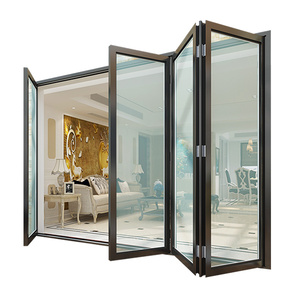
NFRC Factory Hot Sale Bifold Doors Aluminium Folding Patio Bi-fold Aluminum Door Profile Bifold Patio Doors Us Standards
Get a Quote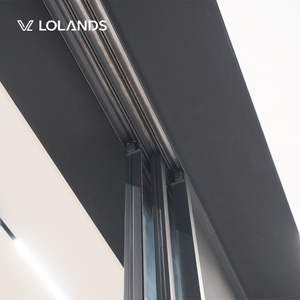
Lolands Slim Frame Aluminum Alloy Sliding Window Stainless Steel Custom Size for Courtyard Residential Projects 5-Year Warranty
Get a Quote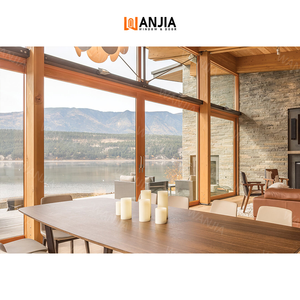
Industry Leader Supplier Patio Balcony Sliding Doors Double Glazing Aluminium Clad Wood Door Residential Exterior Glass Doors
Get a Quote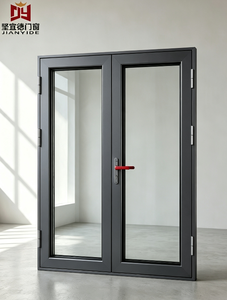
Thermal Break Aluminium Casement Doors Energy Efficient Waterproof Windproof for European Villas Custom OEM and ODM CE Certified
Get a Quote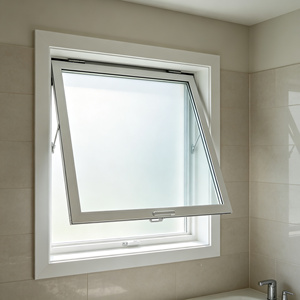
Thermal Break Aluminum Alloy Awning Window Top Hinged Double Glazed Glass Ventilation Design Victorian Living Room Use
Get a Quote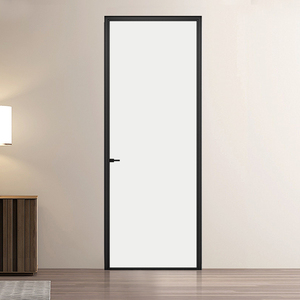
DERCHI Modern Design Villa Aluminum Pocket Door Frosted Glass Slim Frame Space Saving Swing Door for Washroom
Get a Quote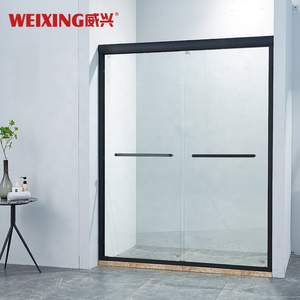
Factory Direct Custom Aluminum Alloy Hotel Home Bathroom Tempered Glass Framed Double Sliding Shower Door
Get a Quote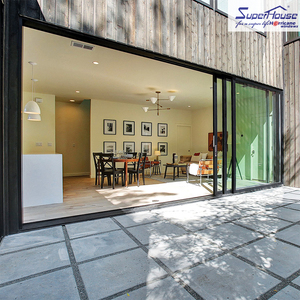
Miami dade hurricane grade Florida Product Approval aluminum alloy windows doors commercial hotel apartment sliding glass door
Get a QuoteWhitepaper: Technical Kinematics & OEM Engineering of Aluminum Crank Out Windows
In modern fenestration architecture, OEM/ODM Aluminum Crank Out Windows (encompassing top-hinged awning systems and side-hinged casement configurations) represent the apex of structural air-tightness, thermal isolation, and controlled mechanical ventilation. Unlike traditional horizontal sliding systems that rely on brush seals prone to friction wear, crank-operated out-swing windows employ continuous multi-point compression gasket geometry. When engaged via a high-torque rotary worm gear operator, the sash is compressed uniformly against the frame, establishing an impenetrable physical barrier against atmospheric infiltration, hurricane-force wind loads, and acoustic energy transfer.
As a premier OEM/ODM manufacturer headquartered in the manufacturing cluster of Foshan, Guangdong (Nanhai District), BrioWindow Technology Co., Ltd. combines precision extruded 6063-T5/T6 structural aluminum profiles with state-of-the-art Polyamide (PA66-GF25) thermal barrier breaks. Our custom export-oriented fenestration solutions cater to luxury residential villas, mid-rise urban developments, and high-performance commercial façades across North America, Europe, Australia, and the Middle East.
Compression Sealing Mechanics
Crank out windows leverage scissor-arm mechanical actuators that translate rotational handle torque into high-tonnage perimeter compression. Combined with triple-extruded EPDM weatherstripping and dual-durometer vulcanized corner keys, the system eliminates perimeter air leakage (Air Infiltration < 0.1 cfm/ft² per AAMA/WDMA/CSA 101/I.S.2/A440 standards).
Optimized Thermal Barrier Core
By incorporating high-density 24mm to 34mm PA66-GF25 structural polyamide thermal break strips filled with expanded polyurethane (PU) foam, our profiles achieve thermal conductivity values down to U-factors of 0.18 Btu/h·ft²·°F (U-value ≤ 1.0 W/m²K), meeting stringent Passive House and Energy Star v7.0 specifications.
Metallurgical Specifications & Surface Treatment Engineering
The structural integrity of an exported window system depends heavily on structural alloy formulation, extrusion wall uniformity, and environmental protective coatings. Below is the structural material standard matrix adhered to in BrioWindow’s Foshan production facilities:
| Engineering Parameter | BrioWindow Standard Specification | International Standard Compliance | B2B Performance Advantage |
|---|---|---|---|
| Alloy Matrix | Primary Billet Aluminum 6063-T5 / 6061-T6 | ASTM B221, EN 755-2 | High tensile strength (Yield Strength ≥ 170 MPa) preventing sash sagging under heavy triple-glazing loads. |
| Profile Wall Thickness | 1.4mm (Residential) to 2.2mm (Commercial Structural) | GB 5237.1-2017 Class High Precision | Resists severe wind loads up to 5000 Pa (Design Pressure DP60 to DP90). |
| Thermal Break Strip | Technoform PA66-GF25 (25% Glass Fiber Reinforced) | DIN 16941 / ISO 20457 | Identical thermal expansion coefficient to aluminum; prevents shear separation during thermal shock. |
| Surface Finishes | PPG Duranar® Fluoropolymer PVDF (3-Coat) / AkzoNobel Powder | AAMA 2605 / AAMA 2604 | 30-year chalk and fade resistance; salt spray corrosion test passed up to 4000 hours (ASTM B117). |
| Glazing Integration | Double (5+12Ar+5) / Triple (6+12Ar+6+12Ar+6) Low-E Insulated Glass | IGCC / SGCC Certified, NFRC Listed | Sound Transmission Class (STC) ratings up to 42 dB; Solar Heat Gain Coefficient (SHGC) optimized to 0.22. |
| Hardware Kinematics | Stainless Steel 304/316 Scissor Arms & Roton Gear Operator | ANSI/BHMA A156.18, AAMA 901 | Cycle tested for 50,000 continuous opening/closing operations without backlash or mechanical play. |
Global Industry & Product Development Trends (2025–2035)
As international building energy codes tighten—such as the European Union’s Energy Performance of Buildings Directive (EPBD) and North American Title 24 energy standards—the global export market for aluminum fenestration is undergoing rapid structural evolution. OEM/ODM manufacturers are moving away from commodity profile cutting to high-precision system engineering.
1. Minimalist Ultra-Slim Sightlines with Structural Glass Bonding
Architectural design trends favor maximum glass-to-frame ratios. Next-generation crank out windows feature concealed sashes where the exterior frame covers the window sash, yielding visible sightlines below 45mm. Structural silicone glazing (SSG) transfers wind load stress directly from the pane to the aluminum profile, allowing window heights exceeding 3.0 meters.
2. Smart Actuation & Automated Building Management (BMS) Integration
The convergence of home automation and commercial BMS requires crank windows to feature concealed 24V DC motorized chain or spindle actuators. Integrated wind/rain sensors automatically drive crank mechanisms shut during adverse weather, while micro-ventilation modes sync with indoor air quality (IAQ) sensors to discharge excess carbon dioxide.
3. Extreme Climate Resilience & Hurricane Impact Rating
With extreme weather events increasing, coastal developers require windows engineered for Florida’s High Velocity Hurricane Zone (HVHZ). Advanced crank out windows incorporate laminated glass with SentryGlas® (SGP) interlayers and multi-point shootbolt locking hardware, capable of withstanding missile impact tests (Large Missile Level D) and dynamic cyclic water pressure.
4. Low-Carbon Billet Sourcing & Circular Powder Coatings
Leading international buyers require Environmental Product Declarations (EPDs). OEM factories are transitioning to hydro-powered primary aluminum billets (< 4.0 kg CO2/kg Al) and VOC-free, heavy-metal-free powder coatings, aligning global fenestration supply chains with Scope 3 carbon reduction targets.
Future B2B Sourcing Trends for Importers, Contractors & OEM Partners
For global procurement managers, window distributors, and real estate general contractors, sourcing aluminum fenestration from China requires evaluating holistic supply chain parameters beyond initial FOB unit pricing:
- Turnkey BIM & CAD Co-Engineering: Modern buyers require suppliers to provide full BIM (Building Information Modeling) Revit files, shop drawings, and 3D FEA (Finite Element Analysis) structural stress models prior to die tooling production.
- Modular Knock-Down (KD) vs. Fully-Assembled Crate Shipping: High container shipping costs drive demand for pre-hung, pre-gasketed knock-down window assemblies that maximize 40ft HQ container loading capacity while retaining quick jobsite assembly protocols.
- Consolidated Multi-Product Sourcing: Importers increasingly prefer single-source manufacturing hubs in Foshan that provide matched architectural finish ecosystems—pairing crank out windows with sliding patio doors, folding doors, curtain walls, and thermal entrance pivot systems under one unified warranty.
- Traceable Quality Assurance Protocols: Demand for full raw-material mill test reports (MTRs), glass tempering batch test certs, and video-recorded water penetration testing for every custom project production run.
Why Partner with BrioWindow Technology Co., Ltd. (Foshan, China)
Located in Lishui Town, Nanhai District, Foshan City—the epicenter of China's aluminum manufacturing industry—BrioWindow Technology Co., Ltd. stands as a premier enterprise specializing in custom OEM and ODM architectural fenestration solutions.
Advanced CNC Manufacturing Infrastructure
Our facility houses 5-axis automated CNC profile machining centers, precision double-head cutting saws capable of 0.1mm dimensional accuracy, automated corner-crimping machinery, and continuous thermal-break strip insertion lines. This automated workflow eliminates manual assembly variance.
Global Testing & Certification Compliance
BrioWindow systems are tested to rigorous international benchmarks, holding approvals for NFRC (US Thermal Certification), CE (European Standard EN 14351-1), AS2047 (Australian Window Standard), and Florida Miami-Dade County HVHZ impact standards.
Comprehensive OEM/ODM Customization Capabilities
From custom extrusion die development (turnkey sample delivery within 15–20 days) to bespoke anodized, PVDF, or real-wood cladding finishes, our engineering team translates architectural drawings into robust production line realities.
30-Year Warranty & Comprehensive Export Support
We provide a 30-year structural after-sales quality assurance framework. Overseas partners receive dedicated technical support, site installation video manuals, replacement hardware reserves, and sea-freight reinforced wooden crate packaging.
Frequently Asked Questions (FAQ) for Global Buyers & Importers
Accelerate Your Commercial Glazing Projects with BrioWindow
Connect directly with our Foshan engineering team for project feasibility reviews, CAD shop drawings, glass thermal calculations, and factory-direct wholesale pricing.
Get a Quote