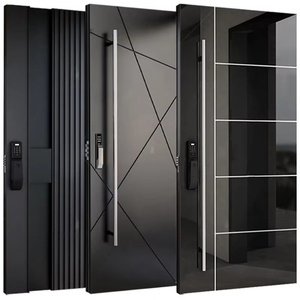
Architectural Grade Product Portfolio
Featured Aluminum Clad & Architectural Door Systems
Engineered for luxury villas, commercial developments, and high-performance building envelopes. Factory-direct wholesale OEM/ODM manufacturing engineered to regional structural codes.
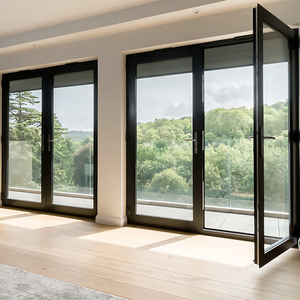
Eloyd Double Swing Casement Door Crittal Aluminum French Design Tempered Glass for Entry Bedroom School Farmhouse Exterior
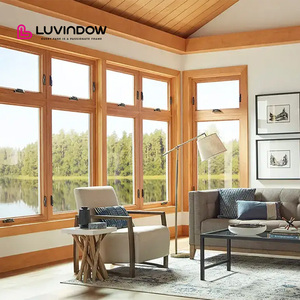
High Quality Hand Crank Aluminum Clad Wood Window Weatherproof Performance for Luxury Villas
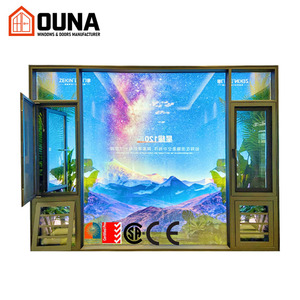
OUNA High Efficiency Windproof Aluminum Windows Wholesale Safe Durable Modern Double Glass Aluminum Frame Casement Windows
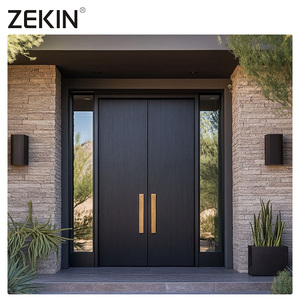
ZEKIN Custom Large Hous Metal Front Entrance Double Door Modern Security Design Armored Aluminum Exterior Door
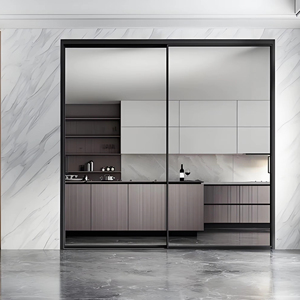
35 Series Aluminum Alloy Kitchen Sliding Door with Tempered Glass for Home Renovation
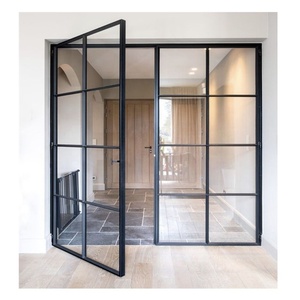
Black Crittall Style Internal/interior/ Indoor Slimline Lounge Aluminum Doors for Sitting Bedroom
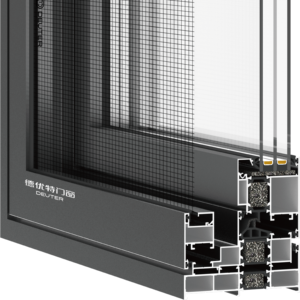
USA Villa Project Impact Resistant Outswing Aluminum Casement Window Double Glass Energy Efficient Hurricane Security Window
Whitepaper & Technical Procurement Guide
Engineering Excellence in Custom Aluminum Clad Door Manufacturing
Modern architectural developments demand fenestration systems that synthesize structural durability, low thermal emissivity, and refined interior aesthetics. As an industry-leading manufacturer located in Foshan, China—the world’s premier aluminum profile engineering hub—BrioWindow Technology Co., Ltd. specializes in custom original equipment manufacturing (OEM) and original design manufacturing (ODM) of high-performance aluminum-clad door and window systems.
Aluminum clad doors represent a hybrid architectural system engineered to eliminate the operational compromises of traditional solid materials. By combining high-tensile, corrosion-resistant extruded T6063-T5 aluminum exterior cladding with an insulated internal core or solid hardwood frame, these systems achieve exceptional structural stability while protecting building interiors against extreme temperature differentials, wind loads, and moisture ingress.
Core Architectural Advantage: Aluminum clad doors provide a permanent weather-resistant shield on the exterior façade that requires zero painting or structural maintenance, paired with high-performance thermal breaks (PA66GF25 polyamide nylon strips) to deliver low U-values compliant with North American (NFRC) and European (CE) Energy Star building standards.
Technical Architecture: How Aluminum Cladding Enhances Structural Lifespan
Traditional wooden doors suffer from expansion, warping, and moisture decay when exposed to fluctuating relative humidity and UV radiation. Conversely, un-clad aluminum doors often fail to provide the interior warmth, tactile luxury, and acoustic dampening demanded by premium residential clients. Aluminum cladding bridges this gap through a composite snap-lock or clip-fastener assembly system that allows independent thermal expansion and contraction between the exterior metallic sheath and the interior core.
Our manufacturing process employs extrusion tolerances conforming to GB/T 5237 high-precision standards. The exterior aluminum profiles undergo electrostatic powder coating, PVDF Kynar 500 fluorocarbon coating, or architectural anodizing, creating a non-porous exterior surface capable of withstanding salt-spray exposure exceeding 3,000 hours in coastal environments (tested under ASTM B117 standards).
Architectural Specification Matrix: Door Systems Comparison
To assist architects, structural engineers, and procurement directors in selecting optimal systems for project schedules, the matrix below outlines performance benchmarks across our core product families.
| System Category | Structural Profile Spec | Thermal U-Factor Range | Acoustic Rating (STC) | Recommended Applications |
|---|---|---|---|---|
| Aluminum Clad Wood Doors | T6063-T5 + Oak/Pine/Teak Core | 0.22 - 0.28 BTU/h·ft²·°F | 38 - 45 dB | Luxury Residential Villas, High-Altitude Resorts |
| Thermal Break Aluminum Doors | 2.0mm - 3.0mm Extrusion + PA66GF25 | 0.26 - 0.32 BTU/h·ft²·°F | 35 - 42 dB | Modern Commercial Entrances, High-Rise Residential |
| Slimline Steel-Look (Crittall) | 1.4mm - 1.8mm Minimalist Frame | 0.38 - 0.45 BTU/h·ft²·°F | 30 - 36 dB | Interior Lounges, French Entrances, Partitioning |
| Heavy-Duty Armored Entrance | Multi-Point Steel Reinforced Core | 0.30 - 0.35 BTU/h·ft²·°F | 40 - 48 dB | Main Villa Gates, High-Security Perimeter Entries |
Factory Expertise & Manufacturing Rigor
Why Global Procurement Partners Rely on BrioWindow
Headquartered in Nanhai District, Foshan, BrioWindow integrates vertical supply-chain manufacturing with rigorous quality management compliant with international building codes.
Certified Quality Assurance
Every batch of aluminum clad doors and windows undergoes stringent air-tightness, water-tightness, and wind-pressure resistance testing matching European (EN) and North American (AAMA/WDMA/CSA) standardized testing methods.
Custom OEM & ODM Tooling
From custom extrusion profile creation to engineered multi-point locking hardware integration (Siegenia, Hoppe, Roto), our engineering staff turns architectural drawings into high-yield mass production runs.
Worldwide Supply Logistics
With established export routes to North America, Australia, Europe, and over 60 countries, we utilize reinforced sea-freight packaging (corner guards, protective film, and fumigated wooden crates) to ensure zero transit damage.
Precision CNC Machining
Automated 5-axis CNC machining centers process frame corners with dual-component corner crimping and injected German sealant, guaranteeing structural rigidity and corner water-tightness.
Advanced Energy Efficiency
Standard glazing configurations include double/triple tempered glass with warm-edge spacers, Low-E coatings (Low-Emissivity), and Argon gas filling, reducing HVAC operational loads by up to 35%.
30-Year Warranty Commitment
We back our architectural systems with a comprehensive 30-year quality assurance warranty covering structural integrity, profile finish against peeling/fading, and hardware functionality.
Industry Insight & Market Dynamics
Future Procurement & Development Trends in Aluminum Clad Fenestration
As international energy regulations become increasingly stringent—such as the European Union’s Energy Performance of Buildings Directive (EPBD) and North American Net-Zero Energy Building initiatives—the global market for aluminum clad doors is undergoing rapid technical evolution. Procurement specialists and real estate developers must anticipate these macro trends to maintain a competitive market edge.
1. Ultra-Low U-Value Architectural Systems & Vacuum Insulated Glass (VIG)
Future architectural specifications are shifting rapidly toward U-factors below 0.15 BTU/h·ft²·°F (U-value < 0.8 W/m²K). To achieve this without swelling door frame depth beyond aesthetic acceptability, OEMs are integrating Vacuum Insulated Glass (VIG) into aluminum clad frames. VIG technology eliminates conductive and convective gas heat transfer within the pane gap, offering passive house performance within a streamlined profile thickness.
2. Smart Building Automation & Concealed Motorization
The convergence of modern residential architecture and Smart Home automation has accelerated demand for motorized opening mechanisms. Next-generation custom aluminum clad doors now incorporate concealed electronic multi-point locking mechanisms, sensor-driven automatic sliding hardware, and biometric access controls (fingerprint scanner, facial recognition, smart home protocol integration via Zigbee/Matter) concealed directly inside the extruded aluminum profile track.
3. Low-Carbon Recycled Aluminum Extrusions & EPD Certification
Carbon footprint transparency is transitioning from a optional credential to a mandatory bidding requirement in Tier-1 commercial procurement. Leading door manufacturers are transitioning to primary aluminum billets processed via renewable hydropower, achieving low embedded carbon (< 4.0 kg CO2/kg Al). Furthermore, Environmental Product Declarations (EPD) are becoming essential documentation for project LEED and BREEAM certifications.
4. Hurricane-Grade Impact Resistance & Seismic Pivot Axles
Climate volatility has expanded demand for hurricane-impact resistant fenestration beyond traditional coastal zones. Modern aluminum clad entrance doors—especially large-scale central axis pivot doors—utilize laminated glass configurations with SentryGlas® (SG) interlayers and high-load stainless steel pivot bearings engineered to withstand wind pressures exceeding 5,000 Pascals (DP70 to DP100 ratings).
B2B Procurement Support
Frequently Asked Questions by Technical Buyers & Importers
Get clear, authoritative answers regarding custom manufacturing, testing standards, shipping, and technical specifications.
What sets aluminum clad doors apart from traditional all-aluminum or solid wood doors?
Aluminum clad doors combine an exterior extruded T6063-T5 aluminum jacket with an interior wood frame or thermally insulated core. This hybrid construction protects the exterior against severe weather, UV light, and moisture damage without requiring painting, while preserving the organic aesthetic warmth and natural acoustic insulation of real wood indoors. The addition of polyamide thermal break strips prevents thermal bridging, making them significantly more energy-efficient than non-thermal break aluminum doors.
Can BrioWindow manufacture door profiles according to custom architectural drawings?
Yes, we provide full OEM and ODM custom engineering services. Our technical team works directly with architectural CAD drawings, Revit BIM models, or opening schedules. We can extrude custom aluminum profile shapes, match specific RAL or PVDF color swatches, engineer specialized glass makeups (double/triple-glazed, laminated, Low-E, tinted), and integrate specified international hardware brands such as Siegenia, Hoppe, or Roto.
What international testing standards and certifications do your products comply with?
Our door and window systems are manufactured under strict ISO 9001 quality management standards and are tested against key international benchmarks. Products exported to North America can be configured to comply with NFRC thermal standards and AAMA/WDMA structural air, water, and wind load tests. For European and Australian markets, our products meet CE marking requirements (EN 14351-1) and AS2047 structural requirements respectively. Certified test reports are available to qualified trade buyers upon request.
What details should be included when submitting a request for quotation (RFQ)?
To expedite an accurate quotation and engineering review, please provide: (1) Architectural opening schedules or elevation drawings; (2) Preferred frame material & cladding finish (e.g., PVDF, powder coat color); (3) Glazing specification (e.g., 6mm + 12Ar + 6mm Low-E); (4) Required performance targets such as U-factor, STC acoustic rating, or design pressure (DP); and (5) Project location, shipping port, and estimated delivery timeline.
How are oversized glass unit doors safely packaged for ocean freight transportation?
We employ rigid export packing standards engineered for long-distance container shipping. Door frames and glass units are wrapped individually in protective anti-scratch film, fitted with heavy-duty EPE foam corner protectors, vacuum-sealed in moisture-barrier plastic, and secured inside fully enclosed fumigated plywood crates. Crates are loaded with internal steel banding to prevent shift or movement within the container during ocean transit.
What after-sales technical support and warranty policies are guaranteed?
BrioWindow provides a comprehensive 30-year warranty on aluminum profile structural integrity and frame stability, a 10-year warranty on insulated glass seal integrity against fogging, and a 5-year warranty on mechanical hardware functionality. We supply complete installation shop drawings, video guidance, and 24/7 online technical support for project engineers and site installation crews worldwide.
