Featured Commercial & Residential OEM Back Door Systems
Architectural-grade fenestration engineered in Foshan. Designed for strict code compliance, severe thermal isolation, and high structural load specifications.
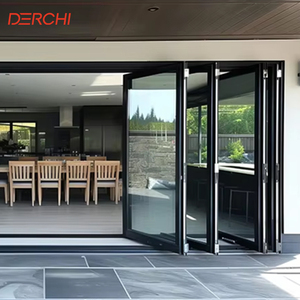
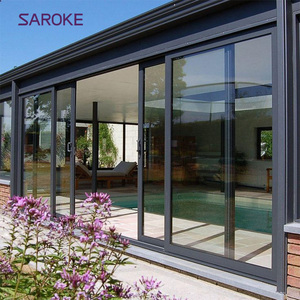
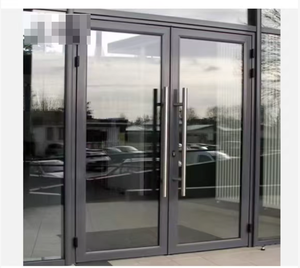
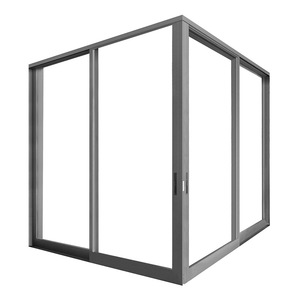
Engineering Precision in Custom OEM Aluminum Back Door Manufacturing
In modern architectural fenestration, the rear exterior threshold represents a crucial nexus of thermal performance, security engineering, and aesthetic integration.
As commercial builders, real estate developers, and international fenestration importers source Custom OEM Aluminum Back Doors, evaluating suppliers requires looking far beyond basic frame dimensions. A back door is no longer merely a secondary utility exit; in high-end residential villas, multi-family developments, and hospitality commercial projects, back doors function as continuous envelope barriers that must withstand extreme wind loads, severe moisture intrusion, thermal bridging, and forced entry attempts.
At BrioWindow Technology Co., Ltd. (headquartered in Foshan, Guangdong—China's primary aluminum hub), our OEM manufacturing methodology integrates structural extrusion design, multi-chambered polyamide thermal breaks, precision European multi-point hardware systems, and advanced glazing tech to deliver back door solutions that pass the most stringent North American, European, and Australian building codes.
1. Metallurgical Excellence & Profile Extrusion Standards
The structural integrity of custom aluminum back doors hinges on the alloy composition and heat treatment process. Standard commercial profiles often compromise on wall thickness or use recycled scrap aluminum with high impurity levels, leading to frame warping and seal degradation over time.
- Primary Extrusion Alloy: We utilize high-purity 6063-T5 and structural-grade 6061-T6 aluminum billets. 6063-T5 provides superior surface finish quality for powder coating and anodizing while maintaining high tensile yield strength (≥110 MPa).
- Wall Thickness Rigor: Our back door extrusion profiles feature structural wall thicknesses ranging from 1.6mm to 3.0mm, exceeding AS2047 and ASTM standards for heavy-duty exterior swing, sliding, and folding applications.
- Multi-Chambered Thermal Breaks: To eliminate cold bridging, profiles incorporate imported Polyamide PA66-GF25 (25% fiberglass reinforced) thermal barrier strips. This configuration achieves structural stability while dramatically reducing frame U-values.
Technical Specification Matrix: OEM Back Door Benchmarks
| Performance Parameter | Engineering Specification | Test Standard / Certification | Commercial Impact |
|---|---|---|---|
| Thermal Transmittance (U-Value) | 1.2 – 1.8 W/m²·K (System Dependent) | NFRC 100/200, ISO 10077-2 | Meets Energy Star & Title 24 efficiency mandates |
| Structural Wind Load | Up to 4500 Pa (Serviceability / Design Pressure) | ASTM E330, AS2047 (N6 Rating) | Resists hurricane-force winds & severe gusts |
| Air Infiltration Rating | < 0.1 L/s·m² at 75 Pa compression | ASTM E283, EN 12207 Class 4 | Zero draft intrusion, maximum HVAC energy savings |
| Water Resistance Pressure | ≥ 700 Pa Static / Dynamic head | ASTM E331, AS4420.4 | Prevents water ingress during torrential rainfall |
| Acoustic Insulation (STC/Rw) | STC 38 – 44 dB (With Laminated Double IGUs) | ASTM E90, ISO 140-3 | Blocks urban traffic noise and external ambient sound |
| Forced Entry Resistance | Multi-Point Locking (3 to 5 latch points) | PAS 24, RC2 / RC3 European Standard | Provides maximum security protection against burglary |
Future Procurement Trends in OEM Aluminum Back Door Manufacturing
As global architectural standards evolve toward net-zero buildings and carbon-neutral construction, B2B procurement strategies are undergoing key structural shifts.
Ultra-Low U-Value & Vacuum Insulated Glass (VIG) Integration
Future exterior back door specifications will increasingly mandate overall system U-values under 1.0 W/m²·K. OEM manufacturing is transitioning to hybrid triple-glazed Low-E profiles and Vacuum Insulated Glass (VIG), providing thermal resistance comparable to solid insulated walls.
Smart Access Hardware & Automated Motorization
Traditional mechanical keys are rapidly being superseded by integrated smart lock ecosystems. OEM buyers require pre-machined lock pockets for hidden electric strikes, motorized automatic opening operators, biometric sensors, and seamless integration with building automation systems (BMS).
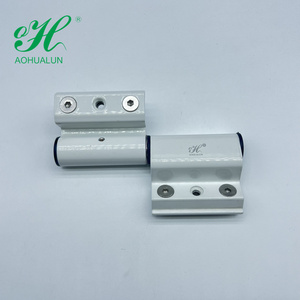
Ultra-Slim Sightlines with Concealed Hinges
Architectural demand is moving toward invisible frame profiles that maximize natural day-lighting. Custom OEM factories must utilize high-tensile hidden pivot hinges and concealed sub-frames capable of supporting leaf weights up to 400kg without visible hardware hardware interruption.
Severe Weather & Hurricane-Impact Engineering
With changing global climate dynamics, coastal and high-wind regions (such as Florida, the Caribbean, and coastal Australia) mandate strict impact-resistant glazing. OEM back doors require PVB/SGP structural interlayers designed to withstand missile impact testing (ASTM E1996).
Low-Carbon Recycled Aluminum & EPD Compliance
Environmental, Social, and Governance (ESG) standards now dictate sourcing decisions. European and North American buyers prioritize OEM suppliers capable of providing Environmental Product Declarations (EPDs) and using primary aluminum processed with renewable hydro-power.
BIM Integration & Direct CAD-to-Factory Fabrication
Procurement friction is minimized through digital twin integration. Modern OEM suppliers accept direct Revit/BIM files to drive automated CNC cutting, milling, and corner-crimping centers, ensuring zero dimensional error between blueprint and finished door assembly.
BrioWindow Technology Co., Ltd. – OEM Manufacturing Capabilities
Headquartered in Foshan, China's premier aluminum capital, BrioWindow serves as a direct manufacturing partner for importers, developers, and trade contractors worldwide.
Sourcing directly from BrioWindow Technology Co., Ltd. gives global procurement teams a distinct structural advantage. With over a decade of specialized export experience servicing the United States, Canada, Australia, and more than 60 countries worldwide, our 32, 52 Lisui Avenue Middle industrial complex in Lishui Town, Nanhai District, Foshan, combines raw extrusion production, surface treating, and complete fenestration assembly under one rigorous Quality Management System.
Our Core Competitive Advantages:
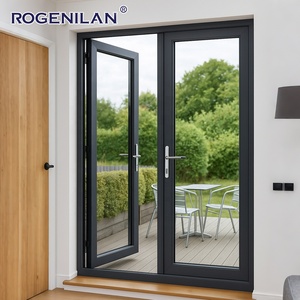
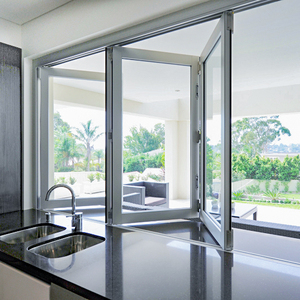
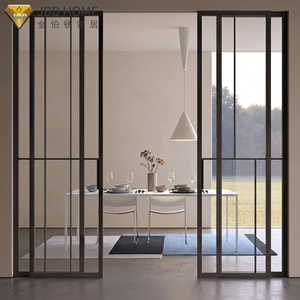
- Unified Fenestration Ecosystem: Unlike narrow suppliers, our manufacturing capabilities span aluminum sliding doors, heavy-duty casement/swing doors, bifold patio doors, central axis pivot entry systems, smart motorized fenestration, PVC profile systems, wooden doors, fire-rated doors, sunrooms, and commercial curtain walls.
- Rigorous International Testing & Certification: Our door systems are subjected to continuous lab testing following European (EN) and North American (ASTM/NFRC) test protocols, holds Australian AS2047 certification, and meets Florida Building Code impact requirements.
- 30-Year After-Sales Quality Assurance: We back our structural profiles and anodized/PVDF surface finishes with an industry-leading 30-year quality guarantee, providing long-term peace of mind for project owners and contractors.
- Comprehensive OEM Customization: From custom extrusion die creation to bespoke anodizing colors, dual-color thermal breaks, specialized glass coatings (Low-E, reflective, acoustic laminated), and customized hardware integration (Roto, Hoppe, Siegenia, or custom brand branding), we tailor every detail to project specifications.
- Export-Ready Structural Packaging: Every completed door frame and glass panel undergoes automated QC inspection before receiving multi-layer protective film, custom corner protectors, and fully enclosed IPPC heat-treated wooden crate packing optimized for sea container transit.
Frequently Asked Questions for OEM Aluminum Back Door Sourcing
Clear, definitive answers to help buyers evaluate technical capabilities, ordering logistics, and factory standards.
Accelerate Your Fenestration Sourcing Today
Get direct access to Foshan's leading aluminum door engineering team. Request custom OEM/ODM technical proposals, physical samples, or factory-direct pricing for your upcoming project.
