Precision OEM Architectural Systems
Engineered for extreme structural integrity, thermal efficiency, and tailored aesthetics for global projects.
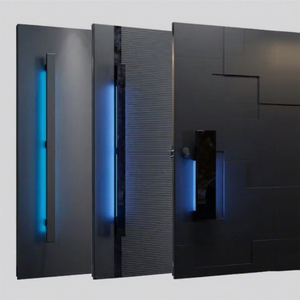
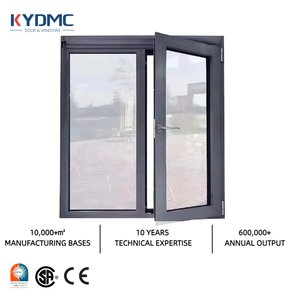
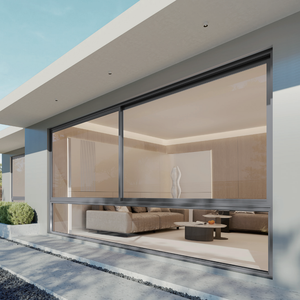

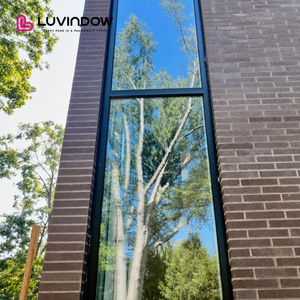
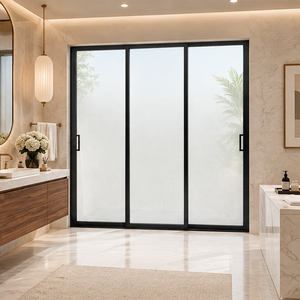
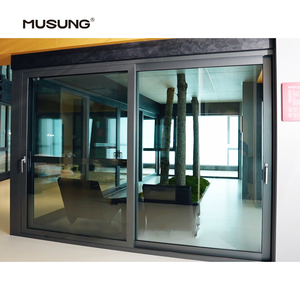
State of the Art: OEM Custom Aluminium Coated Windows Fabrication
Modern architectural design increasingly demands large-format glazing, narrow sightlines, and extreme environmental durability. As a leading Foshan-based OEM custom aluminium coated windows manufacturer and exporter, BrioWindow Technology Co., Ltd. integrates advanced metallurgical extrusion, multi-stage surface coating technologies, and high-performance thermal break engineering. This comprehensive white paper provides developers, procurement managers, structural engineers, and importers with an in-depth analysis of coating chemistries, thermal break mechanics, structural compliance, and global procurement strategies.
1. Advanced Surface Coating Metallurgy: PVDF vs. Powder Coating vs. Anodizing
The operational longevity of exterior aluminum fenestration relies fundamentally on surface coating chemistry. Aluminum profiles exposed to salt spray, UV radiation, thermal cycling, and urban pollution experience galvanic and atmospheric oxidation unless protected by engineered barrier layers.
| Coating Technology | Chemical Composition / Standard | Expected Lifespan | UV & Chalking Resistance | Best Application Environment |
|---|---|---|---|---|
| PVDF Fluorocarbon | 70% Kynar 500 / Hylar 5000 (AAMA 2605) | 25 - 40 Years | Exceptional (Delta E < 5 after 10 yrs) | Coastal Marine, High-UV & High-Rise Commercial |
| Super Durable Powder | TGIC-Free Polyester (AAMA 2604) | 15 - 20 Years | High Thermal & Mechanical Durability | Suburban Residential & Light Commercial |
| Architectural Anodizing | Class I Electrochemical Oxide (≥18μm) | 20 - 30 Years | Immune to Peeling / Metallic Luster | Modern Minimalist Residential & High-Traffic Public |
| Sublimated Wood-Grain | Powder Primer + Polyurethane Transfer Film | 12 - 18 Years | Moderate to High UV Shielding | Luxury Villas & Heritage Architectural Aesthetics |
For custom OEM procurement, choosing the appropriate coating specification directly impacts long-term asset value. AAMA 2605 compliant PVDF (Polyvinylidene Fluoride) coatings utilize a 3-coat/2-bake or 4-coat/3-bake system incorporating a chromate pretreatment, fluorocarbon resin basecoat, and clear topcoat. This matrix provides resistance against salt spray testing exceeding 4,000 hours under ASTM B117 standards, preventing micro-fissuring and color degradation in harsh coastal climates such as Florida, Australia's Gold Coast, or the Middle East.
2. Structural & Thermal Physics: Polyamide Thermal Break Integration
Uninsulated aluminum exhibits high thermal conductivity ($k \approx 160 \text{ W/m}\cdot\text{K}$), leading to thermal bridging, interior condensation, and excessive HVAC energy loads. To achieve stringent North American NFRC, Canadian CSA A440, and European Passive House standards, our custom OEM profiles incorporate PA66-GF25 (Polyamide 66 reinforced with 25% glass fiber) thermal barrier strips.
PA66-GF25 closely matches the coefficient of thermal expansion of architectural aluminum ($2.3 \times 10^{-5}/\text{K}$), ensuring structural stability during extreme temperature fluctuations between interior conditioned spaces and severe ambient conditions outside (from $-30^\circ\text{C}$ Canadian winters to $+45^\circ\text{C}$ desert summers). Combined with double- or triple-pane Insulating Glass Units (IGU) featuring warm-edge spacers, Low-E coatings, and Argon gas fill, system thermal transmittance ($U$-Factor) is reduced to as low as $0.85 \text{ W/m}^2\cdot\text{K} \ (0.15 \text{ BTU/h}\cdot\text{ft}^2\cdot^\circ\text{F})$.
Engineered Quality & OEM Customization Capabilities
Why leading global developers and distributors partner with BrioWindow Technology Co., Ltd.
NFRC & CSA Certified Compliance
Pre-engineered profiles compliant with North American NFRC energy ratings, CSA A440 building codes, and Australian AS2047 structural and water penetration standards.
BIM & CAD OEM Co-Engineering
Complete structural shop drawings, REVIT BIM models, and custom profile extrusion die creation tailored precisely to your project's architectural opening schedules.
Precision Foshan Industrial Supply Chain
Located in Lishui, Nanhai District, Foshan—the global epicenter of aluminum extrusion—providing direct access to high-purity 6063-T5/T6 billet stock and advanced hardware.
Multi-Stage Quality Assurance
100% factory inspection covering air infiltration, water resistance ($Pa$), corner structural tension, frame squareness, and wet-film/dry-film coating thickness testing.
30-Year Extended Warranty
Long-term contractual quality assurance covering profile structural integrity, seal performance, hardware mechanics, and surface finish adhesion.
Export Packaging & Logistics
Custom fumigated plywood crates with foam interleaving, edge protectors, and steel strapping designed for safe ocean transportation across 60+ countries.
Future Global Procurement Trends in Architectural Fenestration
The global window and door procurement landscape is experiencing a paradigm shift driven by decarbonization mandates, digital supply chain integration, and evolving architectural design philosophies. B2B buyers, real estate developers, and international trading companies must align their sourcing models with several macro trends:
1. Decarbonization & Embodied Carbon Regulations
Governments across North America, Europe, and Australia are establishing strict embodied carbon limits for building materials. Aluminum, while highly durable, historically carried a high energy footprint. The future of OEM procurement relies on sourcing low-carbon aluminum billets produced via hydro-powered smelting, combined with recycled aluminum content (up to 75% post-consumer scrap).
Furthermore, energy codes such as ENERGY STAR® Version 7.0 in the United States and Part L regulations in the UK mandate significantly lower $U$-factors. Importers are increasingly specifying triple-pane argon-filled IGUs with dual Low-E coatings, warm-edge silicone foam spacers, and multi-chambered thermal break profile geometries.
2. Ultra-Slim Sightlines & Large-Format Structural Glazing
Contemporary residential and commercial architecture prioritizes expansive daylighting and unobstructed views. Sourcing demands have pivoted toward narrow-frame casements, middle-narrow interlocks for sliding doors (sightlines under 20mm), and central-axis pivot entrance systems capable of supporting leaf weights up to 500 kg.
Achieving these aesthetic targets requires high-tensile 6061-T6 or specialized 6063-T6 aluminum alloys combined with structural silicone bonding (SSG) to ensure wind-load deflection limits ($L/175$ or $L/250$) are met under extreme typhoon or hurricane zone pressures.
3. Smart Fenestration & Building Automation Integration
The convergence of IoT and building envelope management has made smart motorized opening systems a standard specification for high-end developments. OEM custom window manufacturing now encompasses pre-wired concealed motor tracks, automated sensor integration (wind, rain, air quality), and seamless synchronization with modern Smart Home and Building Management Systems (BMS).
Frequently Asked Questions for International OEM Buyers
Direct technical and commercial answers to common challenges faced during OEM window procurement, factory auditing, and international shipping.
What is the typical lead time for custom OEM extruded aluminium coated window orders?
How does BrioWindow ensure coating quality meets international AAMA 2605 specifications?
Can you manufacture custom window systems to meet regional wind load and acoustic requirements?
What documentation and export packaging are provided to prevent transit damage?
What after-sales technical support and warranties are provided to overseas buyers?
Partner with a Trusted OEM Aluminium Window Manufacturer
Whether you are sourcing for a luxury high-rise development, commercial storefront, or custom residential villa project, our Foshan engineering team is ready to review your architectural drawings and deliver precision manufacturing.
Contact Us