Featured Product Catalogue
High-Performance Wholesale Aluminium Systems
Architectural-grade aluminium sliding doors, lifting-sliding configurations, and thermal-break windows manufactured to AS2047, NFRC, and CE international standards.
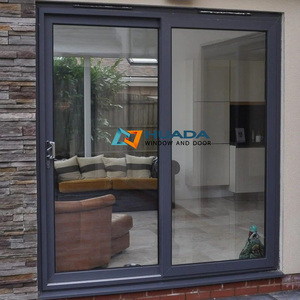
Balcony Patio Aluminum Windows and Doors Energy Efficiency Hurricane Impact Sliding Door
Inquire Now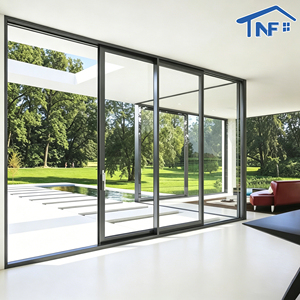
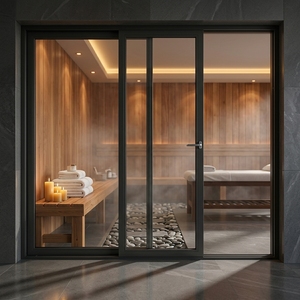
Sliding Door Modern House Aluminum Windows and Doors Design Triple Double Glass Sliding Doors For Outdoor & Interior Use
Inquire Now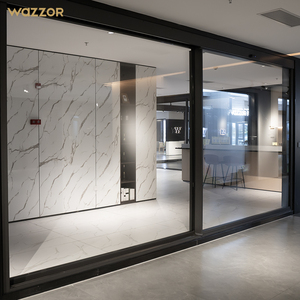
Wazzor Aluminum Double-Glazed Sliding Windows and Doors for Interior Bedroom Garden Use-Minimalist Design Windproof Feature
Inquire Now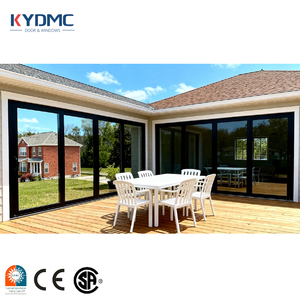
Customized Aluminum Double Glazed Sliding Door NFRC AS2047 Balcony Courtyard American Australia Contractor Lift and Sliding Door
Inquire Now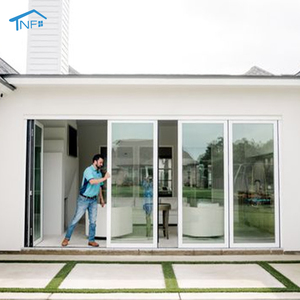
Custom Aluminium Exterior NFRC AS2047 Waterproof Double Low-e Glass Patio Bifold Sliding Swing Panoramic Doors for Home Garden
Inquire Now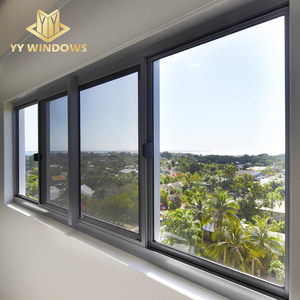
Double Glazed Aluminum Sliding Window Aluminium windows and Doors
Inquire Now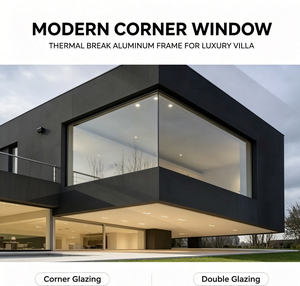
Minimalist Style Corner Bay Window, Thermal Break Aluminum Corner Window with Large Glazing
Inquire Now
Architectural Fenestration Analysis
Engineering & Technical Trends in Aluminium Sliding Systems
A comprehensive examination of structural metallurgy, thermal-break dynamics, minimalist frame geometry, and high-load roller mechanism developments shaping modern building envelopes.
Polyamide Thermal Barriers & Energy Efficiency
Modern commercial and residential construction codes mandate stringent envelope performance. Traditional non-thermal aluminium profiles exhibit high thermal conductivity ($k \approx 160 \text{ W/m}\cdot\text{K}$). Current manufacturing trends in Foshan integrate high-density Polyamide 66 reinforced with 25% glass fiber (PA66-GF25) thermal break strips.
Multi-cavity thermal break designs drop profile thermal transmittance ($U_f$) values to under $1.6 \text{ W/m}^2\cdot\text{K}$, enabling full compliance with U.S. NFRC, Title 24, and European Passivhaus fenestration targets.
By pairing multi-cavity thermal breaks with triple-pane insulated glass units (IGUs) containing warm-edge composite spacers and argon gas fill (90%+ purity), modern aluminium sliding doors mitigate thermal bridging and prevent internal condensation under severe outdoor temperature differentials.
Minimalist Sightlines & Structural Glazing
Architectural demand has shifted decisively toward ultra-slim, floor-to-ceiling panoramic sliding door configurations. Leading Chinese manufacturers are driving structural engineering breakthroughs by transferring wind loads directly to the insulated glass unit through structural silicone bonding (SSG).
Interlock profiles with visible widths reduced to 16mm–25mm support oversized glass panels exceeding 1,000 kg per sash without structural deflection.
Heavy-duty lift-and-slide mechanisms utilize CNC-machined stainless steel tandem rollers on heavy-gauge extruded tracks. This hardware allows massive multi-panel sliding units (up to 4 meters high) to operate effortlessly with minimal initial manual force ($< 20 \text{ N}$).
Hurricane Impact & Weatherproofing Science
Fenestration systems exported to coastal regions in Florida, the Caribbean, and Northern Australia must withstand extreme cyclic wind pressure and high-velocity projectile impacts. Advanced factory customization involves heavy-wall 6063-T6 alloy extrusions with profile wall thicknesses up to 3.0mm.
System engineering utilizes multi-point locking mechanisms paired with SentryGlas® (SG) ionoplast laminated glass to withstand TAS 201/202/203 testing and Australian AS2047 structural load standards ($>6000\text{ Pa}$).
Precision EPDM (Ethylene Propylene Diene Monomer) continuous weatherstripping gaskets paired with hidden, zero-threshold flush drainage systems achieve exceptional water penetration resistance up to $1050 \text{ Pa}$, eliminating interior flooding during typhoons and rainstorms.
Technical Reference
Aluminium Sliding System Performance Matrix
Engineered benchmark specifications across core factory product categories for architectural specification and bulk B2B procurement planning.
| System Category | Profile Alloy & Wall Thickness | Thermal Transmittance ($U_w$) | Acoustic Insulation (STC) | Air & Water Infiltration Rating | Max Sash Load Capacity |
|---|---|---|---|---|---|
| Heavy-Duty Lift & Slide | 6063-T6 Aluminium / 2.0mm–3.0mm | 1.2 – 1.6 W/m²K | 40 dB – 45 dB | ASTM E331 Pass (1050 Pa) | Up to 600 kg / Sash |
| Minimalist Slim Interlock | 6063-T5 Aluminium / 2.0mm–2.5mm | 1.4 – 1.8 W/m²K | 35 dB – 40 dB | AS4284 Pass (700 Pa) | Up to 350 kg / Sash |
| Hurricane Impact Sliding | 6063-T6 Reinforced / 2.5mm–3.0mm | 1.5 – 2.0 W/m²K | 42 dB – 48 dB | HVHZ TAS 202 (1200 Pa) | Up to 450 kg / Sash |
| Standard Balcony Patio Sliding | 6063-T5 Aluminium / 1.4mm–1.8mm | 1.8 – 2.4 W/m²K | 30 dB – 35 dB | GB/T 7106 Class 6 (450 Pa) | Up to 200 kg / Sash |
Strategic Sourcing Foresight
Future B2B Procurement Trends in China Wholesale Aluminium Doors
Key economic, regulatory, and technological shifts that procurement officers, developers, and trade importers must evaluate when sourcing from Chinese suppliers over the next decade.
1. Sourcing Green Aluminium & Carbon Accounting (CBAM Compliance)
International environmental regulations, including the European Union's Carbon Border Adjustment Mechanism (CBAM) and North American LEED v4.1 standards, are reshaping metals procurement. Global buyers are prioritizing Chinese manufacturers utilizing low-carbon hydro-powered secondary aluminium billets and recycled post-industrial scrap.
Leading Foshan factories are implementing certified Environmental Product Declarations (EPDs), documenting cradle-to-gate carbon footprints ($< 4.0 \text{ kg CO}_2\text{e per kg aluminium}$). Wholesale buyers who secure green-certified extrusion supply chains now will mitigate future border carbon tariffs and fulfill ESG mandates imposed by institutional project lenders.
2. BIM LOD350 Direct Factory Integration & Digitalization
Paper-based CAD submittals are rapidly giving way to direct BIM (Building Information Modeling) file exchange. Modern B2B procurement workflows demand that Chinese original equipment manufacturers (OEMs) provide parametric Revit and IFC models at Level of Development 350 (LOD350) or higher.
By offering exact thermal calculations, structural glass anchors, and hardware clearance profiles within the BIM file, Chinese direct-factory partners enable general contractors to run automated clash detection, optimize opening schedules, and compress submittal approval timelines from weeks to days.
3. Prefabricated Unitized Systems & Modular Packaging
High labor costs at construction destinations (North America, Australia, Western Europe) are driving demand for factory-assembled, knock-down (KD) pre-glazed fenestration kits. Importers are requesting standardized unitized frame configurations that minimize job-site installation hours.
Factory packaging technology has evolved to incorporate customized steel A-frames, heavy-duty sea-freight wooden crates with vacuum VCI rust-inhibitor wrapping, and barcode-tracked piece labeling. This ensures zero damage during transoceanic shipping and enables immediate crane-to-opening installation upon container unsealing.
4. Smart Home Motorization & Hidden Automation Integration
The integration of IoT motorized actuators directly into concealed aluminium door head tracks represents one of the fastest-growing procurement vectors. Commercial properties and high-end luxury residences are shifting toward automated sliding doors triggered by smart keypads, mobile apps, or building automation systems (BAS).
Wholesale manufacturers in Foshan are embedding 24V DC brushless silent motors, magnetic drive levitation systems, and integrated safety infrared sensors directly into the profile geometry, allowing seamless architectural integration without compromising clean minimalistic designs.
Manufacturing Infrastructure
Foshan Factory Capabilities & Enterprise Advantages
Headquartered in Nanhai District, Foshan City—China's global capital for architectural aluminium production—BrioWindow Technology Co., Ltd. delivers direct factory engineering, rigorous quality assurance, and global supply chain reliability.
10+ Years Export Specialization
With over a decade of dedicated export experience, our systems are optimized for strict building codes in the USA, Canada, Australia, and over 60 countries worldwide. We understand local framing practices, structural loads, and compliance documentation requirements.
Comprehensive Multi-Category Sourcing
Consolidate your entire door and window schedule under one accountable supplier. In addition to high-end aluminium sliding doors, our manufacturing output encompasses casement windows, folding doors, central axis pivot doors, PVC systems, wooden doors, fire-rated doors, sunrooms, and curtain walls.
Laboratory Certified Testing
Every product line undergoes structural, air infiltration, and water penetration testing in accordance with European (EN) and North American (ASTM/AAMA) methods. Products comply fully with AS2047, NFRC, CE, and China National Quality Testing Standards prior to factory release.
30-Year Quality Assurance
We back our architectural aluminium extrusions, AkzoNobel/PPG fluorocarbon PVDF powder coatings, and structural integrity with an industry-leading 30-year quality guarantee. Our dedicated technical support desk provides lifetime guidance to overseas partners.
Custom Engineering & CAD/BIM Support
Our in-house engineering team reviews project drawings, structural deflection requirements, and opening schedules. We deliver shop drawings, 3D section details, and custom hardware configurations tailored to specific job site criteria before production cutting begins.
Direct Wholesale Factory Pricing
Eliminate middleman markups by dealing directly with our Foshan factory base. Our integrated supply chain—spanning billet extrusion, thermal break assembly, surface treatment, glass IGUs, and final assembly—ensures maximum cost efficiency for commercial volume buyers.
Buyer Guidance
Frequently Asked Questions for Wholesale B2B Sourcing
Answers to technical, operational, and commercial questions commonly raised by project developers, architects, and trade importers.
What types of doors and windows does your Foshan factory manufacture? +
We operate a vertically integrated manufacturing facility in Foshan producing architectural aluminium alloy sliding doors, heavy-duty lift-and-slide doors, bi-fold folding doors, casement and swing windows, sliding windows, central axis pivot doors, and smart motorized fenestration systems. Additionally, we manufacture engineered PVC windows/doors, solid wooden interior doors, fire-rated doors, sunrooms, and commercial curtain wall systems.
Do your aluminium sliding doors comply with US, Australian, and European building standards? +
Yes. Our export products are designed and structurally calculated to meet key international performance benchmarks:
- Australia / New Zealand: Tested to AS2047 (Windows in Buildings) and AS1288 (Glass in Buildings), certified under WERS.
- North America: Compliant with NFRC thermal performance ratings, AAMA window specifications, and Florida HVHZ hurricane impact testing (TAS 201/202/203).
- Europe: CE marked under EN 14351-1 for air permeability, water tightness, and wind load resistance.
Can you manufacture to custom dimensions, architectural drawings, and specific hardware brands? +
Absolutely. Over 90% of our wholesale factory production is custom-engineered to project architectural schedules. You can submit CAD drawings, PDF schedules, or BIM files. Our engineering department verifies structural glass thickness, wind load deflection, frame depth, and thermal break placement. We supply premium domestic hardware as well as top-tier European hardware systems such as Siegenia, Hoppe, G-U, and Sobinco upon project specification.
What technical information should I provide to receive an accurate factory quotation? +
To provide a precise engineering quote and structural evaluation, please share:
- Project location and building application (residential villa, high-rise residential, commercial office, hotel).
- Window/door elevation schedule with rough opening sizes ($W \times H$).
- Preferred system type (e.g., Slim-frame sliding, Lift & Slide, Thermal Break vs. Non-Thermal).
- Glazing specification (e.g., 6mm Low-E + 12Ar + 6mm Clear, Triple Glazed, Laminated Hurricane Glass).
- Finish requirements (Powder Coating color code, Anodized, Fluorocarbon PVDF).
- Target performance criteria (Wind pressure load in kPa, U-factor targets, STC acoustic ratings).
- Destination seaport and estimated delivery schedule.
What is your factory quality control process and after-sales warranty coverage? +
Our manufacturing operations adhere strictly to ISO9001 quality management systems. Quality control inspection points occur at raw profile extrusion, powder coating film thickness verification, glass IGU seal integrity testing, hardware operational cycle testing, and mock-up pre-assembly. We provide a comprehensive 30-year warranty covering aluminium profile structural performance and surface finish integrity, along with continuous technical support and replacement hardware provisioning for overseas clients.
How are wholesale orders packaged to prevent sea-freight transport damage? +
All units are protected using a five-layer export packaging protocol: (1) Protective PE film on aluminium profiles, (2) Corner guard shock protectors, (3) Bubble wrapping, (4) Waterproof shrink wrap, and (5) Fully enclosed fumigated plywood crates or steel A-frame racks for crane un-loading. Every package is labeled with opening identification numbers matching job-site architectural floor plans.
Partner with China's Premier Aluminium Sliding Door Factory
Ready to streamline your architectural supply chain? Connect with our Foshan engineering team for shop drawings, factory-direct wholesale pricing, and technical project submittals.
Inquire Now