Featured Aluminum Door & Window Product Systems
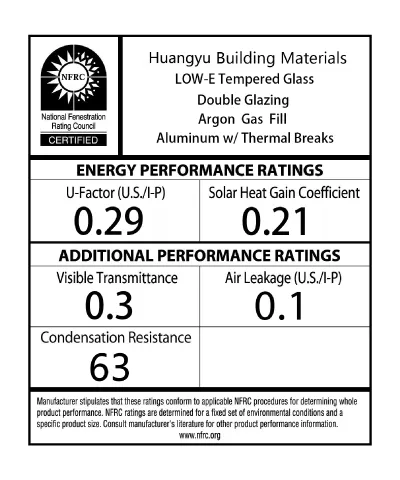
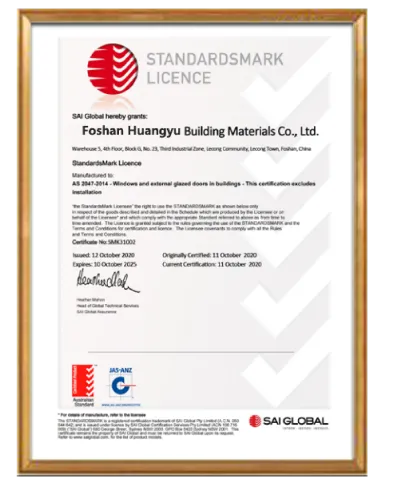
Factory-direct thermal break systems compliant with AS2047, NFRC, CE, and ASTM specifications for global structural and thermal demands.
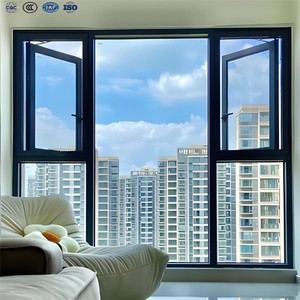
Aluminium Low-E Glass Custom Design Australian Standard Residential French-Style Casement Windows
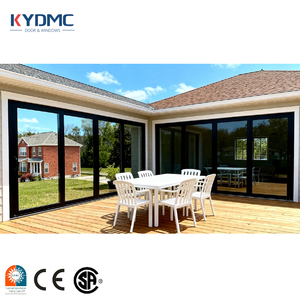
Customized Aluminum Double Glazed Sliding Door NFRC AS2047 Contractor Lift & Sliding Door
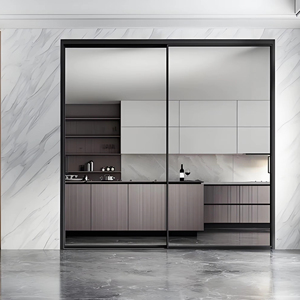
35 Series Aluminum Alloy Interior Kitchen Sliding Door with Safety Tempered Glass
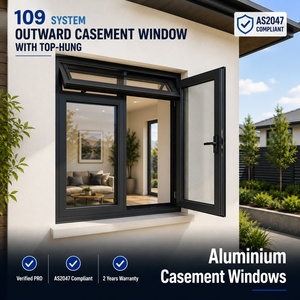
AS2047 Compliant Top Hung Waterproof Double Glazed Australian Standard Casement Window
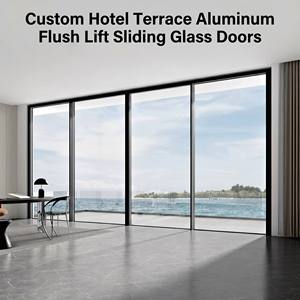
Resort Modern Multi-Track Panoramic Slim Profile Exterior Aluminum Sliding Glass Door
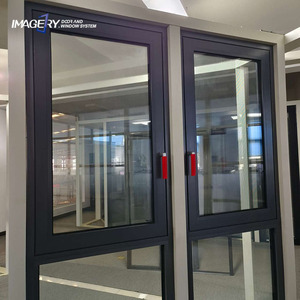
Modern Design Aluminum Tilt & Turn Window with Triple Glazed Hurricane Proof Glass
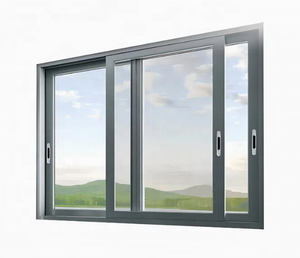
Thermal Break Low-E Glass Double Glazed Horizontal Slider Corrosion-Resistant Window
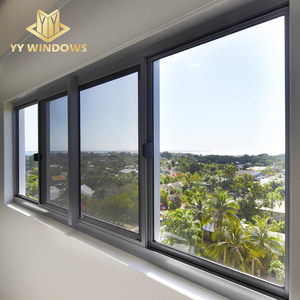
Architectural Grade Double Glazed Heavy Duty Aluminum Sliding Window System
Architectural Aluminum Door Sourcing: Whitepaper for International Procurement & Engineering
As modern architectural design moves inexorably toward maximized day-lighting, seamless indoor-outdoor living, and extreme thermal efficiency, the structural role of modern aluminum door and window systems has expanded dramatically. Selecting the right manufacturer in China—specifically within Foshan, Guangdong, the global nexus of extrusion technology and architectural fenestration—demands a sophisticated understanding of alloy composition, structural thermal break engineering, insulated glass unit (IGU) performance, and international building code certifications.
This technical whitepaper authored by senior fenestration engineers at BrioWindow Technology Co., Ltd. outlines the technical parameters, structural dynamics, and material science required by commercial contractors, real estate developers, and luxury residential builders importing high-end aluminum door systems from China to the United States, Canada, Australia, and Western Europe.
1. Metallurgy & Profile Physics: T6 6063 Aluminum Alloy Extrusion
The structural integrity of modern patio sliding doors, bi-fold doors, and central axis pivot systems begins with virgin aluminum ingot metallurgy. Standard low-cost profiles often utilize recycled aluminum scrap with uncontrolled iron and silicon impurities, leading to frame sagging, air leakage, and premature finish degradation under high wind loads.
- Alloy Grade: We exclusively extrude high-precision 6063-T6 architectural grade aluminum alloy. The T6 temper designation indicates heat-treatment and artificial aging, achieving a tensile strength exceeding 205 MPa and a yield strength of at least 170 MPa.
- Wall Thickness Rigor: While residential doors often settle for 1.2mm to 1.4mm profile thickness, BrioWindow structural door lines feature load-bearing extrusions ranging from 2.0mm to 3.0mm structural wall thickness, ensuring minimum deflection under severe acoustic and hurricane wind pressures.
- Surface Finishes: All profiles undergo surface passivation followed by fluorocarbon (PVDF) coating (compliant with AAMA 2605 specifications for 20-year weatherability) or high-micron hard anodizing (25μ+) to resist salt-spray corrosion in marine and coastal installations.
2. Advanced Thermal Barrier Technologies: PA66-GF25 Polyamide Strips
Aluminum possesses a high thermal conductivity ($k \approx 200 \text{ W/m}\cdot\text{K}$), making solid frames unviable for energy-conscious building envelopes. To achieve compliant U-factors required by North American Title 24, IECC, and Australian NCC codes, BrioWindow integrates multi-cavity thermal break designs.
Rather than using cheap PVC strips that degrade under UV radiation and exhibit coefficient of thermal expansion mismatches, our systems feature PA66-GF25 (Polyamide 66 reinforced with 25% short glass fibers) thermal barriers. PA66-GF25 closely mirrors the thermal expansion rate of structural aluminum ($2.3 \times 10^{-5}/\text{K}$), preventing delamination and frame distortion across broad operating ambient temperatures ($-40^\circ\text{C}$ to $+80^\circ\text{C}$). Coupled with multi-cavity insulation infill foams, our systems lower complete assembly U-factors down to 1.1 – 1.4 W/m²K.
System Performance & Engineering Matrix
Rigorous laboratory testing indicators comparing door system configurations against international standards.
| System Category | Structural Wind Load | Air Infiltration Rate | Water Resistance | Thermal U-Factor | Acoustic Rating |
|---|---|---|---|---|---|
| Lift & Slide Doors (135 Series) | Ultimate 4500 Pa (AS2047 / ASTM E330) | < 0.15 L/s·m² at 75 Pa | 750 Pa (High Threshold) | 1.2 – 1.6 W/m²K | STC 42 dB / Rw 41 dB |
| Slim-Frame Panoramic Sliding | 3000 Pa Structural Load | < 0.30 L/s·m² at 75 Pa | 450 Pa Flush Track Drain | 1.4 – 1.8 W/m²K | STC 38 dB / Rw 37 dB |
| Heavy-Duty Bi-Fold Doors | 3500 Pa Serviceability | < 0.20 L/s·m² at 75 Pa | 600 Pa Compression Seal | 1.3 – 1.7 W/m²K | STC 40 dB / Rw 39 dB |
| Central Axis Pivot Entrance | 4000 Pa Structural Peak | < 0.25 L/s·m² at 75 Pa | 500 Pa Drop-Down Seal | 1.5 – 1.9 W/m²K | STC 36 dB / Rw 35 dB |
| Tilt & Turn / French Casement | 5000 Pa Hurricane Rated | < 0.05 L/s·m² at 75 Pa | 900 Pa Triple Gasket | 0.8 – 1.2 W/m²K | STC 45 dB / Rw 44 dB |
Strategic Global Procurement Trends (2026–2030)
Key evolutionary vectors shaping high-end architectural fenestration and international sourcing decision-making.
Ultra-Slim Sightline Minimalist Geometry
Modern architectural aesthetics demand visual minimalism. Sourcing trends prioritize door systems with central interlock vertical sightlines reduced down to 16mm–25mm, shifting structural loads directly to structural silicone bonding with tempered insulated glass units.
Decarbonization & EPD Certification
Global developers face strict embodied carbon limits. Top Chinese exporters now supply Environmental Product Declarations (EPD) detailing carbon intensity per square meter, supported by low-carbon primary aluminum smelted with renewable hydro-power.
Smart Motorization & Building Automation
Centralized smart home integration has expanded into heavy glazing. Electric conceal-drive motors, pinch-free safety sensors, smart glass tinting (electrochromic), and biometric access controls are transitioning from niche upgrades to standard project specs.
Enterprise Advantage: Why Partner with BrioWindow
Integrated manufacturing, rigorous quality assurance, and end-to-end technical support based in Foshan, China.
Foshan Manufacturing Hub Ecosystem
Situated in Lishui Town, Nanhai District, Foshan—the world's most dense cluster of aluminum extruders, glass fabricators, and hardware foundries—BrioWindow leverages complete supply chain integration to offer factory-direct pricing without sacrificing engineering quality.
Comprehensive Quality Testing & 30-Year Warranty
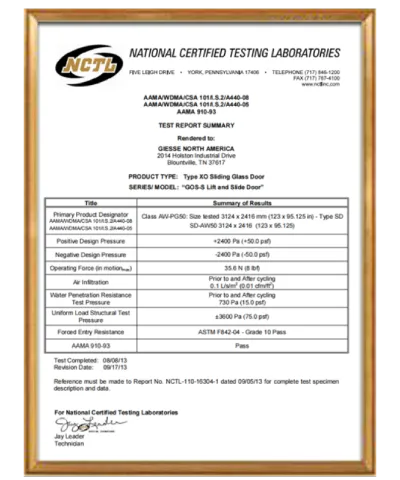
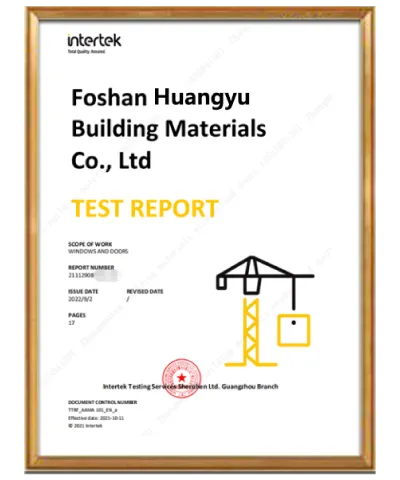
Every export order undergoes strict zero-defect quality control inspections: air tightness chamber tests, forced entry resistance tests, corner seam shear strength verification, and hardware cycle testing (up to 100,000 cycles). We back our profiles with a 30-year quality assurance warranty.
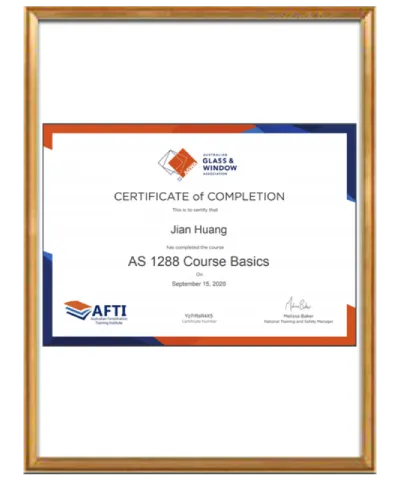
International Standard Testing & Factory Certifications
Frequently Asked Questions for Importers & Contractors
Expert answers to common procurement, compliance, and custom design inquiries when sourcing from China.
Ready to Elevate Your Project's Fenestration?
Connect with our senior engineering team in Foshan today for technical consultation, structural estimates, and factory-direct quotation.
Inquire Now