Industry Whitepaper
Foshan Manufacturing Benchmark & Enterprise Competency
The global demand for high-grade architectural aluminium door systems has shifted dramatically over the past decade. Located in Lishui Town, Nanhai District, Foshan City, Guangdong Province—the undeniable capital of global aluminium extrusion and fenestration engineering—BrioWindow Technology Co., Ltd. represents the pinnacle of Chinese direct-factory manufacturing. Operating with comprehensive structural engineering capabilities, BrioWindow bridges the gap between raw extrusion metallurgy and high-end international architectural requirements.
Information Gain Insight: Unlike regional fabricators, top-tier Foshan manufacturers leverage integrated supply chains utilizing 6063-T5/T6 structural aluminum alloys, multi-cavity polyamide (PA66-GF25) thermal break strips, and automated CNC fabrication lines that guarantee frame tolerances within ±0.5mm across spans exceeding 6 meters.
For international buyers, general contractors, and facade engineers, selecting a supplier requires strict verification of material composition, surface finishing integrity (such as AkzoNobel powder coatings and PVDF fluorocarbon treatments), and certified testing benchmarks. BrioWindow provides verified structural calculations, CAD shop drawing detailing, and full compliance with North American NFRC/AAMA codes, Australian AS2047 standard guidelines, and European CE marking directives.
Core Technical Specifications Matrix
| Parameter Category |
BrioWindow Standard Specification |
Industry Average Competitor |
Architectural Benefit |
| Aluminum Alloy Grade |
Primary 6063-T5 / T6 High-Purity Extrusion |
Recycled / Mixed Grade Aluminum |
25% higher tensile strength & wind-load resistance. |
| Profile Wall Thickness |
1.8mm – 3.0mm Structural Heavy Duty |
1.2mm – 1.4mm Standard Profile |
Supports heavy triple-glazed units without sagging over time. |
| Thermal Barrier Bar |
German Technoform PA66-GF25 Polyamide |
Low-grade PVC or Polyethylene Strips |
Exemplary U-Factor reduction (U ≤ 1.4 W/m²·K) & anti-aging. |
| Weather Sealing |
Multi-Channel EPDM Synthetic Gaskets |
Standard Rubber / PVC Seals |
Superior UV resistance, elasticity retention & zero air leakage. |
| Surface Finishing |
Qualicoat Class 2 / PVDF / Fluorocarbon 25-Year |
Basic Single-Layer Powder Coating |
Chalking resistance, high salt-spray endurance for coastal sites. |
Innovation & Future Tech
Technological & Architectural Development Trends in Aluminium Doors
Architectural fenestration is undergoing a massive transformation. Driven by stringent global carbon-neutrality mandates, urban densification, and modern minimalist design aesthetics, aluminium door systems are no longer passive exterior barriers; they are highly complex active envelope components.
1. Ultra-Slim Sightlines & Structural Glazing
Modern architectural trends favor maximum natural daylight. Frame profiles are shrinking to interlocking sightlines of just 16mm to 21mm without compromising structural moment of inertia. By utilizing structural silicone bonding techniques, the glass pane itself acts as a load-bearing stiffener for massive multi-panel sliding and stacker systems.
2. Net-Zero Thermal Insulation
Decarbonization codes require extreme energy efficiency. Next-generation door designs feature triple-glazing with warm-edge composite spacers, argon gas filling, and dual Low-E coatings. Multi-cavity thermal break extrusions isolate thermal transfer, maintaining interior warmth even in arctic climate zones across North America and Northern Europe.
3. Extreme Hurricane Impact Engineering
With increasing frequencies of severe atmospheric turbulence, storm-prone regions (such as Florida, the Caribbean, and coastal Australia) mandate extreme structural performance. Impact doors now integrate multi-layer PVB/SGP laminated glass capable of handling missile impacts (DP90+ wind ratings) without frame structural failure.
4. Motorized Automation & Smart Integration
Heavy-duty oversized pivot doors and expansive bi-folds weighing up to 500kg per leaf are now seamlessly paired with hidden electric actuators, biometric entry scanners, and smart home automation systems (Zigbee/KNX) for silent, automated push-button operation.
5. Acoustic Isolation via Composite Cores
Urban noise pollution requires heavy acoustic damping. Soundproof interior aluminum doors utilize aerospace-grade aluminum honeycomb cores combined with double-sealed frame perimeters, achieving STC (Sound Transmission Class) ratings above 42dB for luxury bedrooms and commercial suites.
Procurement Strategy
Future B2B Sourcing Trends for Architectural Aluminium Doors
Procuring custom fenestration directly from China has evolved from basic price-arbitrage to strategic co-engineering and digital supply chain integration. Global buyers must align with manufacturers capable of delivering comprehensive engineering support.
Key Sourcing Evolution Vectors:
- Digital Twin Drafting & BIM Integration: Modern project workflows demand exact Revit models and CAD detailing prior to production. Leading exporters provide full BIM object libraries to ensure flawless integration into main building structural frames.
- 100% Dry Mock-up & Pre-Assembly Protocol: To eliminate costly jobsite delays overseas, top factories perform complete structural pre-assembly, water penetration testing, and hardware alignment checks before packing.
- Standardized Modular Crating Logistics: Long-distance ocean freight requires reinforced export-grade plywood packaging with moisture-barrier vacuum wrapping, structural corner guards, and container loading optimization to prevent transit breakage.
- End-to-End Traceability & Warranty Guarantees: Global developers now demand documented batch certificate validation for aluminum billet purity, glass toughening records, and a minimum 30-year structural warranty backed by factory technical teams.
Buyer Knowledge Base
Frequently Asked Questions: Sourcing Aluminium Doors from China
Answers to critical technical, logistical, and commercial inquiries raised by international developers, architects, and procurement managers.
What doors and windows does BrioWindow manufacture in Foshan?
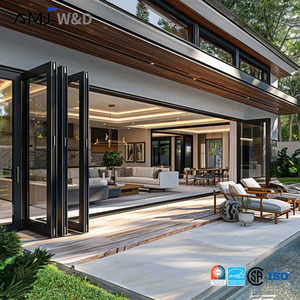
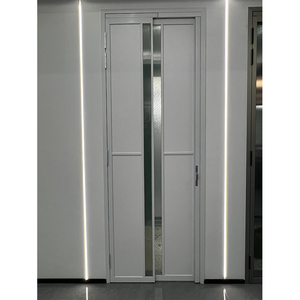
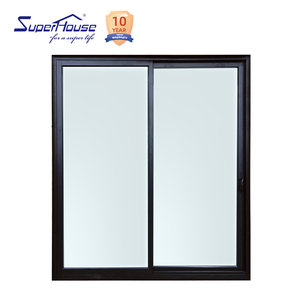
BrioWindow manufactures a comprehensive range of architectural fenestration, including heavy-duty aluminum alloy bi-fold doors, slim-profile sliding doors, stacker doors, swing/casement doors, high-end aluminum-wood composite windows, PVC doors and windows, fire-rated doors, sunrooms, structural glass curtain walls, central axis pivot doors, and smart motorized entry systems.
Which international markets and building codes do your products support?
Our core export destinations include the United States, Canada, Australia, Western Europe, and over 60 countries worldwide. Our profile systems and glass units are engineered to meet North American NFRC/AAMA codes (including Miami-Dade Hurricane Impact NOA standards), Australian AS2047/AS1288 structural criteria, and European CE/EN energy specifications.
Can you manufacture custom door dimensions according to architectural drawings?
Yes. 100% of our production is customized. Our in-house facade engineering team reviews your architectural elevation drawings, window schedules, structural wind load requirements, and desired thermal performance before issuing precise shop drawings for client approval prior to extrusion cutting.
What hardware brands and glass configurations do you integrate into your door systems?
We partner with world-renowned hardware manufacturers such as German Siegenia, Hoppe, Sobinco, as well as premium heavy-duty custom BrioWindow hardware rated for heavy leaf capacities. Glass options include double/triple toughened safety glass, laminated acoustic PVB/SGP interlayers, Low-E solar control coatings, argon gas insulation, and decorative ceramic frit finishes.
What after-sales structural warranty and technical support do you supply?
BrioWindow provides a comprehensive 30-year structural warranty on all aluminum extrusions, alongside multi-year guarantees on glass seals and hardware. Overseas clients receive detailed installation video guides, CAD shop manuals, and live remote engineering consultation for jobsite installation support.
What details are required to receive an accurate factory quotation?
Please provide: 1) Project location and building type; 2) Door/window schedules or CAD architectural drawings; 3) Preferred opening mechanisms (sliding, bi-fold, casement); 4) Glass performance specifications (double/triple, Low-E, acoustic); 5) Frame finish/color codes (RAL color palette); and 6) Target delivery schedule and destination port.