Factory Direct Architectural Systems
Featured Fenestration & Door Solutions
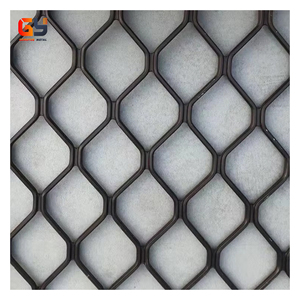
Amplimesh Aluminum Diamond Grille Black Coated Powder Security Mesh for Doors and Windows
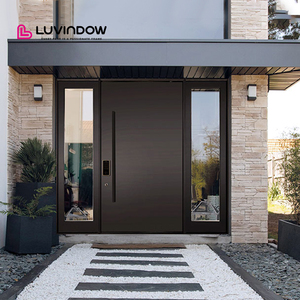
Modern Design Villas Black Profile Aluminum Frame Front Entry Pivoting Doors for Houses
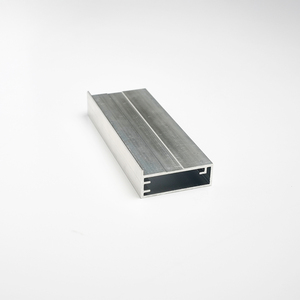
Hinged Cabinet Doors Corrosion Resistance Aluminium Glass Cabinet Door Custom Aluminum Window Screen Frame
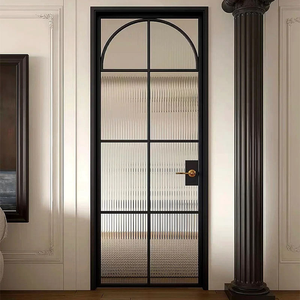
Custom Retro Slim Swing Door Vintage Arched Aluminum Frame Tempered Safety Glass Partition Door for Interior Bathroom Kitchen
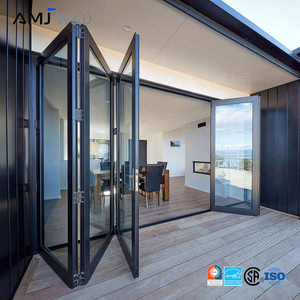
Balcony Accordion Bifold Door Design Exterior Aluminum Alloy Tempered Glass Aluminum Folding Patio Doors
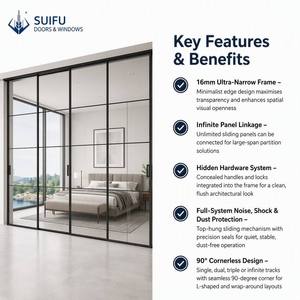
Modern Slim Frame Aluminum Partition Sliding Barn Door Double Glazed Tempered Glass for Interior Use Kitchen Bedroom Bathroom
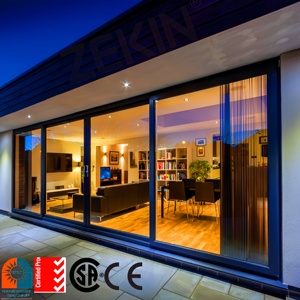
ZEKIN Customized Aluminum Patio Balcony Sliding Doors Double Tempered Glass Heavy Duty Glass Door Aluminum Sliding Doors
1. Architectural Mechanics & Executive Technical Overview of Aluminum Hopper Windows
Aluminum hopper windows—characterized by their inward-tilting bottom-hinged sash configuration—represent one of the most mechanically sound, space-efficient, and secure fenestration typologies utilized in modern architectural design. Designed primarily for high-transom clerestory applications, commercial basements, educational institutions, wet-room ventilation, and facade ribbon window assemblies, hopper windows provide controlled top-level air exchange without obstructing internal floor plates or compromising perimeter security.
From an engineering perspective, the upward deflection of incoming draft creates a natural convection cycle. Cold air entering from the exterior is directed toward the ceiling, where it mixes with warm internal air masses before settling, thereby eliminating harsh floor-level drafts and dramatically improving indoor environmental air quality (IAQ). When closed, the gravity-assisted inward compression of the sash against the double- or triple-lip continuous EPDM (Ethylene Propylene Diene Monomer) gasket perimeter ensures optimal air permeability and water tightness performance under extreme wind loading conditions.
2. Understanding CE Certification Standards for Aluminum Hopper Windows (EN 14351-1 Compliance)
For architectural products entering the European Single Market and demanding global jurisdictions, compliance with CE Marking is not merely a label—it is a mandatory legal proof of performance validated under the European Construction Products Regulation (CPR Directive 305/2011). CE certified aluminum hopper windows manufactured by BrioWindow Technology Co., Ltd. undergo rigorous System 3 and System 1 Attestation of Conformity testing governed by EN 14351-1:2006+A2:2016 (Windows and Doors - Product Standard, Performance Characteristics).
Key mandatory performance vectors validated during our CE certification procedures include:
- Air Permeability (EN 12207): Verified up to Class 4 (maximum test pressure 600 Pa, leakage rate < 3 m³/h·m²). This ensures near-zero uncontrolled infiltration, crucial for Passive House standard alignment and HVAC energy load minimization.
- Watertightness Under Direct Wind Spray (EN 12208): Tested up to Class E1050 (unrated custom pressure limits exceeding 1050 Pa for 55 minutes without water penetration), ensuring complete storm resilience in high-rise coastal facades.
- Resistance to Wind Load (EN 12210): Certified to Class C5/B5 structural deflection limits (test pressure up to 2000 Pa, emergency safety gust pressure of 3000 Pa), proving zero frame distortion or fastener shear.
- Thermal Transmittance ($U_w$ Value per EN ISO 10077-2): Combining multi-chamber polyamide 66 reinforced with 25% fiberglass (PA66GF25) thermal breaks with argon-filled low-emissivity (Low-E) triple insulated glass units (IGU), achieving frame $U_f$ values down to $1.1 \text{ W/m}^2\text{K}$ and total window $U_w$ down to $0.85 \text{ W/m}^2\text{K}$.
- Acoustic Isolation (EN ISO 10140-2): Acoustic damping performance ranging from $R_w = 38 \text{ dB}$ to $R_w = 47 \text{ dB}$ when retrofitted with sound-dampening acoustic PVB laminated glass panels.
Information Gain Insight for Specifiers: Unlike standard casement windows that rely solely on surface friction latches, CE certified hopper windows utilize multi-point perimeter locking cams driven by a central gearbox. This ensures uniform gasket compression along all four corners of the sash, directly neutralizing thermal bowing effects caused by extreme interior-to-exterior temperature differentials.
PA66GF25 Thermal Barriers
Precision-extruded polyamide thermal break strips eliminate thermal bridging, preventing interior condensation and lowering energy consumption.
Dual-Position Limit Stays
Heavy-duty stainless steel 304/316 friction stays allow flexible opening angles (15° micro-ventilation to 90° cleaning access) with integrated drop-down safety catches.
WK2 / RC2 Burglar Resistance
Concealed anti-lift security hardware and mushroom-head locking cams prevent mechanical prying from the exterior side.
3. Technical Specification Matrix: CE Certified Hopper Windows vs. Standard Windows
To assist facade architects, MEP engineers, and commercial procurement directors in evaluating fenestration performance, the matrix below details the engineering parameters of BrioWindow’s CE Certified Aluminum Hopper Window system versus baseline market alternatives:
| Performance Standard / Parameter | BrioWindow CE Hopper System | Standard Non-Thermal Aluminum | Standard Vinyl (uPVC) Hopper |
|---|---|---|---|
| Alloy Grade & Extrusion | 6063-T6 High-Precision Architectural Aluminum | Recycled 6063-T5 Low Gauge Profile | Unreinforced Hollow PVC Profile |
| Thermal Transmittance ($U_w$) | $0.85 - 1.2 \text{ W/m}^2\text{K}$ (CE EN ISO 10077-2) | $2.8 - 3.5 \text{ W/m}^2\text{K}$ | $1.4 - 1.8 \text{ W/m}^2\text{K}$ |
| Structural Wind Load (EN 12210) | Class C5 (2000 Pa Deflection / 3000 Pa Safety) Certified | Class C2 (1000 Pa) | Class B2 (800 Pa) |
| Water Tightness (EN 12208) | Class E1050 (1050 Pa Direct Static Pressure) Certified | Class 5A (200 Pa) | Class 7A (300 Pa) |
| Air Permeability (EN 12207) | Class 4 (600 Pa Tightness Limit) Certified | Class 2 (300 Pa) | Class 3 (300 Pa) |
| Surface Powder Coating | Qualicoat Class 2 / PVDF 3-Coat Fluoropolymer | Basic Standard Anodizing | Uncoated Vinyl (Prone to UV Degradation) |
| Lifecycle Service Expectancy | 50+ Years (30-Year Factory Warranty) | 15 - 20 Years | 10 - 15 Years |
4. Future Procurement Trends for Aluminum Hopper Windows (2025–2032)
As global building codes shift toward net-zero carbon footprints, low embodied energy materials, and smart building management systems (BMS), the procurement criteria for commercial and residential fenestration are undergoing a structural transformation. Buyers must align their purchasing strategies with four dominant future trends:
A. Seamless Integration with Automated BMS and Electric Actuators
Modern commercial developments no longer treat hopper windows as passive envelope elements. Future-ready hopper windows are engineered with integrated internal wiring channels to accept 24V DC electric chain actuators or linear spindle drives. Connected to central HVAC building management systems, motorized hopper windows automatically open during night-purge cooling cycles to discharge accumulated indoor heat naturally, reducing mechanical air conditioning loads by up to 28% in temperate climates. Furthermore, in smoke and heat exhaust ventilation (SHEV) scenarios compliant with EN 12101-2, automated hopper windows serve as emergency low-level fresh air intake dampers.
B. Low Carbon Aluminum Billet Smelting & Circular Sourcing
European Union Green Deal mandates and Carbon Border Adjustment Mechanisms (CBAM) are forcing contractors to document the carbon intensity of imported aluminum fenestration. Procurement policies now prioritize factories using hydro-powered low-carbon aluminum billets (generating < 4.0 kg CO2e per kg of primary aluminum, compared to the global coal-fired average of 16.6 kg CO2e/kg). BrioWindow’s supply chain incorporates certified circular aluminum scrap extrusion loops, reducing embodied carbon in our CE certified hopper series by 45%.
C. Vacuum Insulated Glass (VIG) & Aerogel Hybrid Glazing
While double and triple IGUs remain current standards, the next decade of fenestration procurement will be dominated by Vacuum Insulated Glass (VIG). VIG technology achieves an astonishing center-of-glass $U_g$ value of $0.40 \text{ W/m}^2\text{K}$ within a ultra-thin 8.3mm profile depth. This allows hopper sash profiles to become significantly slimmer, increasing natural daylight transmission ($VLT$) while meeting extreme Passive House benchmarks without adding excessive weight to hardware hinges.
D. Concealed Hinge Systems & Micro-Slim Sightline Architecture
Architectural design preferences are gravitating toward minimalist, hidden hardware. Traditional visible barrel hinges are being rapidly phased out in favor of 180° concealed scissor-stay hinges recessed completely within the frame rebate. This visual simplification enhances clean interior aesthetics while eliminating gasket pinch points, securing complete 360-degree perimeter sealing.
Factory Authority & Engineering Excellence
Why Global Buyers Partner with BrioWindow Technology
Headquartered in Nanhai District, Foshan—China's world-renowned aluminum profile manufacturing epicenter—BrioWindow combines a decade of direct export experience with world-class engineering capabilities.
Foshan Manufacturing Powerhouse
Situated in Lishui Town, Foshan, our high-precision extrusion, thermal-break assembly, and powder coating facilities leverage localized raw material ecosystems to deliver uncompromised quality at factory-direct pricing.
Export Footprint in 60+ Countries
With deep experience serving North American (USA, Canada), Australian, and European markets, our team understands strict regional building codes, custom drawing approvals, and containerized export packing.
30-Year Quality Guarantee
We back every custom window system with a comprehensive 30-year structural and after-sales warranty, supporting project developers with long-term replacement hardware and technical engineering guidance.
Comprehensive OEM/ODM Engineering & Customization Workflow
BrioWindow provides complete end-to-end technical support for facade contractors and real estate developers:
- CAD & BIM Shop Drawing Generation: Architectural elevation reviews and wind load calculations based on local peak gust pressure parameters.
- Custom Surface Finishing: Qualicoat certified anodizing (15-25 microns), PVDF fluoropolymer spraying (3-coat system for high-corrosion coastal zones), and realistic timber-grain sublimation.
- Specialized Glazing Options: Single, double, or triple IGUs, self-cleaning coatings, solar-control Low-E coatings (e.g., Sunguard / Solarban series), bullet-resistant, and acoustic laminated glass integrations.
- Factory Pre-Assembly & Testing: 100% pre-fit testing of hinges, locksets, and motor actuators before protective wooden crate packing.
Technical FAQ
Frequently Asked Questions by Procurement Directors
How do aluminum hopper windows differ from tilt-and-turn window systems?
Aluminum hopper windows open exclusively inward from the top edge via bottom-mounted hinges. In contrast, Tilt-and-Turn windows utilize dual-action gearboxes allowing them to tilt inward from the top for daily ventilation OR swing fully inward like a casement window via side hinges for emergency egress and glass cleaning. Hopper windows offer a more compact, cost-effective, and streamlined solution specifically engineered for high transom openings, clerestory runs, and restricted basement walls.
What specific test reports and documents accompany CE certified shipments?
Every shipment of BrioWindow CE certified aluminum hopper windows includes a official Declaration of Performance (DoP) under EN 14351-1, third-party laboratory test reports detailing air permeability (EN 12207), water tightness (EN 12208), wind resistance (EN 12210), thermal modeling certificates (EN ISO 10077-2), and factory production control (FPC) audit documentation required by European customs authorities and building inspectors.
Can BrioWindow supply motorized aluminum hopper windows for smart HVAC integration?
Yes. We regularly supply hopper windows equipped with pre-wired electric chain actuators operating at 24V DC or 230V AC. These units interface seamlessly with building management systems (BMS), weather stations, rain sensors, and automated smoke evacuation controls (EN 12101-2 certified setups available).
What thermal break technology is used to prevent internal sweating/condensation?
Our thermal hopper series utilizes high-density, glass-fiber reinforced Polyamide 66 strips (PA66GF25) inserted between the inner and outer aluminum extrusions. This multi-chamber thermal barrier isolates exterior cold profiles from warm interior room air, elevating the internal aluminum surface temperature above the dew point and eliminating condensation formation even in freezing winter conditions.
What is the minimum order quantity (MOQ) and production lead time for OEM projects?
Our standard production lead time is 25 to 35 calendar days from final approval of CAD shop drawings and glass specifications. We accommodate custom architectural projects with flexible MOQs, supporting both commercial high-rise facade orders and boutique villa developments.
How does BrioWindow protect aluminum window finishes during international ocean shipping?
Every profile is wrapped in UV-resistant protective PE film, separated by shock-absorbing foam spacers, sealed in moisture-proof shrink wrap, and packed inside fully enclosed IPPC-certified fumigated plywood crates. This prevents salt-spray corrosion, surface scuffing, and frame distortion during long-distance ocean transit.
Request Engineering Specifications & Custom Factory Quotation
Partner with a trusted Foshan manufacturer for certified, high-performance aluminum hopper windows and facade solutions tailored to your exact project drawings.
