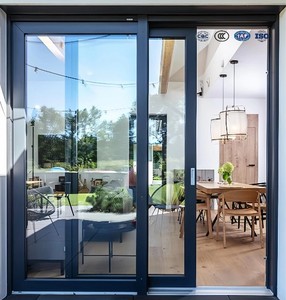
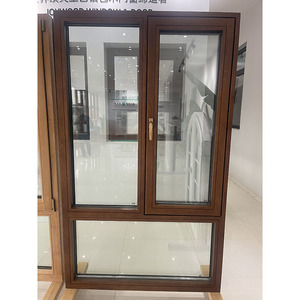
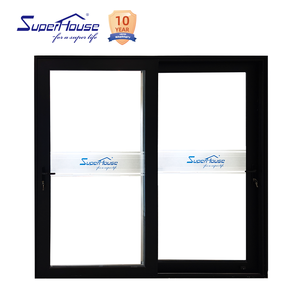
1. Technical Whitepaper: Engineering Standardizations of CE Certified Aluminum Frosted Glass Doors
In modern commercial and high-end residential architectural design, fenestration specification requires an equilibrium between structural integrity, daylighting performance, optical privacy, and rigorous thermal efficiency. CE Certified Aluminum Frosted Glass Doors manufactured by elite OEM/ODM facilities represent the nexus of architectural metallurgy and modern material science. As global building standards—such as the European Union’s Construction Products Regulation (CPR No 305/2011) and EN 14351-1—impose stringent requirements on air permeability, acoustic attenuation, and water tightness, commercial buyers must look beyond aesthetic finish to evaluate the underlying profile extrusion dynamics and glass processing technology.
Headquartered in Nanhai District, Foshan City—China's premier manufacturing base for industrial aluminum extrusions—BrioWindow Technology Co., Ltd. has established an end-to-end quality management architecture that aligns with international building codes. For over a decade, BrioWindow has supplied custom-engineered architectural door and window systems to developers, general contractors, and trade importers across the United States, Canada, Australia, and over 60 international territories.
Key Engineering Takeaway: A genuine CE-compliant frosted glass aluminum door requires mandatory Initial Type Testing (ITT) and Factory Production Control (FPC) under EN 14351-1. This includes micro-structural profile testing for 6063-T5/T6 aluminum alloys, PA66-GF25 thermal breaks, and safety-tempered glass certified under EN 12150-1.
1.1 Structural Metallurgy & Profile Extrusion Metrics
The mechanical core of high-span frosted glass doors resides in the extrusion grade of the aluminum alloy frame. Standard commercial doors frequently fail under wind load stress due to lower-grade recycled billet usage. BrioWindow strictly specifies primary 6063-T5 and 6060-T6 architectural aluminum billets.
- Wall Thickness Rigidity: Frame and sash extrusions maintain a nominal wall thickness of 1.6mm to 3.0mm for sliding and swing configurations, exceeding standard residential requirements to guarantee zero structural deflection under wind loads exceeding 3.0 kPa (EN 12210 Class C5).
- Thermal Barrier Integration: High-performance thermal break series utilize 24mm to 34mm polyamides reinforced with 25% glass fiber (PA66-GF25). This mechanical joining structurally isolates outer and inner extrusion chambers, reducing frame heat transfer rates to Uf ≤ 1.7 W/m²K.
- Surface Passivation & Finishes: Profiles undergo 15–25 micron Anodizing or 60–80 micron Qualicoat-certified Architectural Powder Coating (PVDF Fluorocarbon coatings optional for aggressive marine environments), delivering superior salt spray resistance (ASTM B117 > 2000 hours).
Acid-Etched vs. Sandblasted
Acid-etching produces a silky, fingerprint-resistant surface with uniform light diffusion (VLT ~68%), whereas sandblasting creates a rougher pore structure prone to oil absorption.
Tempered Safety Glass
Fully compliant with EN 12150-1 & ANSI Z97.1 standards. Thermally toughened float glass exhibits 4x-5x higher flexural strength than standard annealed glass.
STC Acoustic Attenuation
Double-glazed frosted glass units (5mm Frosted + 12Ar + 5mm Clear) achieve Sound Transmission Class (STC) ratings up to 38 dB, ideal for executive conference rooms.
1.2 Glazing Technology: Light Transmittance vs. Privacy Optical Densities
The primary operational objective of frosted glass doors is balancing light harvesting with visual privacy. Commercial procurement officers must distinguish between chemical acid-etching, mechanical sandblasting, translucent PVDF ceramic frit printing, and smart switchable liquid crystal (PDLC) laminates.
Acid-Etched Frosted Glass (Satin Finish): Chemically treated with hydrofluoric acid to obscure specular vision while maintaining a high Visible Light Transmittance (VLT) of 65%–72%. The non-porous finish prevents oils and moisture from penetrating the surface, making it the premier specification for high-traffic office partitions, luxury hotel en-suites, and commercial washrooms.
Double Glazed Insulated Units (IGU): Engineered with warm-edge spacers (TPS or stainless steel composite), argon gas filling (>90% concentration), and secondary structural silicone edge seals. When integrated into thermal break aluminum profiles, total door system U-values reach down to 1.3 W/m²K, complying with strict North American NFRC and European Passive House energy thresholds.
2. Future Sourcing & Procurement Trends in Architectural Doors (2025–2030)
As global commercial construction shifts toward decarbonization and intelligent building automation, procurement managers must anticipate regulatory and architectural shifts. BrioWindow’s R&D division tracks three core vectors shaping future door manufacturing:
2.1 Low-Carbon Recycled Aluminum & EPD Transparency
The European Carbon Border Adjustment Mechanism (CBAM) and global LEED v4.1 green building credits require verified Environmental Product Declarations (EPD). Future procurement contracts will prioritize manufacturers utilizing low-carbon hydroelectric aluminum smelting, achieving carbon footprint thresholds under 4.0 kg CO²e per kg of extruded aluminum frame.
2.2 Smart Glass Integration: Transitioning from Static Frosted to Dynamic PDLC
While traditional acid-etched glass offers static optical opacity, modern commercial projects are increasingly specifying Polymer Dispersed Liquid Crystal (PDLC) Switchable Smart Glass. With an applied voltage, liquid crystal molecules realign in milliseconds, transitioning the glass panel from opaque frosted to crystal clear. OEM factories must pre-engineer internal aluminum frame wiring channels, hidden contact pins, and IP67-rated transformers directly into the sash assembly.
2.3 Ultra-Slim Profile Sightlines & Concealed Hardware Systems
Architectural aesthetics continue to favor minimal frame sightlines. Next-generation aluminum frosted glass doors feature ultra-slim interlocks (as narrow as 16mm–21mm visible face width) while supporting leaf weights over 400 kg via heavy-duty stainless steel concealed pivot hinges or multi-roller bottom tracking systems.
3. Comprehensive B2B Material & Specification Comparison Matrix
Evaluating fenestration systems across life-cycle cost, structural durability, and code compliance:
| Performance Metrics | CE Frosted Aluminum Doors | Traditional Timber Doors | Standard Hollow Steel Doors | Single-Glaze Un-Break Aluminum |
|---|---|---|---|---|
| CE Certification Standard | EN 14351-1 (Fully Certified) | EN 14351-1 / EN 16034 | EN 14351-2 / Fire Rated | Non-Compliant / Limited |
| Moisture & Corrosion Resistance | Exceptional (Zero Swelling/Rust) | Poor (Prone to Warping) | Moderate (Requires Coating) | High (Frame Only) |
| Acoustic Isolation (STC) | 35 dB – 42 dB (Double Glazed) | 28 dB – 32 dB | 30 dB – 35 dB | 22 dB – 26 dB |
| Optical Privacy & VLT | Controlled (VLT 68% + Opaque) | Zero Light Transmittance | Zero Light Transmittance | No Privacy (100% Clear) |
| Expected Service Life | 30+ Years (Low Maintenance) | 10 – 15 Years | 15 – 20 Years | 15 – 20 Years |
| Thermal Transmittance (U-Value) | 1.3 – 1.8 W/m²K | 1.8 – 2.4 W/m²K | 2.2 – 3.0 W/m²K | 5.2 – 5.8 W/m²K |
4. Enterprise Strengths & Factory Infrastructure: BrioWindow Foshan
Selecting an overseas manufacturing partner requires strict validation of production capacity, technical compliance, and export logistics reliability. BrioWindow Technology Co., Ltd. operates state-of-the-art facilities located at 32, 52 Lisui Avenue Middle, Denggang Community, Lishui Town, Nanhai District, Foshan City.
Full Precision CNC Fabrication
Automated 5-axis CNC machining centers perform profile cutting, corner crimping, lock pocket routing, and drainage slotting with sub-millimeter tolerances (±0.2mm).
Custom Drawing & Engineering Review
Our in-house structural engineering team reviews architectural CAD/BIM drawings, calculating wind load deflection, frame stress, and thermal expansion factors prior to production.
Seaworthy Export Packaging
Units are fully protected with protective scratch-resistant film, foam corner guards, heat-sealed plastic wrapping, and loaded into fumigated heavy-duty plywood crates.
BrioWindow backs all aluminum frame systems with a comprehensive 30-Year Quality Assurance Program covering structural frame integrity, coating adhesion, and mechanical operation. By combining factory-direct manufacturing efficiencies with strict European testing protocols, BrioWindow provides international trade buyers with a decisive competitive advantage.
5. Quality Assurance & Factory Acceptance Testing (FAT) Workflow
To ensure complete alignment with project specifications and international import regulations, every production run at BrioWindow adheres to a 6-stage Quality Control workflow:
- Raw Billet Spectrometric Analysis: Chemical verification of 6063 aluminum composition (Si, Fe, Cu, Mn, Mg, Cr, Zn, Ti limits).
- Anodizing / Coating Thickness Audit: Eddy-current gauge testing ensuring uniform micron thickness across internal and external profile faces.
- Glass Tempering Stress Measurement: Differential surface refractometer (GASPAR) checking surface compression stress exceeding 69 MPa.
- Assembled Unit Air & Water Testing: Mock-up chamber testing under continuous pressure to verify corner joint sealing and gasket compression.
- Hardware Cycle Endurance Testing: Multi-point lock mechanisms, bottom rollers, and friction stays subjected to 100,000+ operational cycles.
- Final Dimensional & Squareness Check: Laser measurement of diagonal tolerances (≤1.5mm deviation across 3000mm frames).
6. Frequently Asked Questions (FAQ) for Procurement Managers
What documentation accompanies BrioWindow’s CE Certified doors?
Each export shipment includes the Declaration of Performance (DoP), factory test reports under EN 14351-1, glass tempering certificates (EN 12150-1), mill test certificates (MTC) for aluminum extrusions, and comprehensive ocean freight packing lists.
Can acid-etched frosted glass be combined with Low-E thermal coatings?
Yes. Double-glazed units can feature an outer pane of acid-etched frosted tempered glass paired with an inner pane coated with a soft-coat Low-Emissivity (Low-E) layer facing the argon-filled cavity. This configuration optimizes daylighting, visual privacy, and solar heat gain control.
What are the minimum order quantities (MOQ) and production lead times?
Standard project lead times range from 20 to 30 calendar days following shop drawing sign-off and deposit receipt. We support flexible batch sourcing, with flexible MOQs tailored for custom architectural projects, luxury residential developments, or distributor sample runs.
How do aluminum frosted doors hold up in high-humidity coastal environments?
Profiles treated with 70% PVDF (Fluorocarbon) coatings or 20-micron hard anodizing resist salt spray corrosion, pitting, and oxidation. All assembly hardware, fasteners, and corner cleats are fabricated from Marine-Grade 316 Stainless Steel.
What information is required to receive an engineering quotation?
Please provide structural elevation drawings or opening schedules, required profile series/color, glass configuration (single, double, frosted type), wind load requirements, target destination port, and estimated project delivery timeline.
Partner with Foshan’s Premier OEM Door Factory
Request detailed technical specifications, CAD shop drawings, or factory-direct wholesale pricing for your upcoming commercial or residential project.
