Engineering Excellence & Compliance in CE Certified Aluminium Fenestration
An authoritative evaluation of material science, structural dynamics, thermal barrier technology, and international certification standards for architectural specifiers and commercial buyers.
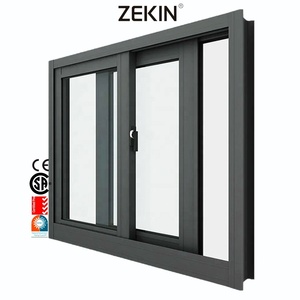
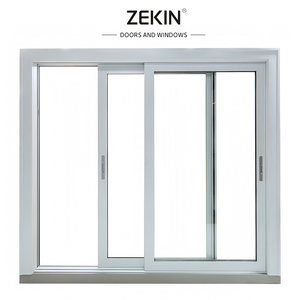
Executive Summary: Modern architectural fenestration requires a precise balance between structural rigidity, low thermal transmittance ($U$-value), maximum daylight penetration, and strict compliance with global building codes. This whitepaper analyzes how Foshan-manufactured CE certified aluminium window and sliding door systems meet European (EN 14351-1), North American (NFRC), and Australian (AS2047) standards through advanced profile geometry, polyamide thermal breaks, and automated double-glazing processes.
1. Structural Engineering & Profile Alloy Selection
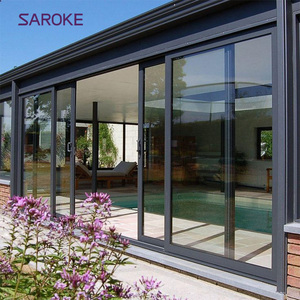
The structural integrity of large-span sliding patio doors and modern floor-to-ceiling window systems depends entirely on the metallurgical quality of the extruded aluminium profile. BrioWindow Technology Co., Ltd. utilizes high-grade 6063-T5 and 6063-T6 aluminium alloys, engineered specifically for high tensile strength ($\ge 205 \text{ MPa}$) and yield strength ($\ge 170 \text{ MPa}$).
Compared to standard commercial extrusions, prime-grade 6063 aluminium provides superior corrosion resistance, crisp geometric tolerances, and an ideal substrate for anodizing or PVDF powder coating. In coastal regions subject to elevated salt fog exposure or tropical hurricane zones, profile wall thickness plays a crucial role. Structural members are engineered with profile wall thicknesses ranging from 1.4 mm for residential casement windows to 2.0 mm–3.0 mm for heavy-duty sliding and pivot entrance doors, ensuring compliance with extreme wind load pressures (Pascal resistance up to Class E2400 under EN 12210 testing).
Primary 6063-T6 Extrusions
Virgin aluminium billets extruded under controlled thermal conditions yield maximum strength, preventing frame deflection in oversized glass openings.
PA66GF25 Thermal Barriers
25% glass-fiber reinforced polyamide strips mechanically crimped between interior and exterior profiles eliminate heat bridge transfers.
Multi-Point Locking Systems
Integrated stainless steel locking gear engineered to withstand forced entry loads while providing continuous gasket compression.
2. Thermal Performance & CE Mark Certification (EN 14351-1 Breakdown)
Under the European Union Construction Products Regulation (CPR 305/2011), external pedestrian doorsets and windows must carry CE marking verified against EN 14351-1:2006+A2:2016. This technical standard dictates essential performance characteristics that manufacturers must continuously validate through Initial Type Testing (ITT) and Factory Production Control (FPC).
| Performance Characteristic | European Testing Standard | BrioWindow Certified Class / Performance | Architectural Benefit |
|---|---|---|---|
| Air Permeability | EN 12207 | Class 4 (600 Pa) | Prevents draft infiltration; reduces HVAC energy loss in cold and hot climates. |
| Water Tightness | EN 12208 | Class E900 (900 Pa Unsubmerged) | Prevents water leakage during driving rain storms and high wind conditions. |
| Resistance to Wind Load | EN 12210 | Class C5 / B5 (2000 Pa Deflection) | Ensures frame stability and structural safety for high-rise or coastal applications. |
| Thermal Transmittance ($U_w$) | EN ISO 10077-1 / -2 | Down to $1.2 \text{ W/m}^2\text{K}$ (Triple Low-E) | Achieves Passive House energy efficiency standards; prevents indoor condensation. |
| Acoustic Performance ($R_w$) | EN ISO 717-1 | $38 \text{ dB} - 45 \text{ dB}$ Sound Reduction | Dampens urban traffic noise and external environmental acoustic disturbances. |
3. Advanced Glazing Technology & Security Systems
Glazing constitutes up to 85% of total window surface area. Consequently, overall fenestration performance is linked directly to glass selection. CE certified aluminium sliding doors and windows manufactured by BrioWindow employ dual or triple-pane Insulated Glass Units (IGU) equipped with warm-edge spacers, argon gas filling (90%+ concentration), and microscopic Low-Emissivity (Low-E) coatings.
For high-security applications, extreme weather zones, or hurricane-prone areas, laminated glass units featuring PVB (Polyvinyl Butyral) or SGP (SentryGlas Plus) interlayers are integrated. In the event of high-impact debris or attempted forced entry, the glass fragments adhere firmly to the interlayer, preserving building envelope integrity and preventing interior damage.
4. Global Sourcing Trends & Procurement Dynamics (2025–2030)
International fenestration procurement has shifted drastically over the past decade. Importers, facade contractors, and residential developers are no longer merely seeking low unit costs; they demand verifiable technical compliance, factory-direct customization, and supply chain accountability. Key procurement trends shaping the market include:
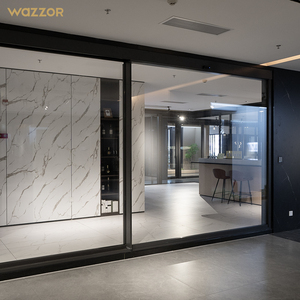
- Ultra-Narrow Sightlines & Concealed Pocket Frames: Modern architectural aesthetics heavily favor minimal frame visibility. Systems like the Wazzor Flush Track Concealed Stacking Slide Door allow total frame embedding into wall cavities and floors, creating uninterrupted transitions between indoor living areas and outdoor terraces.
- Smart Home Motorization & Automation: Motorized sliding glass walls integrated with building management systems (BMS), rain sensors, and smartphone control are rapidly becoming standard in high-end villa construction.
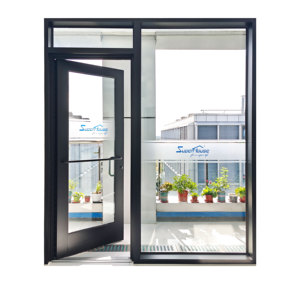
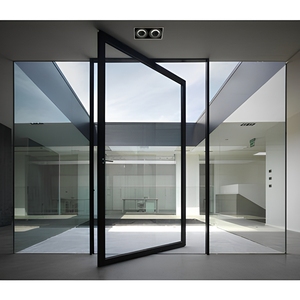
- Unified Multi-Category Sourcing: Developers increasingly prefer working with consolidated manufacturers capable of supplying aluminium sliding doors, casement windows, heavy-duty pivot entrance doors, PVC windows, sunrooms, and curtain walls under a single quality control standard and shipment container schedule.
- Rigorous Third-Party Auditing: Overseas buyers require verified laboratory test reports corresponding to target export markets, including CE (Europe), NFRC / Florida Product Approval (USA), and AS2047 / AS1288 (Australia).
