1. Executive Overview & Structural Engineering of Pivot Doors
In modern luxury residential and high-end commercial architecture, entrance systems serve as the critical transition point between exterior environments and interior spaces. Among structural glazing options, CE certified aluminium pivot entrance doors represent the apex of grand design, structural integrity, and architectural functionality. Unlike conventional butt-hinged doors that transfer leaf weight exclusively to the side jamb frame, pivot entrance doors distribute weight vertically onto heavy-duty top and bottom pivot anchors embedded directly into the floor slab and header transom.
This structural mechanism eliminates sagging risks associated with wide or heavy glass panels, allowing architect-grade door leaves to exceed 3.5 meters in height and 2.0 meters in width, with load capacities extending up to 500 kilograms. As global building energy codes tighten across North America (NFRC standards), Europe (EN ISO 10077), and Australia (AS2047), Tier-1 B2B manufacturers in Foshan, China—such as BrioWindow Technology Co., Ltd.—have re-engineered pivot systems incorporating high-density polyamide thermal breaks (PA66GF25), multi-point lock systems, and pneumatic floor closers to balance aesthetic grandiosity with stringent thermal, wind pressure, and security compliance.
Technical Insight for Project Specifiers: The primary engineering metric for large-format pivot doors is mechanical weight offset ratio. Moving the pivot axis inward by 150mm to 300mm from the jamb reduces rotational resistance by up to 35%, ensuring effortless manually-assisted or automated opening dynamics even under severe wind-load conditions.
2. Factory Direct Products Showcase & Specification Range
Explore our specialized portfolio of aluminum door and window systems engineered for commercial retail spaces, medical facilities, modern residential villas, and industrial facilities:
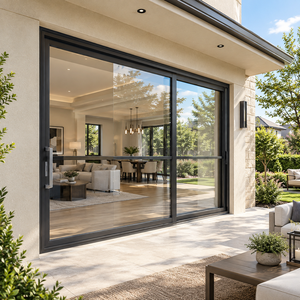
Hihaus High-End Aluminum Sliding Door Double Tempered Sliding Screen Door for House Villa
Inquire Now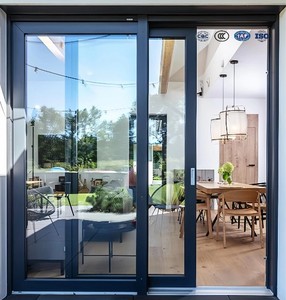
Modern Aluminum Alloy Sliding Windows And Doors With Tempered Glass Soundproof Exterior Use
Inquire Now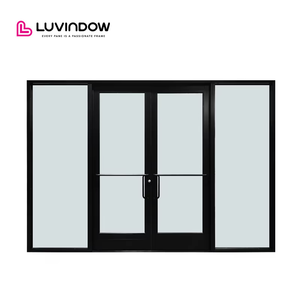
Customizable Aluminum Commercial Door Modern Glass Wall Exterior Aluminum Storefront Entrance Door For Retail Spaces
Inquire Now
High Quality REGWEN RG100.8 Large Sliding Glass Door for Hospitals Supermarkets Entry Modern Aluminum Alloy Sound Insulation
Inquire Now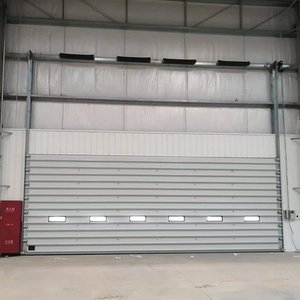
CE Certified High Speed Aluminum Alloy Industrial Shutter Door Automatic Storm Resistant Rolling Door for Workshop
Inquire Now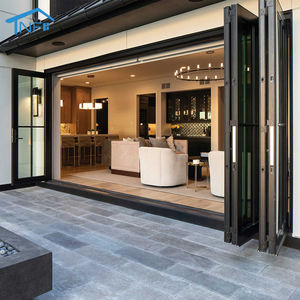
Commercial Modern Low E Bi-Folding Aluminum Door For Hotels Finished Surface Exterior Thermal Break Accordion Folding Dual Glass
Inquire Now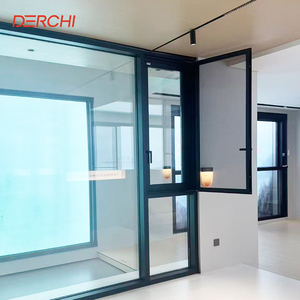
Minimalism Series Window Ultra Double Glass Aluminum Alloy Line Fixed Slimline Window Slim Profile Aluminium Casement Windows
Inquire Now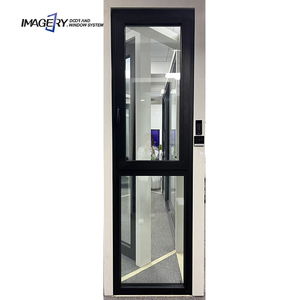
Smart Houses Thermal Break Aluminum Electric Tilt and Turn Windows Double Glazed Glass for Villa Bedroom
Inquire Now3. Technical Performance Metrics & CE Certification Framework (EN 14351-1)
To obtain full CE certification under the European Harmonized Standard EN 14351-1 (Windows and doors - Product standard, performance characteristics), aluminium pivot entrance doors must undergo rigorous empirical testing across four critical engineering metrics: Air Permeability, Watertightness, Wind Load Resistance, and Thermal Transmittance.
| Performance Metric | International Standard Test Method | BrioWindow Standard Rating | Engineering Implementation Details |
|---|---|---|---|
| Air Permeability | EN 1026 / ASTM E283 | Class 4 (600 Pa) | Triple continuous EPDM gasket sealing with perimeter brush drop seals. |
| Watertightness | EN 1027 / ASTM E331 | Class E900 (900 Pa) | Concealed internal drainage channels with floor recess weep valve system. |
| Wind Pressure Load | EN 12210 / ASTM E330 | Class C5 (2000 Pa design, 3000 Pa safety) | 6063-T6 architectural grade aluminum extrusions with 3.0mm wall thickness. |
| Thermal Transmittance (U-Value) | EN ISO 10077-2 / NFRC 100 | Uw ≤ 1.1 W/m²K (down to 0.8 W/m²K) | 24mm-34mm PA66GF25 polyamide thermal breaks with Argon-filled Low-E triple glass. |
| Acoustic Insulation (STC/Rw) | EN ISO 10140-2 / ASTM E90 | Rw 42 dB (-1; -4) / STC 43 | Multi-layer laminated acoustic glass (PVB/SGP) combined with perimeter air cavity locks. |
| Operating Cycles & Durability | EN 1191 / EN 12400 | Grade 8 (1,000,000 test cycles) | Heavy-duty hydraulic floor pivots with dual-speed adjustable closing speed latching. |
4. Future Procurement Trends & Emerging Architectural Tech (2025–2030)
The international fenestration procurement landscape is undergoing a paradigm shift driven by smart building automation, carbon reduction targets, and minimalist spatial design. Sourcing directors, commercial project developers, and facade engineers should evaluate several key technological trends when issuing RFQs (Request for Quotations) for aluminium pivot doors over the next decade:
1. Smart Access & Automated Motorization
Integration of concealed electromechanical drives operating via 24V DC brushless motors. Future-proof pivot doors feature biometrics (capacitive fingerprint scanners), face recognition modules, and smart home automation integration (KNX, BACnet, Zigbee) with motorized multi-point lock latching systems that lock automatically upon leaf closure.
2. Ultra-Slim Sightlines & Oversized Glazing
Architects are demanding perimeter frame concealment. Modern pivot extrusions utilize hidden frame profile engineering, reducing visible frame width to under 20mm around the perimeter while utilizing structural silicone bonding (IGU structural glazing) to transform the glass panel itself into a primary load-bearing diaphragm.
3. High-Performance Thermal Barriers
With strict Net-Zero carbon building guidelines across Europe and North America, traditional non-thermal aluminum frames are obsolete. Future procurement mandates multi-cavity thermal break extrusions injected with expanded polyurethane (PUR) or aerogel insulation strips to achieve Passive House performance metrics.
Low-Carbon & Sustainable Aluminum Procurement
Leading procurement managers are now requiring suppliers to provide Environmental Product Declarations (EPDs). BrioWindow utilizes primary aluminum produced using hydro-electric energy sources, ensuring structural profiles comply with green building certifications such as LEED v4.1 and BREEAM while offering full circular recyclability.
5. Precision Manufacturing & Quality Assurance Protocol
The production of a CE certified aluminium pivot entrance door requires sophisticated CNC machining and multi-stage quality control. At our state-of-the-art facility in Nanhai District, Foshan, every door leaf undergoes rigorous fabrication steps:
A. CNC Extrusion & Miter Machining
6063-T6 aluminum profiles are cut on 5-axis German CNC machining centers with accuracy tolerances within ±0.1mm. High-strength cast aluminum corner keys are pneumatically crimped with dual-component epoxy adhesive to ensure zero joint flexure under extreme torsional stress.
B. Surface Treatment Technology
Profiles receive AkzoNobel or PPG fluorocarbon (PVDF) spray coating or 25-micron architectural anodizing, offering AAMA 2605 compliance for coastal environments. Coatings withstand salt spray testing exceeding 3,000 hours without surface degradation or fading.
C. Double/Triple Glazing Assembly
Insulated Glass Units (IGUs) are produced in cleanroom conditions utilizing tempered or SGP laminated safety glass, warm-edge spacers, and dual-seal silicone structural sealant to eliminate gas leakage and internal condensation risks over decades of exposure.
6. Quality Certificates & International Auditing Credentials
Compliance documentation is vital for global importers and architectural contractors submitting tender documentation. Our factory products are inspected to national and international standards, holding comprehensive CE certification, ISO9001 quality management, and rigorous physical laboratory test reports:
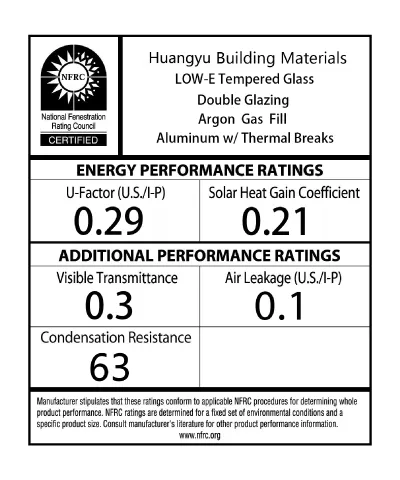
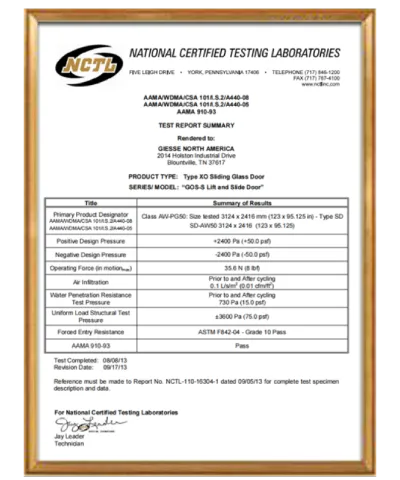
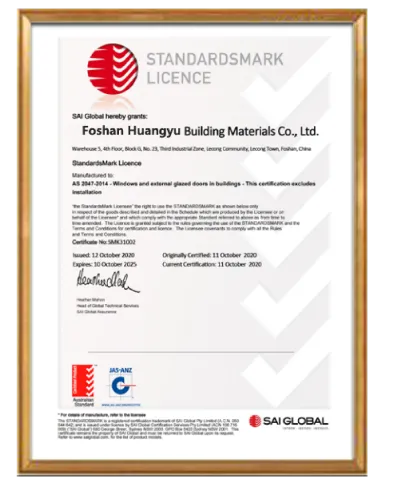
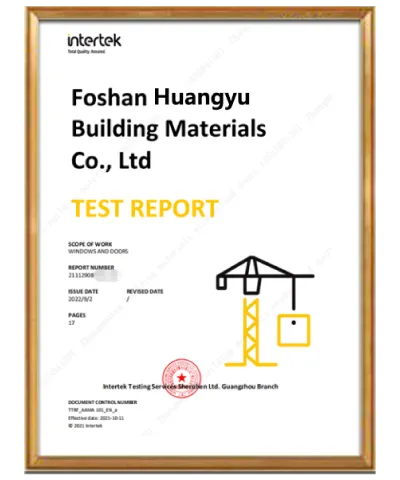
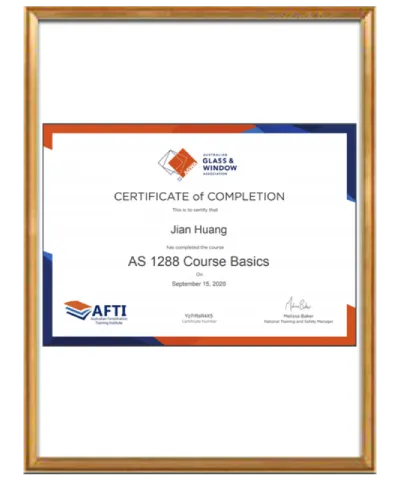
* Verified factory certifications on file. Complete laboratory test reports (EN 14351-1, ASTM, AS2047) available upon official request.
7. B2B Sourcing Guide: Evaluating Chinese Pivot Door Manufacturers
Procuring custom architectural doors directly from Chinese OEM/ODM factories provides significant cost efficiency without sacrificing quality—provided buyers execute rigorous supplier verification protocols. When auditing door and window factories in Foshan, evaluate the following operational criteria:
1. Profile Alloy & Wall Thickness Compliance
Ensure the manufacturer uses virgin 6063-T6 architectural grade aluminum extrusions rather than recycled scrap metal. For oversized pivot leaves, nominal frame wall thickness must measure at least 2.0mm to 3.0mm to prevent structural flex under wind loads.
2. Hardware Brand Integrity
The hardware is the mechanical heart of a pivot door. Verify whether the factory integrates certified German or Italian pivot systems (e.g., Dormakaba, FritsJurgens, Savio) or high-tier proprietary heavy-duty floor spring systems rated for 500kg+ dynamic load capacities.
3. Export Packaging & Crating Protocols
Large glass pivot leaves are vulnerable during ocean freight transit. Superior manufacturers mandate fully enclosed plywood wooden crates with internal foam cushioning, corner protectors, and vacuum desiccant packaging to prevent moisture oxidation.
8. Architectural Engineering & Procurement FAQ
Addressing common technical and commercial questions from architects, importers, and general contractors:
What specific tests determine CE compliance for aluminium pivot entrance doors?
Under EN 14351-1, pivot entrance doors must undergo mandatory third-party laboratory testing for Air Permeability (EN 1026), Watertightness (EN 1027), Wind Resistance (EN 12210), Load-bearing capacity of safety devices, and Thermal Transmittance calculation (EN ISO 10077-1/2). Products receive a formal Declaration of Performance (DoP) and CE marking upon passing all metrics.
How do aluminum pivot doors prevent water ingress at the bottom threshold?
Water seal integrity is achieved through engineered sub-floor drainage boxes, continuous EPDM weather-stripping gaskets, and drop-down pneumatic bottom seals that actuate automatically when the leaf closes. For flush zero-threshold transition designs, internal concealed channel drains divert driven rain away from the interior building envelope.
Can BrioWindow manufacture custom pivot doors according to architectural CAD/BIM drawings?
Yes. Our in-house engineering team reviews architectural CAD drawings, Revit BIM models, and opening schedules. We confirm all structural calculations, glass loading limits, hardware anchorage points, and custom profile extrusion finishes prior to releasing shop drawings for production.
What glass configurations are recommended for high thermal insulation and acoustics?
We recommend double or triple-pane Insulated Glass Units (IGUs) composed of 6mm/8mm toughened Low-E glass, 16mm warm-edge Argon gas cavity, and 6mm laminated safety glass (with SGP or PVB interlayer). This configuration achieves U-values down to 0.8–1.1 W/m²K and sound reduction ratings exceeding 42 dB.
What lead times and warranty terms apply to international export orders?
Standard production lead time is 25 to 35 business days following final shop drawing approval. BrioWindow provides a comprehensive 30-year warranty on aluminum structural extrusions, a 10-year warranty on insulated glass units, and a 5-year warranty on precision mechanical pivot hardware.
9. Corporate Advantage: BrioWindow Technology Co., Ltd.
Headquartered in Nanhai District, Foshan—China's premier manufacturing center for architectural aluminum profile systems—BrioWindow Technology Co., Ltd. stands as a trusted single-source manufacturer for high-performance fenestration solutions. With over a decade of dedicated export experience, our products are installed in commercial towers, luxury residential villas, and institutional developments in over 60 countries across the United States, Canada, Australia, and Western Europe.
Complete Product Portfolio
Beyond central axis pivot doors, we design and manufacture aluminum sliding doors, casement windows, thermal break fold-aside accordion doors, PVC window systems, wooden doors, fire-rated doors, sunrooms, and unitized curtain walls.
Rigorous Testing & Certification
Our products undergo comprehensive laboratory testing adhering to European (EN), North American (NFRC/AAMA), and Australian (AS2047) testing protocols, guaranteeing long-term durability under severe operational conditions.
End-to-End Engineering Support
From initial structural design consultations and CAD detailing to export sea-freight packaging and dedicated overseas after-sales support, our engineering team ensures flawless project execution.
Ready to Upgrade Your Architectural Door & Window Projects?
Partner directly with Foshan's premier OEM manufacturer. Contact our technical engineering team today for project quotations, shop drawing evaluations, and structural specification assistance.
Inquire Now