Engineered Aluminium Windows & Doors Systems
Precision-manufactured structural fenestration systems certified for international building codes, energy compliance, and severe wind-load resistance.
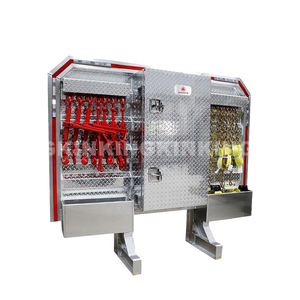
Customization Trailer Bulkhead Mini Vault Single Door Aluminum Cab Guard
Heavy-duty structural aluminum cab guard headache rack engineered for semi-truck utility, impact resistance, and secure payload protection.
Get a Quote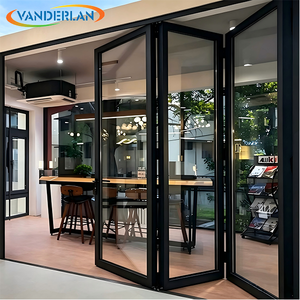
Continuous Operation Aluminum Folding Door for Commercial Event Venues
High-cycle bi-fold partition door built with reinforced stainless steel roller tracks and thermal break profiles for flexible architectural space management.
Get a Quote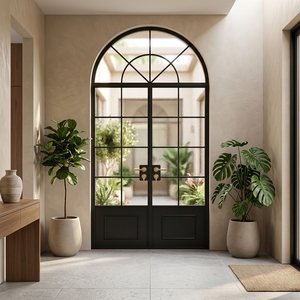
Modern Aluminum French Double Swing Doors with Arched Design
Elegant architectural double swing door system with custom radius arches, multi-point compression locking, and Low-E acoustic double glazing.
Get a Quote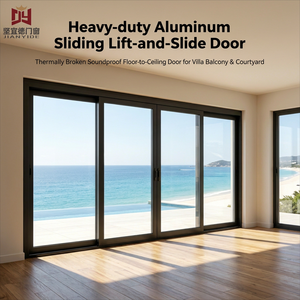
Custom Lift & Slide Soundproof Thermal Break Exterior Door System
Ultra-smooth lift-and-slide mechanism handling heavy triple-glazed panels up to 400kg per sash, offering maximum weather tightness and soundproofing.
Get a Quote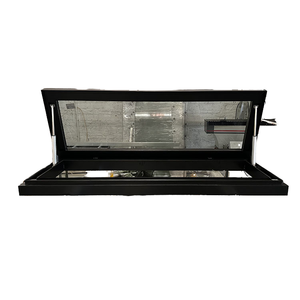
DEMEA Commercial Aluminum Electric Skylight Window with Low-E Glass
Automated roof skylight featuring integrated rain sensors, motorized actuators, solar heat control glass, and fully welded aluminum water drainage channels.
Get a Quote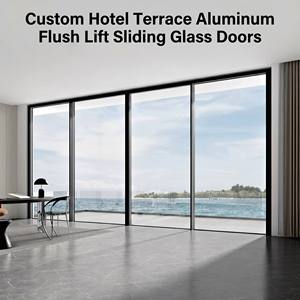
Resort Slim Profile Multi-Track Panoramic Glass Sliding Door
Architectural minimalist sliding system featuring a 21mm narrow vertical sightline, recessed threshold, and multi-track expansive opening configurations.
Get a Quote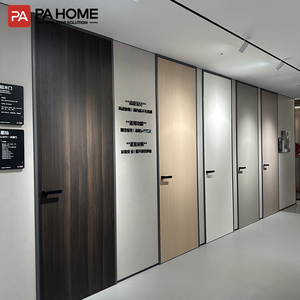
PA Modern Slim Aluminium Profile Wooden Hybrid Guest Room Doors
Interior architectural door combining anodized structural aluminum perimeter frames with solid core acoustic wood infills for luxury hotel interiors.
Get a Quote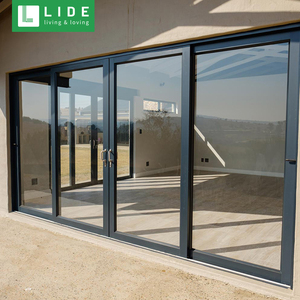
Contemporary Porch & Living Room Glazed Exterior Sliding Door
Durable exterior patio sliding door utilizing high-tensile 6063-T5 aluminum alloy, double toughened safety glass, and anti-lift security locking hardware.
Get a QuoteCE Certified Aluminium Window Factories: Manufacturing Rigor & Standard Compliance
In modern architectural fenestration, securing genuine CE Certification (Conformité Européenne) for aluminum windows and doors is far more than a regulatory checkbox—it represents a verifiable framework of mechanical safety, thermal efficiency, structural integrity, and environmental accountability. For international real estate developers, building contractors, and commercial importers, sourcing directly from audited aluminium window factories in manufacturing hubs like Foshan, Guangdong guarantees strict adherence to the Harmonized European Standard EN 14351-1:2006+A2:2016 (Windows and doors - Product standard, performance characteristics).
BrioWindow Technology Co., Ltd. operates a state-of-the-art manufacturing facility in Nanhai District, Foshan. As an established global exporter, our factory integrates automated aluminum extrusion processing, CNC machining centers, robotic corner-crimping technology, and double-sealed Insulated Glass Unit (IGU) assembly lines under ISO 9001 quality management protocols. Every window system supplied—from ultra-slim casements to heavy-duty lift-and-slide patio doors—undergoes rigorous Factory Production Control (FPC) to ensure compliance with European CPR (Construction Products Regulation EU No 305/2011) and international standards such as NFRC, AS2047, and ASTM E283/E330/E331.
Technical Note for Procurement Officers: CE Certification according to EN 14351-1 mandates full transparency across Mandatory Declared Performance Characteristics, including Air Permeability (EN 12207), Watertightness (EN 12208), Resistance to Wind Load (EN 12210), Thermal Transmittance (EN ISO 10077-2), and Acoustic Performance (EN ISO 140-3).
Material Metallurgy & Extrusion Engineering
The structural reliability of an aluminum window system depends on raw material metallurgy. BrioWindow utilizes primary 6063-T5 and 6060-T66 aluminum alloy extrusions boasting a minimum wall thickness of 1.4mm to 3.0mm depending on structural load requirements. Unlike secondary recycled aluminum scrap, primary virgin aluminum billets deliver uniform tensile strength (≥ 160 MPa) and yield strength (≥ 110 MPa), protecting profiles against deflection under high wind velocity.
Surface treatments strictly adhere to international coating standard benchmarks. For anodized finishes, our anodizing thickness reaches QUALANOD Class 15 to Class 25 (15–25 microns), preventing pitting corrosion in harsh marine environments. Powder coating lines utilize AkzoNobel or PPG fluorocarbon (PVDF) thermosetting coatings certified under QUALICOAT Class 2, guaranteeing UV resistance and color stability without chalking or fading for up to 25 years.
Engineering Benchmark Matrix: CE Testing Compliance Standards
Below is the empirical testing criteria verified across BrioWindow’s CE-certified architectural aluminum profile product range:
| Performance Characteristic | European Test Standard | Achieved Classification / Value | Architectural Application Field |
|---|---|---|---|
| Resistance to Wind Load | EN 12210 / EN 12211 | Class C5 / P3 = 3000 Pa (Deflection < 1/300) | High-rise commercial towers & coastal villas |
| Watertightness | EN 12208 | Class E1050 (Unexposed 1050 Pa Static Pressure) | Extreme weather zones & exposed facades |
| Air Permeability | EN 12207 | Class 4 (600 Pa Positive/Negative Pressure) | Passive House & ultra-low energy buildings |
| Thermal Transmittance (Uw) | EN ISO 10077-2 | Uw 0.8 to 1.4 W/(m²·K) (Triple Low-E Glazed) | Cold climate thermal insulation projects |
| Acoustic Insulation (Rw) | EN ISO 140-3 / EN ISO 717-1 | Rw = 38 dB to 45 dB (Laminated Acoustic IGU) | Urban residential & airport vicinity developments |
| Repeated Opening/Closing | EN 12400 | Class 8 (100,000 operational cycles) | High-traffic commercial entrances & hotels |
Future Procurement Trends in the Global Aluminium Window & Door Industry
As global decarbonization mandates intensify and building energy efficiency regulations (such as the EU Energy Performance of Buildings Directive - EPBD) become stricter, commercial buyers and real estate developers are updating their fenestration procurement criteria. Importing from CE certified aluminium window factories requires analyzing key technological macro-trends shaping supply chains through 2030:
1. Low-Carbon Recycled Billets & EPD Transparency
Leading international developers now require Environmental Product Declarations (EPDs). Forward-thinking factories are adopting low-carbon aluminum smelted using hydropower or green hydrogen, along with post-consumer recycled billets, reducing embodied carbon by up to 65%.
2. Aerogel-Enhanced Thermal Break Technology
Standard polyamide PA66-GF25 thermal barrier strips (24mm to 39mm) are evolving. The integration of aerogel insulation cores within multi-chambered extrusion cavities allows window frames to achieve structural U-values suitable for Passive House certification without compromising frame strength.
3. Minimalist Sightlines with Structural Glazing
Architectural demand favors concealed sash designs and ultra-slim frame profiles (interlock widths under 21mm). Modern factories utilize high-modulus structural silicone sealants and perimeter multi-point locking mechanisms to deliver expansive glass views capable of withstanding hurricane-force wind loads.
4. Smart BMS & Automated Actuator Integration
Procurement schedules increasingly request motorized operators integrated with smart home protocols (KNX, Zigbee, BACnet). Automated skylights and high-level casement windows featuring hidden electric actuators provide natural smoke evacuation and automated indoor climate control.
Foshan Manufacturing Power & Factory Advantage
Headquartered in Nanhai District, Foshan—China's world-leading aluminum extrusion and fenestration hub—BrioWindow combines industrial scale with precision custom engineering.
End-to-End One-Stop Manufacturing
From aluminum sliding/swing/folding profiles to PVC systems, solid wooden doors, fire doors, sunrooms, and unitized glass curtain walls—all sourced from a single responsible factory.
Rigorous Certification System
Full CE certification compliance alongside laboratory-backed testing for US, Canadian, Australian, and European building standards before dispatch.
Direct Architectural Engineering Support
In-house CAD/BIM engineers review architectural opening schedules, structural wind load calculations, and section details prior to extrusion and cutting.
30-Year Warranty & Global Service
Extensive export experience spanning 60+ countries backed by a 30-year quality assurance guarantee, step-by-step installation guides, and dedicated online support.
Comprehensive B2B Procurement FAQ (User Intent & Technical Specification)
Answers to technical, logistics, and quality assurance questions asked by international buyers, procurement officers, and architectural specifiers:
What mandatory documentation proves genuine CE Certification for aluminum window imports?
To verify authentic CE compliance for aluminum windows entering the EU market, a certified factory must supply: (1) Declaration of Performance (DoP) issued by the manufacturer detailing specific performance values under EN 14351-1; (2) Initial Type Testing (ITT) Reports issued by an accredited EU Notified Body; (3) Proof of Factory Production Control (FPC) system under ISO 9001; and (4) Clear CE Marking labels affixed to the products or shipping crates detailing essential characteristics.
How does BrioWindow prevent thermal expansion stress in aluminum profiles across climate extremes?
Aluminum has a coefficient of thermal expansion of approximately 23 × 10⁻⁶ /K. In long-span structural glazing and heavy sliding doors, temperature differentials cause dynamic shear stress between the inner and outer aluminum extrusions. BrioWindow mitigates this by inserting glass fiber-reinforced polyamide 66 (PA66-GF25) strips with high mechanical shear strength. We also apply continuous EPDM gasket sealing and expansion joint gaps within outer frames to accommodate structural thermal movement without frame warping or seal failure.
Can custom dimensions and complex architectural shop drawings be submitted for direct OEM manufacturing?
Yes. Over 90% of BrioWindow’s export volume comprises custom-engineered OEM/ODM orders. Our engineering team reviews DWG/BIM drawings, structural elevation plans, opening schedules, glass requirements (e.g., argon-filled double/triple Low-E, laminated glass), hardware preferences (e.g., German Siegenia, Hoppe, Sobinco, or heavy-duty in-house hardware), and powder coating codes (RAL colors) prior to issuing production drawings for final sign-off.
What quality inspection measures prevent seal failure and fogging in Insulated Glass Units (IGU)?
Double and triple-glazed units are manufactured using a dual-seal methodology. Primary sealing utilizes butyl rubber (polyisobutylene - PIB) for vapor tightness, preventing moisture ingress into the air gap. Secondary structural sealing utilizes two-part silicone or polyurethane sealant to ensure mechanical bond strength. Warm-edge composite spacer bars containing molecular sieve desiccant absorb residual moisture inside the cavity, preventing condensation, seal failure, or internal glass fogging throughout the window's lifespan.
What are the export packaging and transport safety standards for overseas ocean freight?
All finished window and door frames are wrapped with protective adhesive film to prevent scratch damage during handling. Framework corners are fitted with reinforced plastic guards. Glazed assemblies are placed into fully enclosed ISPM-15 compliant fumigated plywood crates or A-frame steel transport racks lined with shock-absorbing foam padding. Crated units are banded securely with plastic-steel strapping and loaded into ocean containers with moisture-absorbing desiccant bags to prevent corrosion during ocean transit.
What after-sales service and long-term technical support guarantees are provided for international projects?
BrioWindow provides a comprehensive 30-year after-sales quality assurance framework covering structural profile integrity, surface finish durability, and glass seal performance. For installation teams, we supply detailed structural installation manuals, hardware adjustment videos, and remote technical support via video conference. In the event of transport-damaged parts or hardware failures, replacement components are dispatched via priority international express delivery.
Partner with a CE Certified Aluminium Window Factory
Streamline your architectural fenestration procurement with factory-direct Foshan pricing, rigorous technical compliance, and custom engineering support. Submit your project schedules or RFQ today.
Get a Quote