Factory Direct Catalog
CE Certified Aluminium Hinged & Glazed Door Systems
Engineered for rigorous international building standards, offering superior thermal break performance, acoustic insulation, structural wind resistance, and modern architectural aesthetics.
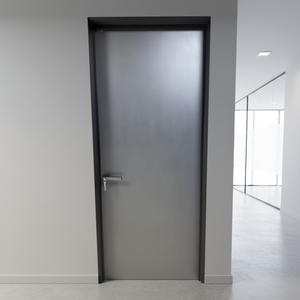
Modern Interior Aluminum Alloy Finished Bathroom Slab Door Frosted Glass Waterproof Vertical Hinged Toilet Doors Total Solution
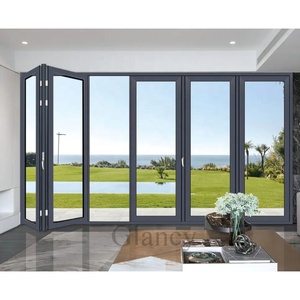
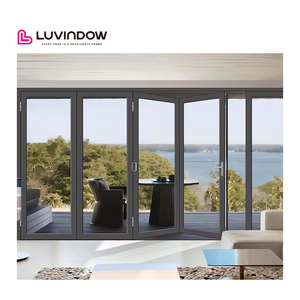
Large Modern Internal Lockable Accordion Sliding Aluminum Bifold Folding Double Glass Patio Doors
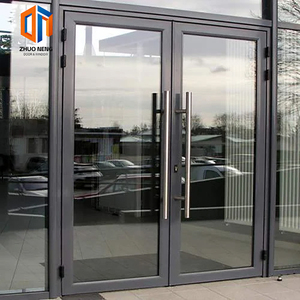
Modern Customized Casement Door Aluminum Alloy Interior With Soundproof Double Glass Front Entry Hinged Hinged Doors
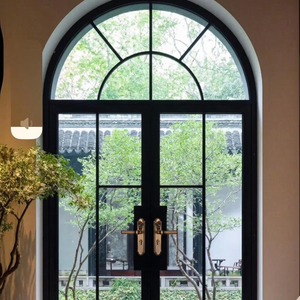
Factory Custom Aluminum Alloy Single & Double French Hinged Casement Door Swing Type Anti-Theft Feature For Bathroom Entry Use
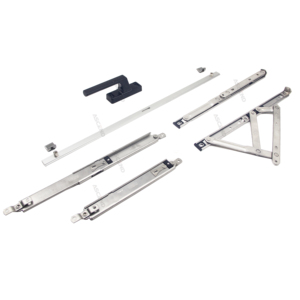
Industrial-Style Hinged Doors and Windows Hardware Accessories Easy Outdoor Installation Aluminum Alloy Seal Hanging Design
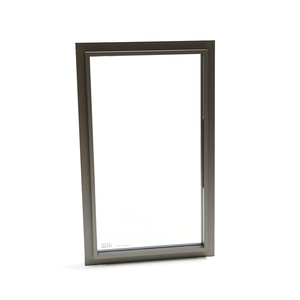
No Built-In Handle Designed For Hinged Cabinet Doors Decorative Frame Kitchen Cabinet Aluminum Frame Glass Door
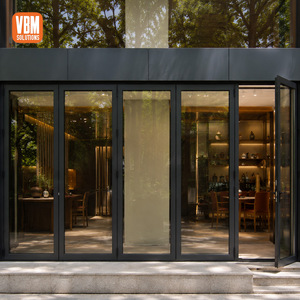
Commercial Aluminum Glass Folding Door For Restaurant Cafe Shopfront Storefront Outdoor Entrance
10+ Years
Manufacturing Expertise
60+
Export Destination Countries
EN 14351-1
CE Compliant Testing
30 Years
Quality Assurance Support
B2B Architectural Procurement Whitepaper
CE Certified Aluminium Hinged Doors: Technical Specifications, Compliance & Global Sourcing Standards
Authored by Senior Technical Director & Fenestration Procurement Specialists at BrioWindow Technology Co., Ltd.
In modern architectural design and real estate development, the selection of fenestration systems directly impacts a building's overall energy rating, structural longevity, acoustic performance, and visual appeal. Aluminium hinged doors—also frequently specified as casement swing doors—represent one of the most mechanically robust and versatile doorway solutions for both luxury residential villas and high-traffic commercial developments. When sourcing from China's primary manufacturing hub in Foshan, verifying authentic CE Certification (EN 14351-1 compliance) and structural integrity becomes paramount for European, North American, and Australian procurement managers.
Key Procurement Insight: Information Gain for B2B Importers
Not all aluminium profiles are created equal. High-performance CE certified hinged doors utilize thermal break extrusion technology paired with PA66GF25 polyamide insulation strips, dual or triple EPDM compression weather-stripping, and heavy-duty 3D adjustable friction hinges capable of supporting leaf weights exceeding 180 kg.
1. Regulatory Compliance & The CE Certification Framework (EN 14351-1)
For doors and windows exported to the European Economic Area (EEA) and markets recognizing harmonized European standards, CE marking under the Construction Products Regulation (CPR 305/2011) serves as a legal prerequisite rather than an optional badge of quality. At BrioWindow Technology Co., Ltd., located in Lishui Town, Nanhai District, Foshan, our manufacturing protocols align directly with the testing requirements outlined in EN 14351-1:2006+A2:2016 (Windows and doors - Product standard, performance characteristics).
To achieve full compliance, factory samples undergo rigorous third-party laboratory verification across four essential mechanical and environmental criteria:
- Air Permeability (EN 12207): Rated up to Class 4 (maximum test pressure 600 Pa), ensuring zero unmeasured air infiltration during severe barometric pressure changes.
- Watertightness (EN 12208): Achieving up to Class E900 / Class 9A (unshaded test up to 600 Pa+ constant water spray), preventing wind-driven rain penetration under typhoon-grade conditions.
- Resistance to Wind Load (EN 12210): Rated Class C5/B5 (p3 structural deflection test at 2000 Pa), confirming that structural frames resist mechanical fatigue and deflection under intense gust pressures.
- Thermal Transmittance / U-Value (EN ISO 10077-2): Achieving frame U-values ($U_f$) as low as $1.1 - 1.5 \text{ W/m}^2\text{K}$ when combined with double or triple Low-E insulated glass units (IGU) containing argon gas fillers.
Standard Technical Matrix: BrioWindow Hinged & Casement Systems
| Performance Parameter | Standard Residential Grade | Thermal Break Commercial Grade | Ultra-Performance Passive Grade |
|---|---|---|---|
| Profile Material | Architectural 6063-T5 Aluminium | High-Precision 6063-T6 Extrusion | Heavy-Duty Structural 6060-T6 |
| Frame Profile Depth | 50 mm - 65 mm | 70 mm - 85 mm | 90 mm - 110 mm System |
| Thermal Barrier Strip | None / Basic PVC Strip | PA66 GF25 Polyamide (24mm) | Technoform Multi-Cavity PA66 (34mm+) |
| Thermal Transmittance ($U_w$) | $\sim 2.8 - 3.2 \text{ W/m}^2\text{K}$ | $\sim 1.4 - 1.8 \text{ W/m}^2\text{K}$ | $\le 0.8 - 1.1 \text{ W/m}^2\text{K}$ |
| Glazing Compatibility | 5mm - 12mm Single/Double Glass | 5+12A+5 Double Low-E Tempered | 6+16Ar+6+16Ar+6 Triple Glazed |
| Acoustic Insulation ($R_w$) | 28 dB - 32 dB | 38 dB - 42 dB | 44 dB - 48 dB (Laminated Acoustic) |
| Hardware Integration | Standard Single-Point Latch | German Siegenia / HOPPE Multi-Point | Concealed 3D Heavy-Duty Hinges |
2. Future Sourcing & Procurement Trends in Aluminium Fenestration (2025–2030)
As global building codes prioritize decarbonization, net-zero operational energy, and occupant wellness, international procurement managers must stay ahead of evolving manufacturing and specification trends. Based on trade volume analysis across the United States, Canada, Australia, and European Union member states, four dominant trends are reshaping the procurement landscape:
1. Decarbonized Alloy & Circular Economy
Architects are requiring low-carbon recycled aluminium extruded via hydro/solar powered smelters. Profile traceability and EPD (Environmental Product Declarations) are becoming mandatory in public and commercial tenders.
2. Minimalist Sightlines & Concealed Hardware
The demand for ultra-narrow frame profiles (interlock widths down to 18mm) and hidden heavy-duty barrel hinges is surging. Hidden hardware creates continuous flush visual planes while delivering enhanced anti-burglary protection.
3. Smart Access & Motorized Automation
Commercial entrance doors are rapidly transitioning to integrated biometric sensors, RFID reader handles, magnetic drop-bolts, and automated actuators linked to central Building Management Systems (BMS).
3. Technological Advancement: Anatomic Engineering of Premium Hinged Doors
To understand why modern aluminium hinged doors outperform legacy timber or unplasticized PVC (uPVC) alternatives, one must examine the internal engineering of the door leaf and frame assembly:
Extrusion Quality & Alloy Temper
BrioWindow utilizes primary 6063-T5 aluminium billet. Standard wall thickness across load-bearing structural profiles ranges from 1.4 mm for interior residential slab doors up to 2.0 mm–3.0 mm for heavy-duty commercial entry doors. The T5 artificial aging process yields a Webster hardness of $\ge 12 \text{ HW}$, preventing frame sagging or thermal warping under extreme temperature gradients.
Thermal Separation via PA66 GF25
Unbroken aluminium conducts heat rapidly ($K \approx 200 \text{ W/m}\cdot\text{K}$). Our thermal break hinged door series incorporates dual continuous glass-fiber reinforced polyamide strips (PA66 GF25). By mechanically crimping these non-conductive strips between interior and exterior aluminium extrusions, heat transfer is reduced by over 70%, completely eliminating interior frame condensation during freeze-thaw cycles.
Precision Corner Cleating & Injection Grouting
Structural frame corners are joined using heavy-duty cast aluminium mechanical corner cleats, combined with pneumatic corner crimping. High-strength dual-component epoxy resin is injected into the internal corner assembly, creating an airtight, watertight, and distortion-proof joint capable of enduring decades of heavy cycle opening.
4. Key B2B Procurement FAQ: Critical Guidance for International Buyers
When procuring aluminium hinged doors from Chinese OEMs, international trade partners must address specific technical and logistical challenges. Below are answers to the most frequent inquiries processed by our technical support engineers:
What specific documentation proves your aluminium hinged doors are truly CE Certified?
Authentic CE compliance requires two vital items: a official Declaration of Performance (DoP) issued by the manufacturer under EN 14351-1, and accredited third-party laboratory test reports detailing Initial Type Testing (ITT) for air permeability, water tightness, wind load resistance, and thermal transmittance. BrioWindow provides full copies of test documentation alongside factory production control (FPC) audit certifications for custom project clearance.
How do thermal break hinged doors compare against uPVC and Solid Timber doors?
While uPVC offers reasonable thermal performance, it suffers from structural flex, frame yellowing under high UV exposure, and limited leaf dimensions. Solid timber provides aesthetics but requires ongoing refinishing and is prone to swelling or rotting in humid environments. Thermal break aluminium delivers superior structural strength (allowing massive glass openings), zero maintenance, UV immunity, fire resistance, and matching thermal efficiency ($U_w \le 1.4 \text{ W/m}^2\text{K}$).
What hardware brands and multi-point locking systems are integrated into your doors?
Hardware failure is the #1 cause of door malfunction in commercial buildings. We equip our hinged doors with top-tier hardware solutions including German Siegenia, Roto Frank, HOPPE handles, and custom high-load BrioWindow stainless steel 304 friction hinges. Multi-point security gearboxes engage 3 to 5 locking points along the jamb, achieving European RC2/RC3 burglary resistance standards.
Can BrioWindow manufacture doors according to custom architectural CAD drawings and opening schedules?
Yes. Over 85% of our factory output is custom manufactured to order. Our in-house drafting engineering team converts architectural elevations and opening schedules into 2D CAD shop drawings and 3D BIM models for client sign-off before raw extrusions enter CNC cutting lines. We custom-configure profile depth, glass build-ups, frame colors, transom lights, sidelights, and threshold height profiles (including low-step barrier-free ADA compliant sills).
What surface finishes are available to ensure corrosion resistance in coastal environments?
For seaside or high-salinity zones, we recommend Qualicoat Class 2 / Class 3 fluorocarbon (PVDF) spray coatings or Anodized finishes (minimum 25-micron thickness). These treatments withstand over 3,000 hours of continuous neutral salt spray testing (ASTM B117) without chalking, blistering, or delamination, backed by our comprehensive factory warranty.
How are heavy glass hinged door units packaged to prevent damage during long-distance ocean freight?
Every door leaf and frame outer profile is wrapped in a 5-layer protective system: blue anti-scratch PE film, shock-absorbing EPE foam, heavy-duty cardboard edge guards, fully sealed moisture-proof plastic wrap, and fumigation-free solid plywood crates equipped with forklift lifting skids. This guarantees zero vibration cracking or frame abrasion during intermodal sea shipping.
What is the standard production lead time and minimum order quantity (MOQ)?
Our standard factory lead time is 20 to 30 calendar days following CAD drawing sign-off and deposit confirmation. For standard profile systems in stock anodized or black/white RAL finishes, our flexible B2B MOQ starts at just 10 units—making BrioWindow an ideal manufacturing partner for bespoke boutique developments as well as large multi-family housing projects.
5. Corporate Advantage: Why Source from BrioWindow Technology Co., Ltd.
Headquartered in Foshan—China's world-renowned aluminum and fenestration manufacturing ecosystem—BrioWindow Technology Co., Ltd. operates state-of-the-art extrusion, CNC machining, glass tempering, and automated assembly facilities. For over a decade, we have exported complete window and door packages to over 60 countries across North America, Europe, Australia, and the Middle East.
Our commitment to long-term partner success is demonstrated by our robust engineering support ecosystem:
- Single-Source Accountability: Comprehensive supply of aluminium sliding doors, swing doors, bi-folding systems, casement windows, curtain walls, smart motorized entries, PVC doors, and solid wooden interior doors.
- 30-Year Warranty Assurance: Structural frame integrity backed by a full 30-year limited factory quality assurance guarantee.
- Strict In-House QC Inspection: Every unit undergoes 100% pre-assembly inspection, water tightness chamber verification, and hardware smooth-cycling checks prior to crating.
Request Your Comprehensive Architectural Door Catalog & Quotation
Connect directly with BrioWindow's engineering procurement team for technical consultation, CAD shop drawings, and competitive direct factory pricing.
Get Catalog