Choosing the right Aluminium Door With Window involves more than matching a frame to your home’s exterior. The decision affects daylight, ventilation, security, energy use, and everyday comfort. A beautifully finished door can still disappoint if its glass, hardware, or installation is poorly selected.
Fenestration consultant Paul McAlister advises, “A good aluminium door should balance slim sightlines, reliable performance, and practical maintenance.” His point is easy to test in real life. Stand near the proposed opening at different times of day. Notice where sunlight falls, how the handle feels, and whether outside noise reaches the room. These small observations often reveal more than a showroom sample.
Start by checking the aluminium alloy, powder-coating quality, thermal break, drainage design, and glazing specification. Double glazing may suit moderate climates, while low-emissivity glass can reduce heat gain near strong afternoon sun. Security hardware deserves equal attention. Multi-point locks, strong hinges, and correctly fitted seals matter more than decorative finishes.
Size also requires restraint. A wider opening creates an impressive view, but it can increase weight, wind pressure, and maintenance demands. Larger is not always better. I have seen attractive door designs become inconvenient because furniture blocked the swing path. That detail is easy to miss.
Ask for documented U-values, warranty terms, drainage information, and installation guidance. Compare complete systems, not frame prices alone. Local weather, exposure, and building orientation should influence the final choice. The best Aluminium Door With Window is the one that performs quietly, opens smoothly, and remains dependable after the novelty fades.
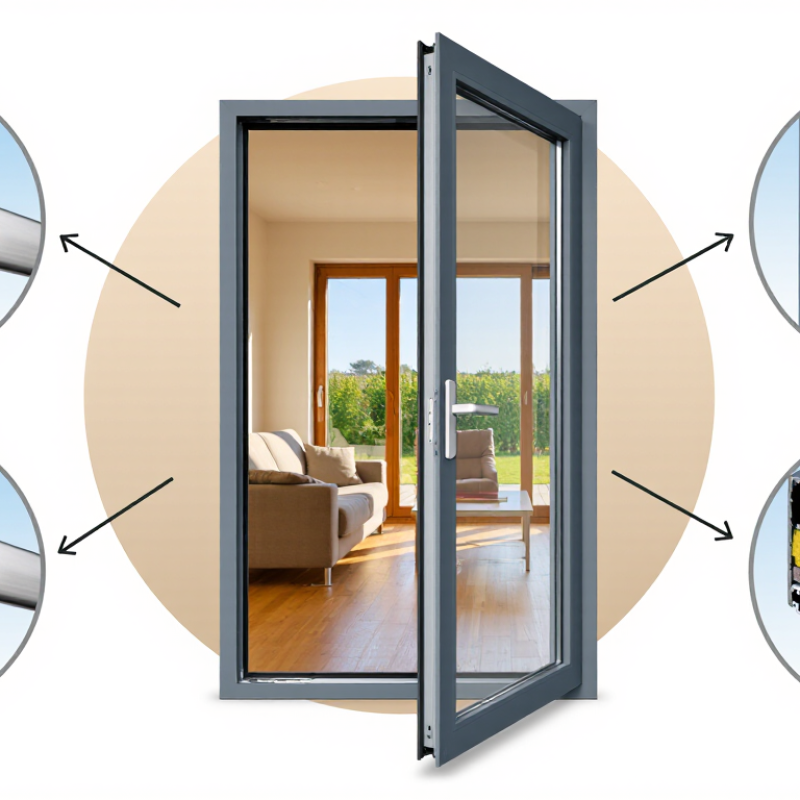
Define Your Needs for an Aluminium Door With Window
Define Your Needs for an Aluminium Door With Window
Start with the room, climate, and daily traffic. A south-facing entrance may need lower solar heat gain. A shaded hallway may benefit from larger glazing instead. The U.S. Department of Energy estimates that windows can represent 25–30% of residential heating and cooling energy use. That figure makes glass selection more important than many buyers expect.
Measure the opening carefully, including wall thickness and drainage space. Then decide how the door will work. A hinged door suits a compact entry, while a sliding design needs clear floor space. For security, specify laminated or tempered safety glass and a multipoint locking system where appropriate. Ask for tested U-factor, solar heat gain coefficient, air leakage, and water resistance data. The National Fenestration Rating Council uses these metrics to compare window and door performance. Numbers matter.
Think about comfort, not only appearance. Aluminium frames can feel cold without thermal breaks. In wet or coastal areas, finish quality and drainage deserve close attention. The Global Status Report for Buildings and Construction reports that buildings account for about 30% of global final energy demand. Small choices can influence long-term use. A low initial price may look sensible, but replacement costs can change the calculation. I would also question oversized glass. It brings daylight, yet it can increase glare, heat, and cleaning work. No specification is perfect.
How to Choose the Best Aluminium Door With Window - Define Your Needs for an Aluminium Door With Window
| Selection Dimension | Define Your Need | Recommended Specification | Useful Data or Typical Range | Why It Matters |
|---|---|---|---|---|
| Door Location | Is the door used as an exterior entrance, balcony door, patio door, or interior partition? | Use an exterior-rated, thermally improved system for exposed openings; use a lighter non-thermal system for protected interior applications. | Exterior doors need weather seals, drainage paths, durable finishes, and suitable wind-load performance. | The location determines resistance to rain, wind, temperature changes, and daily wear. |
| Opening Size | What are the finished width and height of the structural opening? | Measure the width, height, squareness, and plumb condition at several points before ordering. | Common single-door widths are approximately 700–1,000 mm; wider openings may use double, sliding, or folding configurations. | Accurate measurements help provide correct clearances and reduce installation problems. |
| Door Configuration | Do you need a hinged, sliding, pivot, French, or folding door? | Choose hinged doors for compact openings, sliding doors for space-saving operation, and folding systems for large clear openings. | Sliding and folding systems generally require a level, structurally supported track or sill. | The operating style affects usable floor area, ventilation, accessibility, and hardware maintenance. |
| Thermal Performance | Is the door installed in a heated or cooled room? | Select thermally broken aluminium profiles with insulated glazing and continuous perimeter seals. | Compare the complete door U-value, not only the glass or frame U-value. Lower U-values indicate lower heat transfer. | A thermally broken frame reduces conductive heat flow and helps limit interior condensation. |
| Glazing Type | Do you prioritize insulation, daylight, solar control, privacy, or impact resistance? | Use double glazing for most energy-conscious applications; consider laminated, low-emissivity, or solar-control glass where appropriate. | Double-glazed units commonly use two panes separated by an insulated spacer; glass thickness and build-up depend on size and safety requirements. | Glazing affects heat loss, glare, noise, safety, weight, and total door cost. |
| Solar Exposure | Does the opening face strong afternoon sun or a hot climate? | Consider low-solar-gain glass, external shading, blinds, or an overhang for highly exposed elevations. | Solar heat gain is influenced by glass coating, orientation, shading, window area, and local climate. | Managing solar gain can improve summer comfort and reduce cooling demand. |
| Safety and Security | Is the door on a main entrance, ground floor, or another accessible location? | Specify a multipoint lock where suitable, robust hinges, security glazing when required, and hardware tested for the intended use. | Laminated safety glass remains bonded after breakage; tempered safety glass breaks into smaller granular fragments. | Security and safety requirements vary by location and should comply with applicable building regulations. |
| Weather Resistance | Will the door be exposed to driving rain, coastal air, or strong wind? | Choose tested air, water, and wind performance with compatible seals, drainage, flashing, and sill details. | Performance classifications differ by region; compare test results using the same standard and product size. | A well-designed frame can still leak if the sill, flashing, or installation joint is poorly detailed. |
| Threshold and Accessibility | Do children, older adults, wheelchair users, or wheeled equipment use the doorway? | Select a low or flush threshold only when it can meet required water-management and accessibility conditions. | Threshold height and the maximum allowable upstand depend on local accessibility rules and drainage design. | A lower threshold improves access but may require additional drainage protection. |
| Acoustic Control | Is the property near traffic, public areas, or other persistent noise sources? | Use sealed double glazing or upgraded acoustic glazing with a well-sealed frame and careful installation. | Sound reduction depends on the complete assembly; laminated acoustic glass and different pane thicknesses can improve performance. | Gaps around the frame can significantly reduce the benefit of high-performing glass. |
| Finish and Environment | Will the door be exposed to salt spray, pollution, high humidity, or frequent cleaning? | Select a durable architectural coating suitable for the exposure category and follow the specified cleaning schedule. | Coastal locations may require enhanced protection, compatible fasteners, and more frequent inspection. | Correct finish selection helps reduce fading, corrosion, staining, and premature maintenance. |
| Maintenance Requirements | How much routine care can you provide? | Choose corrosion-resistant finishes, accessible drainage channels, replaceable seals, and adjustable hardware. | Clean frames and tracks with mild detergent and water; avoid abrasive cleaners and check seals and drainage periodically. | Regular cleaning keeps drainage paths clear and helps preserve smooth operation and weather sealing. |
| Installation Quality | Is the opening new construction or a replacement project? | Use an installer familiar with aluminium systems, structural fixing, perimeter sealing, sill drainage, and glass handling. | The finished result depends on frame alignment, fixing spacing, seal continuity, insulation, and correct adjustment. | Even a high-quality door can perform poorly when it is incorrectly sized, sealed, or adjusted. |
| Budget and Service Life | What is the total project budget, including glazing, hardware, delivery, and installation? | Compare whole-life value rather than frame price alone, including energy performance, maintenance, durability, and replacement-part availability. | Larger doors, heavier glass, special coatings, upgraded hardware, and complex installation generally increase total cost. | A realistic budget helps balance appearance, performance, longevity, and installation quality. |
Note: Dimensions, performance classifications, safety glazing rules, accessibility limits, and energy requirements vary by project location. Confirm the final specification against applicable local building codes and the tested performance of the complete door assembly.
FAQS
Aluminium is lightweight, rigid, and resistant to moisture. It suits busy entrances and humid rooms. Thermal-break frames can reduce indoor heat loss.
Double glazing usually insulates better than single glazing. Low-emissivity glass can reduce unwanted heat gain. Laminated glass helps hold broken fragments together. Tempered glass is stronger, but it cannot be cut afterward.
Consider tinted or solar-control glass. It can soften bright sunlight and reduce glare. Check performance data carefully. Attractive glass may still cause condensation near an unheated porch.
Sliding doors save floor space. Their tracks collect grit and need regular brushing. Hinged doors often seal more tightly, but they need clear swing space. Think about cleaning habits before choosing.
Measure the opening width and height in three places. Record the smallest measurements. Check wall thickness, sill level, and frame clearance. A few millimetres matter.
The frame should be plumb, level, and square. Keep drainage holes clear. Use suitable fixings for the wall material. Do not force the frame into position.
Clean the frame with mild soap and water. Remove grit and leaves from tracks. Inspect seals for cracks. Lubricate approved moving parts lightly. Check hinges, handles, and drainage channels twice yearly. Small checks matter.
Ask for reports on air leakage, water resistance, wind pressure, and operating cycles. Confirm the tested product matches your chosen design. Open the sample repeatedly. Look for smooth movement, even gaps, firm locks, and clean glass edges. A polished finish is not proof of quality.
Conclusion
Choosing the right Aluminium Door With Window starts with understanding your needs, including the door’s purpose, opening size, preferred style, ventilation, natural light, and budget. Compare frame materials, glass options, and door designs to find a combination that balances appearance, durability, privacy, and usability. Consider insulated frames and energy-efficient glass if you want to improve indoor comfort and reduce heat transfer.
Security and weather resistance are also important. Look for strong locks, stable construction, effective seals, and finishes that can withstand moisture, wind, and daily use. Before purchasing, confirm the exact dimensions, installation conditions, wall structure, and maintenance requirements. Finally, choose a reliable manufacturer that provides clear specifications, consistent product quality, suitable warranties, and responsive support. Careful evaluation of these factors will help you select an Aluminium Door With Window that performs well, suits your home or project, and remains attractive and practical over time.