As global construction priorities shift in 2026, buyers need more than attractive window profiles. An Aluminum Window must perform across different climates, building styles, and supply chains. A slim frame may look elegant in a showroom. It may struggle beside a cold northern wall or a humid coastal site. Practical selection begins with climate, opening size, glass specification, and installation conditions.
Experienced buyers usually examine the full system, not the frame alone. They check thermal breaks, drainage paths, gasket quality, hardware durability, and surface treatment. For example, a powder-coated finish should resist fading and corrosion during transport and daily use. Double or triple glazing may improve comfort, but its weight can affect hinges and installation. Ask suppliers for test reports, material certificates, production photographs, and clearly stated performance values. Independent verification remains valuable.
Details often decide the result. Confirm millimetre-level dimensions before production. Review corner joints, frame sections, packaging, and spare hardware. A supplier may promise excellent insulation, yet provide unclear test conditions. That should raise questions. No checklist is perfect. Some decisions still depend on local installers, wall construction, and maintenance habits. Buyers should compare quotations carefully, communicate technical drawings in writing, and request samples before placing large global orders. Reliable sourcing is not simply about finding the lowest price. It is about balancing performance, compliance, delivery risk, and long-term service. A well-chosen Aluminum Window should arrive protected, install accurately, operate smoothly, and remain dependable years after the purchase.
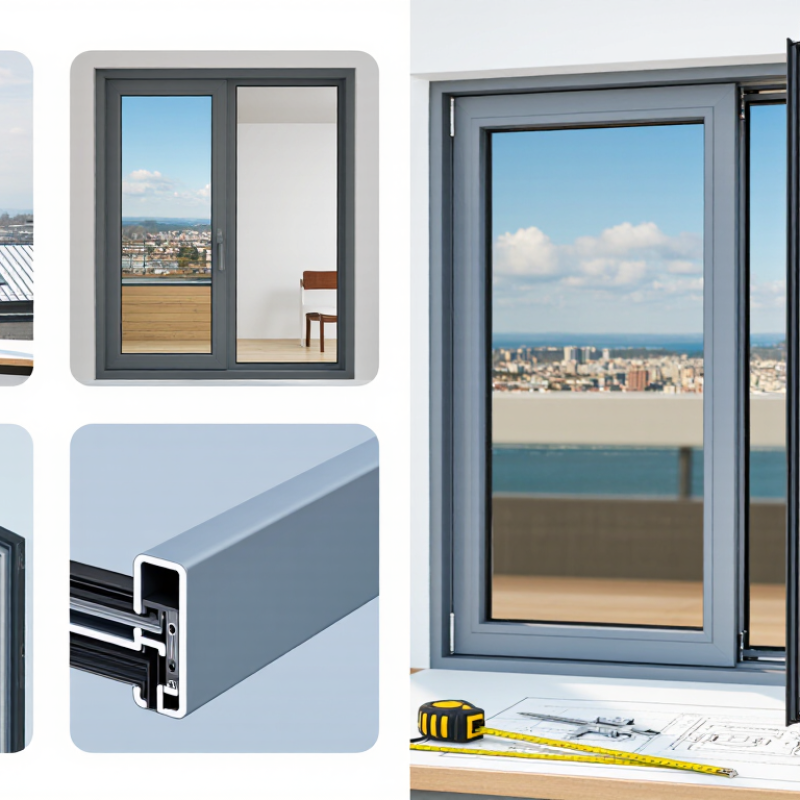
How to Choose Aluminum Windows for Global Buying in 2026?
Define Project Requirements and Climate Performance
A reliable purchase begins with the building, not the window catalogue. Record room use, opening sizes, façade direction, occupancy, and installation height. A bedroom facing west needs different glass from a shaded service corridor. Include local wind pressure and expected rainfall. Coastal towers may require stronger corrosion protection than inland offices.
Climate data should guide the specification. In cold regions, compare whole-window U-values, not glass performance alone. Thermal breaks, insulated frames, and warm-edge spacers can reduce interior condensation. In hot climates, review solar heat gain, visible light, and external shading together. A very low U-value can still allow uncomfortable afternoon heat.
Check air leakage, water resistance, and structural test results from an independent laboratory. Ask whether testing matches the proposed size and hardware. Small sample windows can hide real project weaknesses. Request performance values in recognized units, with clear test conditions. Local codes may require different safety glass, fire separation, or wind standards.
Material finish also deserves attention. Salt spray, humidity, dust, and cleaning chemicals affect long-term appearance. Specify coating durability and maintenance access before ordering. I have seen attractive designs fail because drainage paths were ignored. That detail is easy to miss. It should be reviewed with the architect, installer, and engineer, not judged from drawings alone.
For global buying in 2026, compare the window system before comparing the finish. A thermal-break aluminum system uses an insulating polyamide barrier between inner and outer metal. It reduces heat transfer around the frame. Non-thermal profiles cost less and suit mild, unconditioned spaces. They may feel cold beside winter glass. In hot climates, solar-control glass and exterior shading can matter more. That detail is often missed.
Profile depth affects strength, glass capacity, and drainage. A deeper profile usually supports larger panes and stronger wind resistance. A narrow profile gives more visible glass, but it may limit hardware options. During project reviews, I check corner joints, gasket quality, drainage paths, and powder-coating thickness. Ask for test reports covering air leakage, water penetration, and wind pressure. Local exposure matters. Coastal air can attack weak finishes, while dusty regions can block drainage holes.
Opening style changes daily use and installation risk. Casement windows seal tightly and ventilate efficiently, but their hinges need clear space. Sliding windows save room and work well for wide openings. However, their tracks require regular cleaning. Tilt-and-turn designs offer controlled ventilation and easy indoor cleaning. Lift-and-slide units suit large panels, yet they demand accurate floor levels and strong rollers. My first comparison was too simple: I focused on appearance. I now check climate, building movement, glass weight, replacement access, and available technical support. Small mistakes become expensive after delivery.
Global buyers should compare aluminum windows by tested performance, not frame appearance. The International Energy Agency reports that buildings consumed about 30% of global final energy in 2022. Window selection therefore affects both operating costs and indoor comfort.
Start with the glazing system. Low-emissivity coatings reduce radiant heat transfer, while double glazing improves insulation in moderate climates. Triple glazing may suit cold regions, but it adds weight, cost, and installation demands. Check U-factor, solar heat gain coefficient, visible transmittance, and air leakage. The U.S. Department of Energy notes that windows can account for 25–30% of residential heating and cooling energy use. A low U-factor alone is not enough.
The aluminum frame also needs a continuous thermal break. It separates the exterior and interior metal paths, reducing conductive heat flow and interior condensation risk. Ask suppliers for whole-window test results, not center-of-glass figures. NFRC rating procedures emphasize this distinction. Small gaps around the frame can undermine expensive glazing. It happens more often than buyers expect. Request laboratory reports, installation tolerances, spacer specifications, and warranty conditions before ordering. Climate data matters too: a low solar gain value can help in hot regions, but may reduce useful winter heat in colder locations. Some purchasing teams still choose identical specifications worldwide, and that approach deserves reconsideration.
Choosing aluminum windows for global buying in 2026 requires more than comparing unit prices. Start by verifying the supplier’s legal registration, production capacity, export experience, and quality records. Request recent factory audit reports and product test documents. Certifications should match your destination market and project requirements. Check whether certificates are current, traceable, and issued by recognized testing bodies.
Customization also deserves careful attention. Confirm frame dimensions, thermal breaks, glass combinations, drainage design, hardware options, surface finishes, and packaging methods. Ask for shop drawings before production begins. A small measurement error can create expensive installation problems. Sample approval is useful, but samples may not show every production risk. Include inspection points for color consistency, sealant quality, corner joints, and opening operation.
Tips: Compare total landed cost, not just the factory quotation. Include tooling, sampling, testing, packaging, freight, duties, insurance, installation, and possible replacement costs. Clarify delivery terms and payment milestones in writing. A supplier offering the lowest price may create higher project costs later. I have found that simple checklists prevent many disputes, although they cannot replace physical inspection. Keep communication records, approve one final specification, and allow time for corrective action before shipment.
| Buying Scenario | Typical Window Specification | Supplier Verification Evidence | Relevant Certifications and Standards | Customization Scope | Indicative Factory Lead Time | Indicative Product Cost | Estimated Logistics and Import Cost | Main Technical Risk | Overall Assessment |
|---|---|---|---|---|---|---|---|---|---|
| Residential replacement |
Thermally broken aluminum frame; double glazing, Low-E coating; U-value target: approximately 1.4–1.8 W/m²K |
Business registration check; production-line video audit; three recent project references; pre-shipment inspection |
EN 14351-1 for external windows; ISO 9001 quality system evidence; performance test report from an accredited laboratory |
Custom opening sizes; tilt-and-turn or sliding hardware; powder coating or anodized finish; insect-screen option |
25–40 days | US$160–320/m² | US$45–130/m² | Incorrect site measurements and inadequate drainage details | Suitable |
| High-rise residential |
Heavy-duty thermally broken system; laminated or insulated safety glass; wind-load design based on project height and exposure |
Verified engineering calculations; documented material traceability; independent factory inspection; sample-unit approval before mass production |
Local building-code compliance; EN 12207 air permeability; EN 12208 watertightness; EN 12210 wind resistance; safety-glazing test evidence |
Mullion and transom design; reinforced corners; acoustic glazing; concealed drainage; restricted-opening hardware |
35–60 days | US$240–520/m² | US$60–170/m² | Wind-load assumptions, glass weight, and interface with the building structure | High control required |
| Tropical coastal project |
Corrosion-resistant aluminum finish; laminated or tempered glazing; enhanced seals and water-management design |
Coating-process records; salt-spray or corrosion test report; inspection of hardware and gaskets; batch-based quality records |
ISO 9227 salt-spray testing where specified; AAMA 2603, 2604, or 2605 coating level where applicable; regional wind and impact requirements |
Marine-grade coating options; stainless-steel hardware; upgraded EPDM gaskets; impact-resistant glass; custom louvers |
35–55 days | US$220–480/m² | US$70–190/m² | Premature finish corrosion and saltwater penetration at joints | Specify carefully |
| Cold-climate building |
Thermally broken aluminum frame; triple glazing or high-performance double glazing; U-value target: approximately 0.8–1.3 W/m²K |
Thermal simulation or test report; gasket and spacer specifications; condensation-risk review; verified low-temperature hardware rating |
EN 10077 thermal transmittance calculation; EN 14351-1; local energy-code compliance; condensation-resistance assessment |
Triple glazing; warm-edge spacer; insulated sill; low-temperature seals; acoustic upgrade |
40–65 days | US$280–620/m² | US$65–180/m² | Thermal bridging, condensation, and glass-unit seal failure | Suitable after testing |
| Commercial office project |
Large-format fixed and operable windows; double or laminated insulated glass; coordinated façade interfaces |
Approved shop drawings; project-specific mock-up; documented change-control process; site-installation support plan |
EN 14351-1 or applicable regional equivalent; air, water, and wind performance tests; acoustic and solar-control documentation |
Custom mullion depth; solar-control glass; motorized vents; integrated blinds; color matching |
45–75 days | US$300–700/m² | US$75–220/m² | Coordination errors between window, façade, and mechanical systems | Project management critical |
| Budget housing development |
Non-thermal-break or basic thermal-break frame; standard double glazing; standard white or neutral powder coating |
Factory capacity confirmation; sample approval; basic dimensional inspection; container loading photographs |
Applicable national product standard; basic air and water performance evidence; glass safety marking where required |
Limited size range; standard colors; standard handles and rollers; minimal hardware choices |
20–35 days | US$110–230/m² | US$40–115/m² | Inconsistent dimensions, lower hardware durability, and higher energy loss | Cost-focused |
| Renovation with irregular openings |
Made-to-measure frames; mixed fixed, casement, and sliding units; site conditions may require segmented delivery |
Measurement protocol review; drawing approval for every opening; replacement-policy confirmation; sample corner and color approval |
Applicable regional window standard; glass safety compliance; water-drainage and installation guidance |
Non-standard shapes; split frames; custom trim; reveal adapters; multiple finish colors |
35–60 days | US$190–460/m² | US$55–160/m² | Measurement error and poor compatibility with existing masonry | Use local measurement control |
| Export order with low initial volume |
Standardized window modules; limited finish and hardware selection; optimized for mixed-container shipment |
Minimum-order quantity in writing; payment-term verification; sample before deposit; third-party inspection option |
Destination-market labeling; applicable safety-glass requirements; test reports matching the ordered configuration |
Basic size customization; limited colors; standard packaging; private labeling excluded from this comparison |
25–45 days | US$140–300/m² | US$70–210/m² | Higher per-unit freight and difficulty obtaining replacement parts | Order samples first |
Global aluminum window buying in 2026 requires more than comparing unit prices. Start with a written specification sheet. Include opening sizes, frame alloys, coating requirements, glass thickness, hardware, drainage, and thermal targets. Request technical drawings before discussing production. A small tolerance error can disrupt an entire installation.
Compliance must match the destination market. Check current requirements for safety glazing, wind resistance, fire performance, energy efficiency, labeling, and product documentation. Confirm the correct customs classification with a qualified broker. Rules and test methods can change. Do not rely on an old certificate. Ask for test reports, declarations, material records, and factory quality procedures. Keep every revision dated and approved.
Shipping needs practical control. Agree on trade terms, lead time, insurance responsibility, and port charges in writing. Use reinforced corner protection, separators, waterproof wrapping, and moisture control inside the container. Photograph loading conditions and record package numbers. Before shipment, inspect dimensions, surface finish, glass, hardware, drainage holes, and carton labels against the approved sample. A third-party inspection can reduce risk, but it cannot replace clear specifications. One overlooked detail still causes expensive rework. A perfect checklist does not exist. Leave room for corrective action, and review the process after every order.
Record room use, opening size, façade direction, occupancy, and installation height. Climate also matters. A west-facing bedroom needs different glass from a shaded corridor.
Cold regions need strong insulation and condensation control. Hot climates require solar heat analysis and external shading. One global specification may not fit every location.
Compare whole-window U-values. Frame performance affects real insulation. Thermal breaks, insulated frames, and warm-edge spacers can reduce indoor condensation.
Not always. Triple glazing may suit cold regions, but it adds weight, cost, and installation demands. The structure must support it.
Review U-factor, solar heat gain coefficient, visible transmittance, and air leakage. A low U-factor alone cannot guarantee comfort.
It separates exterior and interior aluminum paths. This reduces conductive heat flow and cold interior surfaces. Small gaps can still weaken performance.
Request independent laboratory reports, test conditions, installation tolerances, spacer details, and warranty terms. Confirm that testing matches the proposed window size.
Poor sealing can create drafts, moisture damage, and higher energy use. Heavy rain exposes weak drainage paths. Drawings may not reveal these problems.
Review salt spray, humidity, dust, and cleaning chemicals. Specify durable finishes and maintenance access. Attractive surfaces can deteriorate quickly near the coast.
Yes. In hot climates, glazing and shading should work together. Low solar gain helps, but excessive reduction may limit useful winter sunlight.
Choosing the right Aluminum Window for global purchasing in 2026 requires a clear understanding of project goals, local climate, and long-term performance expectations. Buyers should assess factors such as wind and water resistance, corrosion exposure, insulation needs, building style, and preferred opening methods. Comparing different aluminum systems, profile designs, and configurations can help balance appearance, ventilation, durability, and maintenance requirements.
Special attention should be given to glazing options, thermal breaks, air tightness, and overall energy efficiency. Buyers should also carefully verify supplier capabilities, product certifications, customization services, warranty terms, and total cost rather than focusing only on the initial price. For international orders, planning should include technical documentation, applicable import requirements, packaging, shipping schedules, and pre-shipment quality inspections. A structured evaluation process helps reduce communication risks, prevent costly errors, and ensure that the selected windows meet both project specifications and regional performance expectations.