Choosing an Aluminum Door With Window involves more than matching a frame to a façade. Buyers must compare thermal performance, glass type, frame depth, drainage, hardware, and installation support. A slim profile may look elegant, yet its performance depends on the full door system. Details matter.
The U.S. Department of Energy estimates that heat gain and heat loss through windows account for 25–30% of residential heating and cooling energy use. This is a U.S. benchmark, not a universal figure, but it shows why glazing and frame design deserve careful review. Building-science expert Joseph Lstiburek is often quoted as saying, “A window is a hole in the wall.” The blunt reminder is useful: the frame-to-wall junction matters as much as the product itself. Buyers should request documented test results, not rely on appearance or broad performance claims.
This Top 10 guide compares aluminum doors with windows for homes, commercial spaces, and varied climates. It considers thermal breaks, glazing options, security hardware, finish choices, and available certification data. Standards and rating systems differ by market, so buyers should confirm that test documentation applies to their destination and project. A low-maintenance finish can still show wear near the coast. No single design suits every opening. The comparisons aim to clarify trade-offs, while recognizing that product details and local installation quality can change the outcome.
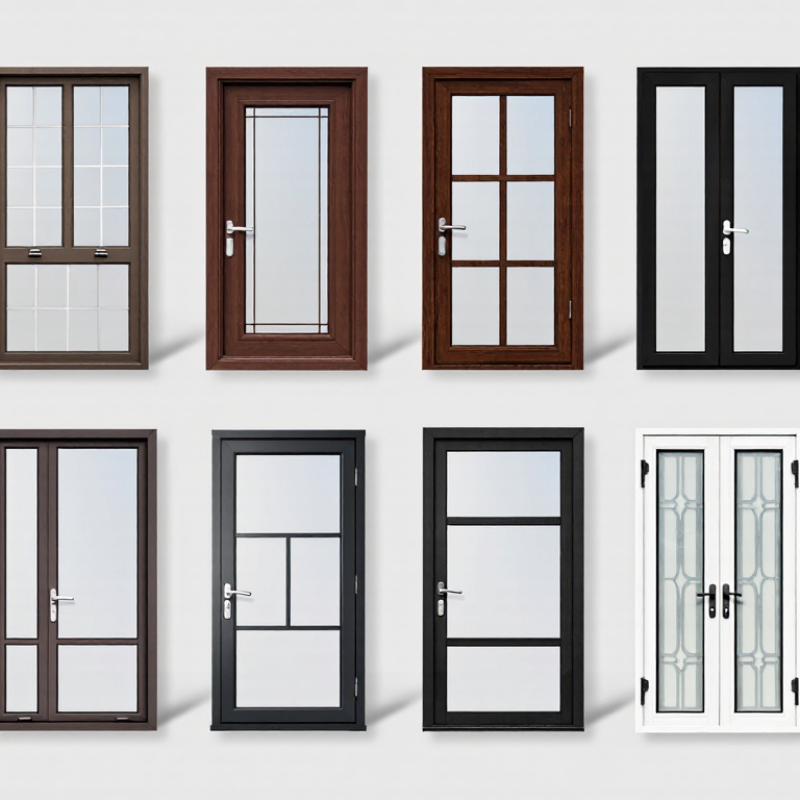
How Aluminum Doors With Windows Are Designed and Classified
Aluminum doors with windows are designed around three choices: frame construction, glazing, and opening style. A thermally broken frame uses a nonconductive barrier between its inner and outer aluminum sections to reduce heat transfer. Glazing may be clear, tinted, laminated, or insulated, depending on daylight, privacy, and climate needs. Small details matter. Drainage paths and well-fitted seals help manage wind-driven rain, while sturdy hinges or rollers support daily use.
Common classifications include hinged, sliding, and folding doors, as well as designs with fixed sidelights above or beside the door. Each layout changes how people move through a space. Sliding panels save swing room, but their tracks need regular cleaning. Hinged doors offer a familiar feel, though they require clear floor space. Glass selection should match the opening’s exposure and specified safety and energy performance. A polished elevation drawing can still miss a practical issue, such as a handle colliding with nearby furniture.
Tips: Measure twice. Check the rough opening, threshold height, and nearby walls before choosing a configuration. Ask for documented air, water, and structural performance for the intended project conditions. Confirm how the glass is held in the frame and how damaged panels can be replaced. These checks take time, and they are easy to overlook.
Top 10 Aluminum Doors With Windows for Global Buyers – How Aluminum Doors With Windows Are Designed and Classified
| No. | Door Type | Typical Design | Opening Style | Common Glazing | Typical Applications | Key Classification or Design Consideration |
|---|---|---|---|---|---|---|
| 1 | Aluminum Hinged Door with Glazed Panel | One glazed leaf in an aluminum frame; glazing may cover most or part of the leaf. | Inward- or outward-opening on side hinges. | Single, double, or laminated safety glass, depending on requirements. | Residential entrances, balconies, and utility rooms. | Classified by handing, frame depth, threshold, and whether the profile has a thermal break. Confirm the required safety glazing for the location. |
| 2 | Aluminum French Door | A pair of glazed leaves meeting at the center, often with narrow frame profiles. | One or both leaves swing open. | Insulating glass units are common; laminated or toughened glass may be specified. | Patios, gardens, terraces, and rooms opening to outdoor areas. | Check the active-leaf arrangement, center meeting stile, opening clearance, and weather seals. |
| 3 | Aluminum Sliding Patio Door | Two or more glazed panels in parallel tracks; one or more panels slide. | Horizontal sliding. | Double-glazed units are common; low-emissivity coatings can be selected for energy control. | Balconies, patios, and openings where swing space is limited. | Classified by panel count, number of moving panels, track arrangement, and frame thermal design. |
| 4 | Aluminum Lift-and-Slide Door | Large glazed panels engage with the frame when closed and lift slightly for movement. | Panel slides along a track after the handle operates the lifting mechanism. | Large insulating glass units; glass thickness and makeup depend on panel size and engineering. | Wide residential openings and spaces designed for expansive views. | Specify panel dimensions, operating weight, hardware capacity, threshold detail, and applicable performance requirements. |
| 5 | Aluminum Bi-Fold Door | Multiple glazed leaves connected by hinges and arranged to fold together. | Leaves fold and stack to one or both sides. | Double glazing is commonly offered; safety glass may be required by local codes. | Patio openings, garden rooms, and wide indoor-outdoor connections. | Classified by leaf count, folding direction, traffic-door position, and whether the system uses a top or bottom track. |
| 6 | Aluminum Pivot Door with Glazing | A large glazed leaf rotates around pivot hardware positioned away from the side edge. | Rotates around a vertical pivot axis. | Laminated or toughened safety glass; insulated glazing may be used in suitable systems. | Modern residential entrances and architectural interior openings. | Design depends on leaf size and weight, pivot position, floor clearance, and suitable hardware capacity. |
| 7 | Aluminum Door with Fixed Sidelights | A hinged or pivoting door combined with one or two stationary glazed panels. | Operable door leaf with non-opening sidelights. | Insulating or safety glazing, selected according to exposure and local requirements. | Main entrances and areas where additional daylight or a wider visual opening is desired. | Classify the operable leaf separately from fixed panels; consider frame junctions, drainage, and glazing safety. |
| 8 | Aluminum Door with Transom Window | A glazed door with a fixed window panel above the door head. | Usually hinged; the transom is typically fixed. | Insulating glass is common; obscured or solar-control glass can be specified where appropriate. | Entrances with higher ceiling lines or a need for additional daylight. | Check the overall frame height, structural support, transom fixing, and any applicable fire or egress requirements. |
| 9 | Thermally Broken Aluminum Glazed Door | Aluminum profiles separated by a low-conductivity thermal barrier between the exterior and interior portions. | Available in hinged, sliding, and other compatible configurations. | Often paired with double or triple insulating glass, depending on climate and system design. | Heated or cooled buildings where limiting heat transfer through the frame is important. | “Thermally broken” describes the frame construction, not the opening style. Performance depends on the complete door, glazing, seals, and installation. |
| 10 | Non-Thermally Broken Aluminum Glazed Door | Aluminum profiles without a thermal barrier between the interior and exterior frame sections. | Commonly available as hinged or sliding doors. | Single or insulating glazing may be used where the selected system permits. | Interior partitions, mild climates, and some unconditioned or utility spaces. | Often simpler in construction, but the frame can conduct heat more readily than a thermally broken profile. Suitability depends on climate and project requirements. |
Buyer note: Door configurations and available glazing vary by system and destination market. Confirm local building-code requirements, safety-glazing locations, wind-load design, thermal performance, water resistance, and installation details before specifying a door.
FAQS
The main choices are frame construction, glazing, and opening style. Each affects daylight, movement, and comfort.
It places a nonconductive barrier between inner and outer aluminum sections. This helps reduce heat transfer. It is not a cure-all.
Options include clear, tinted, laminated, and insulated glass. Choose based on privacy, daylight, climate, and project requirements.
Sliding doors save floor space, but their tracks need regular cleaning. Hinged doors feel familiar and close firmly. They need swing space.
Measure the rough opening, threshold height, nearby walls, and furniture clearance. A handle can hit a chair. It happens.
Bi-fold panels create a broad opening, but their tracks need careful cleaning. Pivot doors make a bold visual feature and need planned swing space.
Look for drainage paths and well-fitted weather seals. A low threshold may ease access, but rain can collect nearby.
Request documented air, water, and structural performance for the intended conditions. Ask how glass is held and replaced. Seasonal movement may require adjustment.
Conclusion
This guide explains how an Aluminum Door With Window is designed and classified, from frame and glazing options to opening styles and intended uses. It compares ten common door types for global buyers, highlighting the features that set them apart, including visibility, ventilation, space efficiency, and suitability for residential or commercial projects.
The article also outlines how to assess energy efficiency, security, and durability by considering glazing performance, frame construction, hardware, weather resistance, and maintenance needs. A practical selection framework helps buyers match door specifications to local climate, project requirements, budget, and installation conditions, so they can make a well-informed choice for their market.