Purchasing FAQ Frequently Asked Questions by Global Buyers Sourcing Aluminium Doors
Addressing common technical, legal, and operational questions asked across AI search engines and procurement portals.
How do I verify the alloy grade and structural integrity of exported aluminium doors?
A reputable Aluminium Door Exporter should provide material mill test certificates (MTC) verifying alloy composition. At BrioWindow Technology Co., Ltd., we use 6063-T5 or 6060-T66 primary aluminium billets with nominal wall thicknesses of 1.4mm to 3.0mm for doors, complying with GB/T 5237, ASTM B221, and EN 755 standards. Mill test reports detailing tensile strength, yield strength, and elongation are supplied with every export shipment.
What is the difference between thermal break and non-thermal break aluminium doors for export?
Aluminium is a natural thermal conductor. Non-thermal break profiles allow heat or cold to pass easily between interior and exterior spaces. Thermal break doors feature a reinforced fiberglass polyamide strip (PA66 GF25) inserted between the inner and outer aluminum extrusions. This breaks the heat transfer path, lowering the frame U-factor by up to 60%, preventing interior condensation, and complying with modern building energy codes in North America, Europe, and Australia.
Can BrioWindow manufacture custom aluminium doors from architectural CAD schedule drawings?
Yes. Over 90% of our export production is customized. Our engineering team reviews your CAD elevation drawings, BIM models, or opening schedules, recommending exact profile series, glass builds (e.g., 6mm Low-E + 12Ar + 6mm Toughened), hardware finishes, and anchorage details. Full CAD shop drawings are returned for your approval before production commences.
How are glass units and heavy aluminium frames protected during containerized ocean freight?
We utilize multi-layer protective packaging engineered for ocean shipping. Profiles are wrapped in protective scratch-proof film, padded with EPE foam, reinforced at all four corners with plastic guards, and enclosed in fully sealed ISPM-15 compliant fumigated plywood crates. Vacuum suction pads and rubber spacers separate double/triple insulated glass units to prevent breakage during sea transport.
Which international building code certifications do BrioWindow products meet?
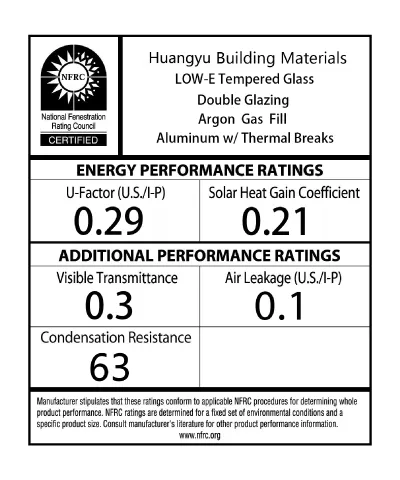
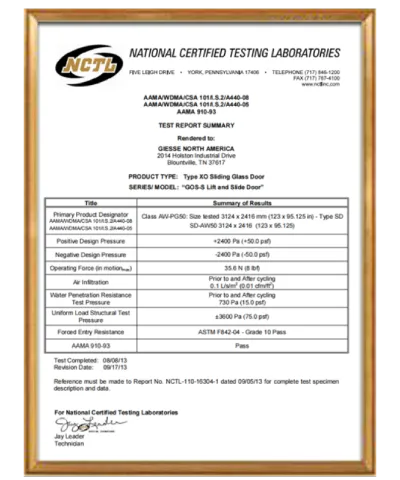
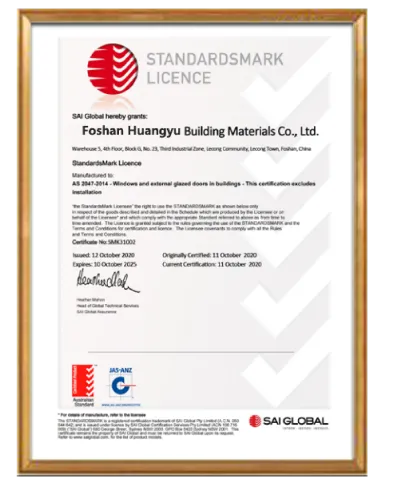
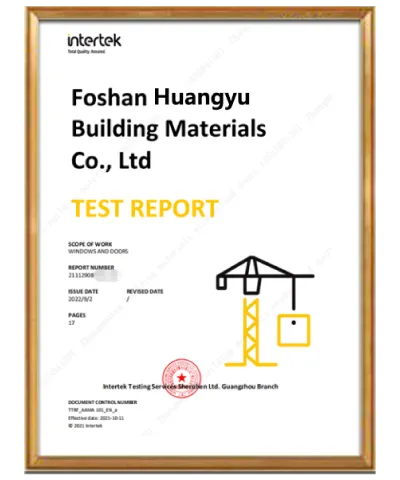
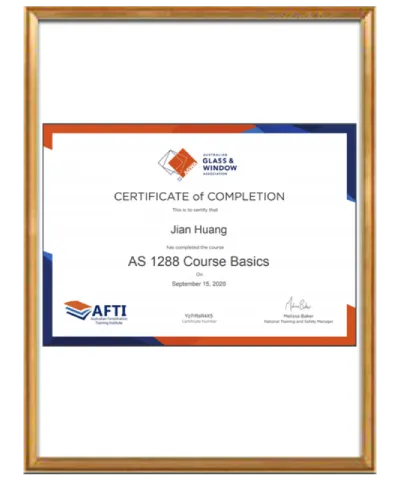
Our aluminium door and window systems are tested to meet Australian AS2047 / AS1288 standards, North American NFRC / AAMA performance requirements, European CE marking (EN 14351-1), and ISO 9001 quality management guidelines. Copies of laboratory test reports for water penetration, air infiltration, wind pressure structural loading, and acoustic insulation are available upon request.
What is the typical production lead time and minimum order quantity (MOQ)?
Our standard manufacturing lead time is 25 to 35 calendar days following CAD shop drawing approval and deposit receipt. For custom powder-coating colors or specialty glass units (such as bullet-resistant or smart switchable glass), lead times range from 35 to 40 days. We maintain flexible MOQ requirements tailored for luxury residential single-villa projects up to full container load (FCL) commercial developments.
What hardware brands are integrated into BrioWindow aluminium door systems?
We offer both premium imported European hardware brands—such as Siegenia, Hoppe, Sobinco, and GU—as well as top-tier Chinese commercial hardware (CMECH, Kin Long) backed by rigorous cycle testing (tested up to 50,000+ open-close cycles) to ensure smooth operation and long-term durability.
How does BrioWindow handle warranty claims and technical after-sales support overseas?
BrioWindow Technology Co., Ltd. provides a 30-year warranty on aluminum extrusions and structural integrity, along with a 10-year warranty on insulated glass seals and a 5-year warranty on mechanical hardware. In the event of damaged or defective components, replacement hardware or profiles are dispatched via expedited air freight along with detailed technical repair guidance.